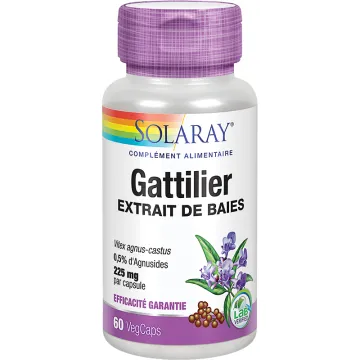
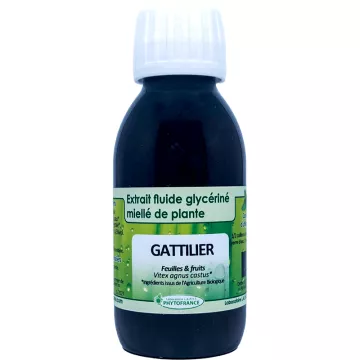
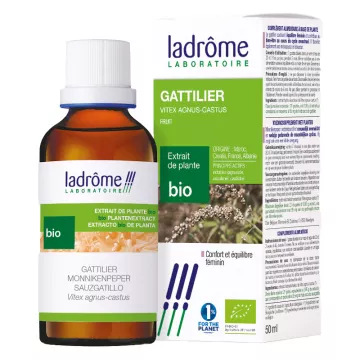
Chaste tree (Vitex agnus-castus), also known as monks’ pepper, is a Mediterranean shrub that has been used since ancient times in women’s herbal medicine. Its berries contain iridoids (agnuside) and diterpenes that have been studied for their potential benefits in supporting hormonal balance and the comfort of the female hormonal cycle. The European Medicines Agency (EMA) recognizes it as having a well-established medical use for premenstrual syndrome.
The benefits of chasteberry are primarily felt in alleviating female discomforts linked to hormonal fluctuations and in promoting emotional balance, which can sometimes be disrupted by the menstrual cycle (irritability, premenstrual anxiety ).
Chasteberry is available in several dosage forms depending on the intended use, ranging from menstrual cycle support to relief from so-called hormonalacne.
Chasteberry is among the best-documented herbs for treating premenstrual syndrome. Several clinical trials cited by the EMA report a reduction in breast tenderness, irritability, bloating, and painful periods after several cycles of use. The effect is gradual: it generally sets in after 3 to 6 weeks of regular use and is fully appreciated after 3 consecutive cycles.
Chasteberry is traditionally used to support irregular cycles, particularly when they are characterized by a short luteal phase or a relative excess of estrogen. Its dopaminergic action may moderate prolactin secretion and promote a more regular cycle, particularly as perimenopause approaches. This use remains traditional and is not a substitute for a gynecological evaluation, which is essential in cases of amenorrhea, severely disrupted cycles, or the desire to become pregnant.
During menopause, chasteberry may help alleviate discomforts associated with hormonal fluctuations: hot flashes, night sweats, and mood swings. It is often combined with other herbs traditionally used for this purpose, such as sage or hops. However, its effectiveness for this indication has not been formally validated by the EMA, unlike its use for premenstrual syndrome.
The dosage of chasteberry depends on the form chosen and the intended use. A course of treatment lasting several months is generally necessary to achieve a stable effect. It is sometimes combined with an adaptogen such as maca, depending on the desired outcome.
Consult your pharmacist, especially if you experience chronic stress or are taking other hormonal herbs at the same time.
The hormonal effects of chasteberry require several strict precautions, starting with pregnancy and certain sensitive medical conditions.
Any severe allergic reaction, such as angioedema (swelling of the face, difficulty breathing), requires an immediate call to 15 or 112; any signsof insomnia or persistent agitation after starting treatment also warrant medical attention.