Breastfeeding is an essential part of a baby’s development and a mother’s well-being. It is much more than just a way to feed a baby; it creates a precious bond between mother and infant. Although it comes naturally, it raises many questions for new mothers. Here are reliable and practical answers to help you navigate this unique experience with confidence.
What are the benefits of breastfeeding for the baby?
Breastfeeding provides numerous documented benefits for the infant:
- Completenutritional coverage tailored to each stage of development
- Maternal antibodies (secretory IgA, lactoferrin) that support immunity
- Reduced risk of gastrointestinal, respiratory, and ENT infections
- Easier digestion thanks to the natural, evolving composition
- Support for cognitive and sensory development
- Strongemotional bond through skin-to-skin contact
- Studies suggesta protective effect against certain allergies and childhood obesity
The WHO recommends exclusive breastfeeding for the first 6 months to maximize these benefits. It fits naturally into an overall routine that includes daily care for a contented baby.
How long should breastfeeding continue?
Official recommendations provide clear guidelines:
- WHO: exclusive breastfeeding for up to 6 months, then continued with complementary foods until 2 years of age or older
- French recommendations (HAS): exclusive breastfeeding ideally for 6 months, at least 4 months
- Transition period: gradual introduction of solid foods starting at 4–6 months, depending on signs of readiness
- Maternal choice: The duration should be based on each family’s capabilities, circumstances, and needs
No specific duration is required: every breastfeeding session, even a brief one, provides benefits. When introducing solid foods, the process should be gradual, while breastfeeding may continue.
How can you tell if your baby is getting enough milk?
Several objective indicators confirm that breastfeeding is effective:
- At least 5 to 6 wet diapers per 24 hours (clear urine)
- Regular bowel movements: at least 3 per day during the first few weeks, then varying
- Steady weight gain according to the growth charts in the health record
- Audible swallowing during feedings
- Baby is content and calm after a feeding
- Peaceful sleep between feedings
- Alertness and good muscle tone when awake
If you have any concerns (weight loss, lethargy, few wet diapers), consult your pediatrician, independent midwife, or an IBCLC lactation consultant promptly to assess the situation.
What breastfeeding positions should you use?
Several positions are suitable depending on the situation and your comfort:
- Madonna position: baby facing the breast, with his head resting in the crook of the mother’s arm
- Reverse Madonna position: the opposite hand supports the baby’s head; useful for newborns
- Rugby ball position: baby under the arm, legs pointing backward; ideal after a C-section
- Lying-on-the-side position: convenient for nighttime feedings or postpartum
- Biological nurturing position: mother semi-reclined, baby on her stomach; promotes innate reflexes
Regardless of the position, check for a proper latch: mouth wide open, lips everted, full coverage of the areola (nipple plus a large portion of the pigmented area), chin against the breast, nose clear. A proper latch prevents most cracked nipples and discomfort.
How can you manage breastfeeding-related pain?
The most common pain often stems from an improper latch:
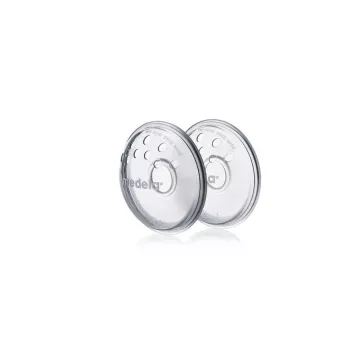
- Adjusting the latch: mouth wide open, entire areola in the mouth
- Applypure lanolin-based creams after each feeding; no need to rinse
- Soothinghydrogel pads between feedings
- Softnursing pads to prevent chafing
- A well-fitting, wirelessnursing bra
- Applya few drops of colostrum or breast milk to the nipple and let it dry
- Gentlecooling in case of engorgement
If the pain persists, consulting an IBCLC lactation consultant, a private midwife, or a doctor can help identify the cause (short tongue tie, thrush, poor latch) and adjust the treatment plan. For persistent breast pain, medical advice is essential.
What foods should you avoid and prioritize while breastfeeding?
A breastfeeding mother’sdiet should remain balanced and varied:
Foods to prioritize:
- Fruits, vegetables, whole grains, legumes
- A variety of protein sources: lean meats, fish, eggs, legumes
- Dairy products or alternative sources of calcium
- Fatty fish twice a week for omega-3s
- Hydration: 2 to 2.5 L/day
- Increasedcalorie intake by 400 to 500 kcal/day
Avoid or limit:
- Alcohol: strict avoidance recommended
- Caffeine: maximum 200 mg per day (about 2 cups of coffee)
- Fish with high mercury levels: swordfish, marlin, shark, and large tuna
- Ultra-processed foods
- Tobacco: strict avoidance
Monitor your baby’s reaction to certain foods: in case of repeated discomfort (increased colic, skin rashes), dietary monitoring can help identify potential intolerances. No restrictive diet is necessary without an identified cause.
How can you balance breastfeeding with returning to work?
Returning to work does not mean you have to stop breastfeeding:
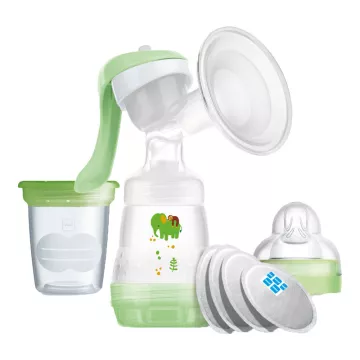
- Planning ahead: Start using a breast pump 2 to 3 weeks before returning to work
- Build up a supply of frozen breast milk
- Legal right to use a breast pump: 1 hour per day for 1 year (Article L.1225-30 of the French Labor Code)
- Breastfeeding rooms are mandatory in companies with more than 100 employees
- Communicate with your employer to arrange breaks and a dedicated space
- Use adouble-pump electric breast pump to save time
- Storage: milk can be kept in the refrigerator for 48 hours or frozen for 4 to 6 months
- Breastfeeding sessions maintained in the morning, evening, and on weekends
- Organizational support from your partner or childcare provider
The breast pump may be covered by insurance with a doctor’s prescription. Ask your pharmacist or midwife for more information.
How does breastfeeding affect a baby’s sleep?
Breastfeeding and an infant’s sleep are closely linked:
- Melatonin present in evening and nighttime breast milk helps the baby fall asleep
- Skin-to-skin contact and suckling havea soothing effect
- Physiological nighttime awakenings during the first few months, especially between 0 and 3 months
- Nighttime feedingsgradually become less frequent as the baby gets older
- Soothingevening routine: bath, skincare, feeding, lullaby
- Alwaysplace the baby on the back to sleep for safety (SIDS prevention)
- Co-sleeping recommended until 6 months in the parents’ room
Nighttime awakenings do not indicate a milk supply problem: they reflect the infant’s physiological needs. A soothing nighttime breastfeeding routine makes it easier to manage these moments. To help the baby settle down, a calm environment and swaddling are just as important as the feeding itself.
What to do if you have an insufficient milk supply?
Several signs may indicate insufficient milk production:
- Slow weight gain or concerning weight loss
- Rare wet diapers (fewer than 5 per day after the first few weeks)
- Infrequent or pale stools
- Very frequent feedings without the baby feeling full
- Baby is lethargic or difficult to wake up for feedings
Solutions to discuss with a healthcare professional:
- Adjustment of latch-on by an IBCLC consultant
- Increasing the frequency of feedings (8 to 12 per 24 hours)
- Feeding from both breasts at each feeding session
- Pumping between feedings
- Breast compression during a feeding
- Increasedrest and hydration
- Traditionally galactogenic herbs, only under strict medical supervision
An evaluation by a pediatrician or midwife remains a priority before any supplementation, to avoid the vicious cycle of decreased stimulation.
Is it possible to breastfeed after breast surgery?
Breastfeeding after breast surgery is often still possible, but it varies depending on the type of procedure:
- Breast augmentation with implants: breastfeeding is generally possible if the surgical approach and implant placement have preserved the milk ducts
- Breast reduction: possible but carries greater risk depending on the technique used (whether or not the pedicle is preserved)
- Post-cancer reconstruction: varies depending on the side operated on and the type of procedure
- Nipple or areola surgery: may affect sensitivity and milk ejection
A preliminary discussion with your surgeon and an IBCLC lactation consultant will help assess your situation. Even partial lactation is possible: mixed feeding or residual milk production may be suitable depending on your family’s plans. The first few weeks are critical for assessing milk production capacity and tailoring support accordingly.