What is arthritis, and how does it differ from osteoarthritis?
Arthritis refers to any joint inflammation—a general term that encompasses more than 100 distinct conditions. The key distinction to understand is between inflammatory arthritis (dysregulated immune system) and osteoarthritis (mechanical wear and tear)—two different mechanisms requiring opposite treatment approaches. Our joint pain product line offers solutions tailored to each individual’s needs.
- Inflammatory (autoimmune) arthritis: morning stiffness lasting > 60 min, pain at rest and at night, bilateral and symmetrical involvement, elevated inflammatory markers (ESR, CRP)—typical of rheumatoid arthritis
- Osteoarthritis: mechanical pain (worsens with activity, improves with rest), brief morning stiffness (< 30 min), normal laboratory markers
- Septic arthritis: infectious arthritis—joint is warm, red, and swollen + fever—absolute medical emergency—immediate antibiotic therapy required
- Microcrystalline arthritis: gout (urate) or chondrocalcinosis (pyrophosphate)—acute monoarticular attacks, documented hyperuricemia
- Arthritis that develops gradually, is bilateral, and is accompanied by fatigue and weight loss warrants a comprehensive rheumatologic evaluation without delay
Rheumatoid arthritis: diagnosis and biological markers
Rheumatoid arthritis (RA) is the most common form of inflammatory arthritis (1% of the population)—early diagnosis is crucial to prevent irreversible joint damage. For associated rheumatic pain, see our dedicated page.
- 2010 ACR/EULAR diagnostic criteria: involvement of ≥ 1 small joint + duration ≥ 6 weeks + positive biological markers + clinical presentation score—a score of ≥ 6/10 confirms the diagnosis
- Rheumatoid factor (RF): positive in 70–80% of RA cases—but not very specific (found in other diseases and in 5% of the healthy population)
- Anti-CCP (anti-citrullinated peptides): 95% specific for RA — may be positive before symptoms appear — significant prognostic value
- Early imaging: MRI and joint ultrasound are more sensitive than X-rays for detecting early erosions — adjust treatment within the first few weeks
- Optimal time for initiating treatment: < 3 months after symptom onset — each month of delay increases the risk of irreversible joint destruction
What natural supplements can help manage inflammatory arthritis?
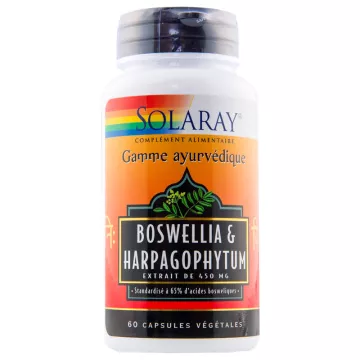
Natural supplements may help reduce discomfort between flare-ups—strictly as an adjunct to standard medical treatment (methotrexate, biologics), never as a substitute in progressive forms of the disease. Find these formulas in our joint comfort line.
- Omega-3 (EPA/DHA): reduces the synthesis of pro-inflammatory prostaglandins and leukotrienes—meta-analyses show a reduction in morning stiffness in RA with ≥ 2.7 g EPA+DHA/day
- Turmeric (curcumin): inhibits NF-κB and TNF-α—pathways involved in synovial inflammation in RA—available in liposomal form or combined with piperine to enhance bioavailability
- Glucosamine + chondroitin: structural support for cartilage—more extensively studied in osteoarthritis but useful as an adjunct in mixed forms
- Anti-inflammatory diet: Mediterranean diet—omega-3s, colorful vegetables, olive oil—documented reduction in inflammatory markers (CRP) in RA
- Any supplementation must be approved by a rheumatologist due to potential interactions with immunosuppressants and biologics
What are the systemic complications of arthritis and the new therapies?
Inflammatory arthritis is not just a joint disease—its extra-articular complications and therapeutic advances deserve attention to optimize management with a rheumatologist.
- Cardiovascular complications: RA doubles the risk of myocardial infarction—chronic systemic inflammation is atherogenic—strict control of inflammatory activity is essential
- Secondary osteoporosis: inflammation + prolonged corticosteroid therapy—routine calcium and vitamin D3 supplementation during any corticosteroid treatment
- Methotrexate (MTX): standard of care—reduces radiographic progression—folic acid supplementation is mandatory to prevent toxic effects
- Biotherapies (anti-TNF, anti-IL-6, anti-JAK): a therapeutic revolution—target specific inflammatory mediators—achieve remission in 30–50% of cases refractory to MTX
- “Treat-to-target” therapeutic goal: achieve remission or low disease activity (DAS28 score < 2.6) — monthly assessment during the active phase