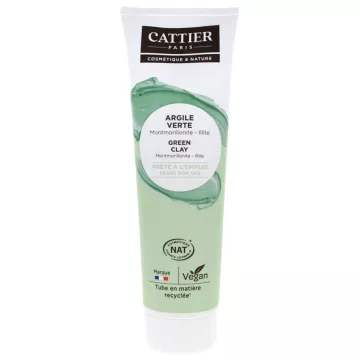
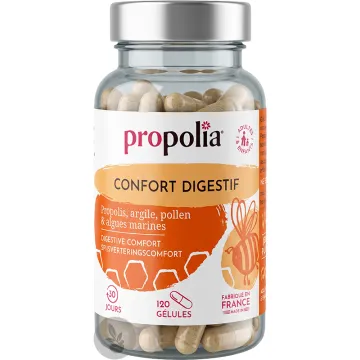
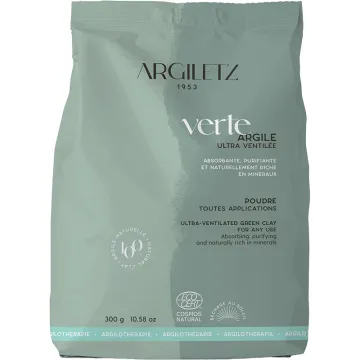
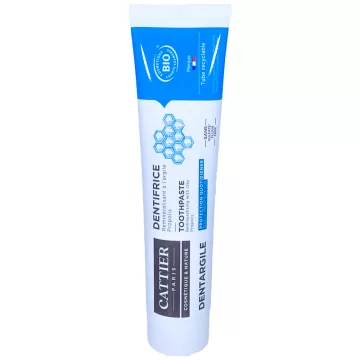
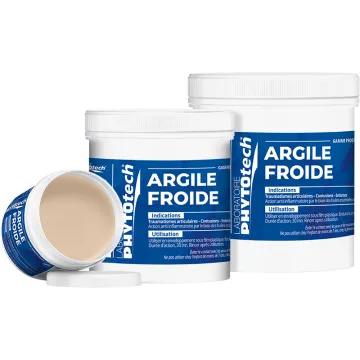
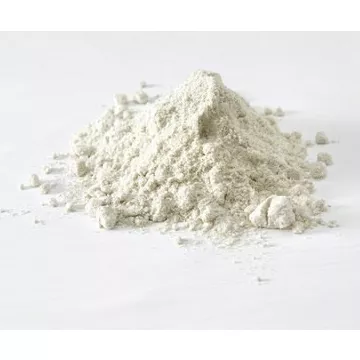
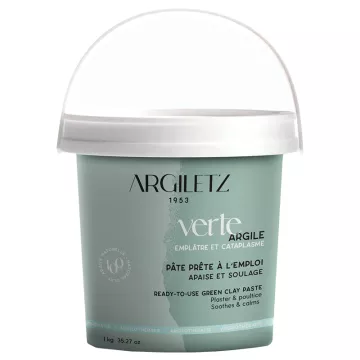
Are you looking for a natural solution to purify your skin or soothe your joints? Clay is undoubtedly one of the oldest remedies nature has given us, and yet it remains incredibly relevant today. At Soin-et-Nature, we’ve selected 100% natural clays for you—rich in minerals and recognized for their purifying, soothing, and remineralizing properties.
More detailsThere are several types of clay, generally classified by color (red, yellow, white, purple, green, etc.). Regardless of its type, clay contains alumina and at least 50% silica. In the health sector, green clays (illite or smectite) and white clays (kaolin) are primarily used.
Purifying, antiseptic, and 100% natural, thismiraculous earth comes in a variety of colors and benefits us both inside and out. Rich insilicaandminerals, clay is the natural remedy you should always have at home. It purifies, disinfects, and relieves certain types of pain. But that’s not all—it can be used for countlessbody, facial, and hair care treatments, allnaturally!
Clays are particularly valuable for their absorption and adsorption properties. They absorb liquids such as water, filling up much like a sponge.
Clays also have the ability to adsorb—that is, to bind molecules to their surface. This is because they carry a negative charge due to the presence of minerals. Thus, the higher the concentration of mineral salts in the clay, the more negatively charged it will be. Beyond its cosmetic properties, clay supports joint and gastrointestinal comfort, promotes wound healing, and aids drainage. Used for centuries in herbal medicine, clay is an integral part of naturopathy’s natural remedies, supporting the body both internally and externally.
Clay is a natural volcanic soil used for healing purposes; it is a natural source of minerals and trace elements (notably silica, aluminum silicates, magnesium, calcium, iron, phosphorus, sodium, potassium, copper, zinc, selenium, cobalt, manganese...) which it contains in varying proportions. The term “clay” refers to a wide variety of clay-bearing rocks, which can come in different colors (green, red, blue, yellow, gray, white, brown, pink...). Its color varies depending on the iron oxides (limonite) it contains.
White clay is gentler than green clay. White clay has a softening effect on the skin, while green clay is better suited for excessively oily skin.
Discover our new line of organic clays at your online organic pharmacy.
Clay contains alumina and at least 50% silica, as well as a variety of minerals such as magnesium, calcium, iron, phosphorus, and potassium, and trace elements like zinc, copper, and selenium. These components vary depending on the type and color of the clay, which are influenced by the iron oxides it contains.
Clay works through two main mechanisms:
Each type of clay is distinguished by its composition and specific properties, allowing for a variety of applications depending on therapeutic or cosmetic needs.
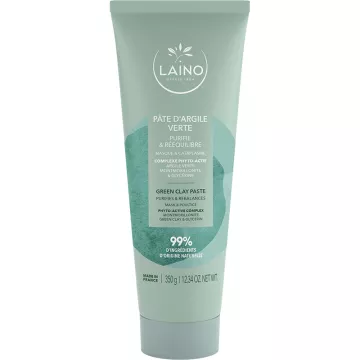
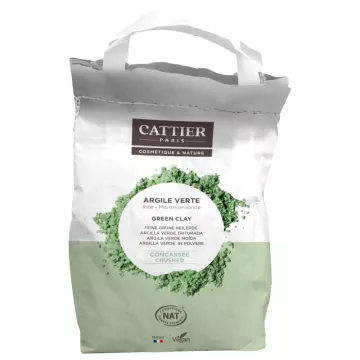
Green clay, composed mainly of illite or montmorillonite, is particularly renowned for its absorbent and purifying properties. Thanks to its high mineral content, it is ideal for regulating excess sebum in oily skin and deeply cleansing pores. For external use, it is applied as a poultice to relieve joint pain, reduce swelling in inflamed areas, and accelerate wound healing.
White clay, or kaolinite, is gentler and less active than green clay, making it a preferred choice for sensitive or dry skin. It softens the skin while providing a brightening and mattifying effect. In cosmetics, it is often combined with other clays for multifunctional skincare treatments. When taken internally, it can be used to soothe stomach irritation and regulate digestive issues thanks to its soothing effect on the mucous membranes.
Yellow clay, rich in iron oxides, revitalizes and tones dull or mature skin. It stimulates blood microcirculation, making it a key ingredient in skincare products designed to restore the skin’s radiance. When used as a mask, it restores vitality and firmness to the skin while absorbing impurities.
Red clay, characterized by its high iron content, is renowned for its soothing and detoxifying properties. It is ideal for reactive skin or skin prone to redness. When applied to the face or body, it purifies the skin while leaving it feeling soft and comfortable. It is also used as a poultice to stimulate blood circulation.
Blue clay, though less well-known, is an excellent ally for dull skin. Thanks to its purifying and revitalizing properties, it eliminates toxins and restores radiance and luminosity to the complexion. It is often recommended in cleansing or detoxifying treatments to revitalize tired skin.
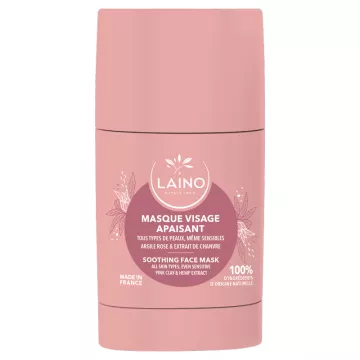
Finally, pink clay—a natural blend of red and white clay—combines the benefits of both varieties. Both gentle and purifying, it is ideal for sensitive or reactive skin, cleansing the epidermis while respecting its natural balance. It is frequently used in masks designed to soothe and refresh the face, while providing gentle care.
These different types of clay—whether applied as a mask, a poultice, or consumed as food—address specific needs, making each one a key ingredient for body care and health.
Soin-et-Nature offers a wide selection of herbal products to help you enjoy the benefits of medicinal plants and natural solutions for health and well-being. Here are the available categories:
These herbal products available on Soin-et-Nature allow you to easily incorporate the benefits of medicinal plants into your daily life, thanks to a natural approach that respects your health.