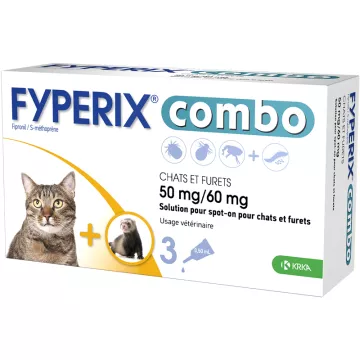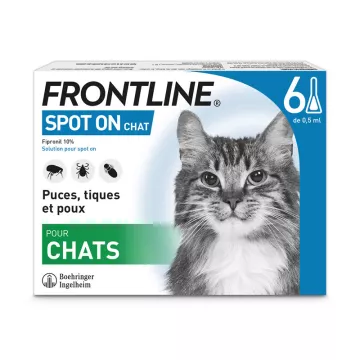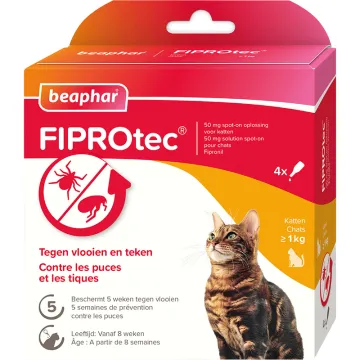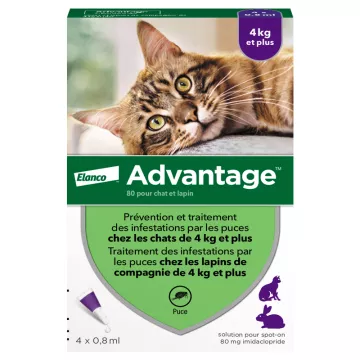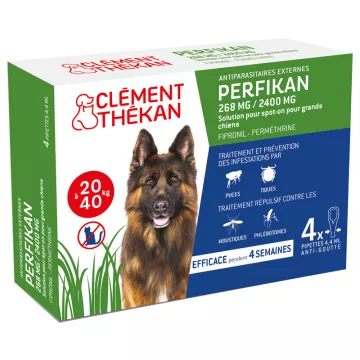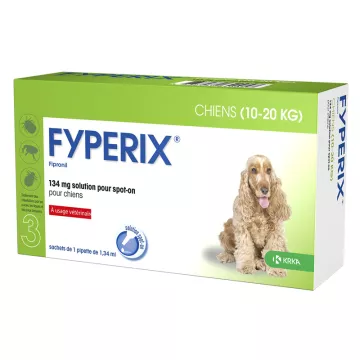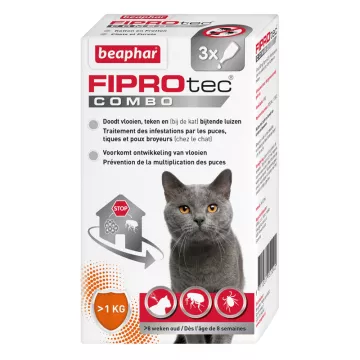
Spot-on pipettes are concentrated liquid solutions applied directly to the animal’s skin at one or more specific sites (back of the neck, base of the skull, interscapular area). The active ingredient diffuses through capillary action into the skin’s sebum and is distributed over the entire body surface within 24 to 48 hours. Fipronil (a phenylpyrazole that blocks the chloride channels of insects and arachnids) is effective against fleas and ticks. Imidacloprid (a neonicotinoid) specifically targets adult fleas. Permethrin (a synthetic pyrethroid), often combined with fipronil for dogs, extends the spectrum of activity to include mosquitoes and sand flies—but it is absolutely contraindicated in cats, whose metabolism cannot break it down. An effectiveflea treatment must always target both the animal and its environment.
Proper application ensures the treatment’s effectiveness and the animal’s safety:
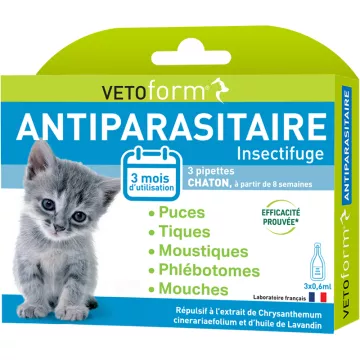
For cats, it is essential to verify that the pipette is approved for this species—a permethrin pipette intended for dogs can be fatal to a cat. Pipettes for kittens (tick and fleacontrol ) are available in weight-appropriate formulations starting at 8 weeks of age.
Most spot-on treatments provide protection for 4 to 8 weeks, depending on the active ingredient. During periods of heavy infestation (spring and fall), monthly application ensures continuous protection. Alternating between chemical classes (fipronil one month, imidacloprid the next) is recommended to limit the development of resistance—flea populations with partial resistance to fipronil have been documented in Europe. Treating the environment (bedding, couches, car) with a methoprene- or pyriproxyfen-based spray is essential: 95% of fleas are not found on the animal but in its environment. Pest control treatments are part of a comprehensive health protocol to be established with the veterinarian.
Some spot-on treatments are approved for rabbits (imidacloprid) and ferrets (fipronil + s-methoprene). Rabbits are particularly sensitive to many insecticides—no spot-on treatment containing permethrin or pyrethroids should be applied to them. Rabbit mange (Cheyletiella parasitovorax, highly contagious) and cat fleas (which can infest indoor rabbits) are the two most common skin parasites. In ferrets, ticks and fleas are the main ectoparasites—pipettes suitable for their weight are available but less widely distributed. Veterinary guidance is essential for these species, as their antiparasitic protocols are less standardized. A good antiparasitic regimen also complements protection against mosquito bites, which can transmit leishmaniasis in at-risk regions.
Spot-on treatments address ectoparasites but do not protect against endoparasites (intestinal worms, tapeworms). Regular deworming —every 3 months for an adult dog, every month for a puppy or a nursing cat—is essential as a supplement. Natural approaches can be used in conjunction with conventional treatment without replacing it: neem oil (azadirachtin, a natural repellent), diluted Bourbon geranium on the collar, or diatomaceous earth in the environment can help reduce parasite pressure. These methods alone are not sufficient in high-risk areas.
A veterinary consultation is necessary in several situations: very young puppies or kittens (weight and age thresholds vary by product), animals on medication (risk of interactions), rabbits or ferrets, for which treatment protocols are less standardized; geographic areas at risk for leishmaniasis or Lyme disease (enhanced protocols); or if the current treatment is found to be ineffective (persistent fleas despite proper application). After detecting a tick bite, remove the ectoparasite with a tick remover within 24 hours and monitor the animal for several weeks to detect any signs of a vector-borne disease. The veterinarian tailors the antiparasitic protocol to each animal’s specific lifestyle, environment, and health status.