When should Fyperix be used against fleas and ticks?
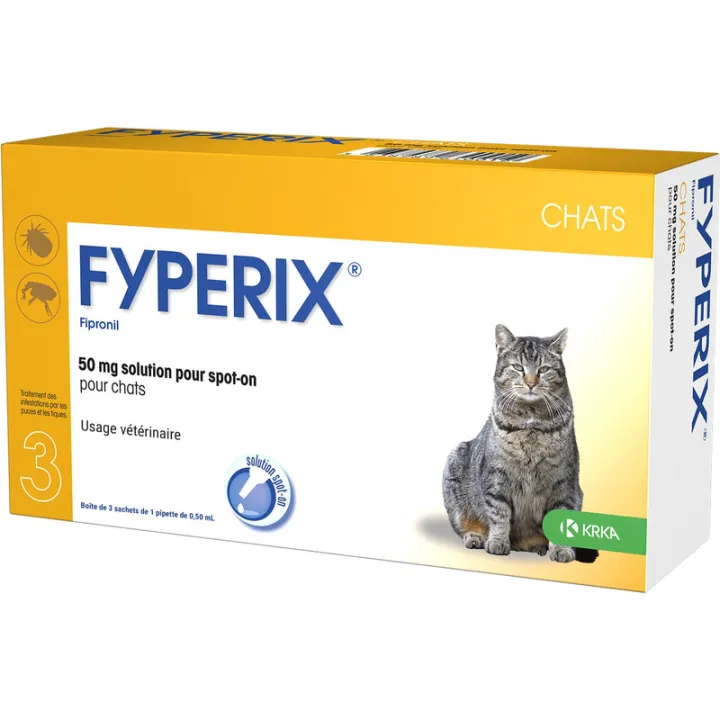
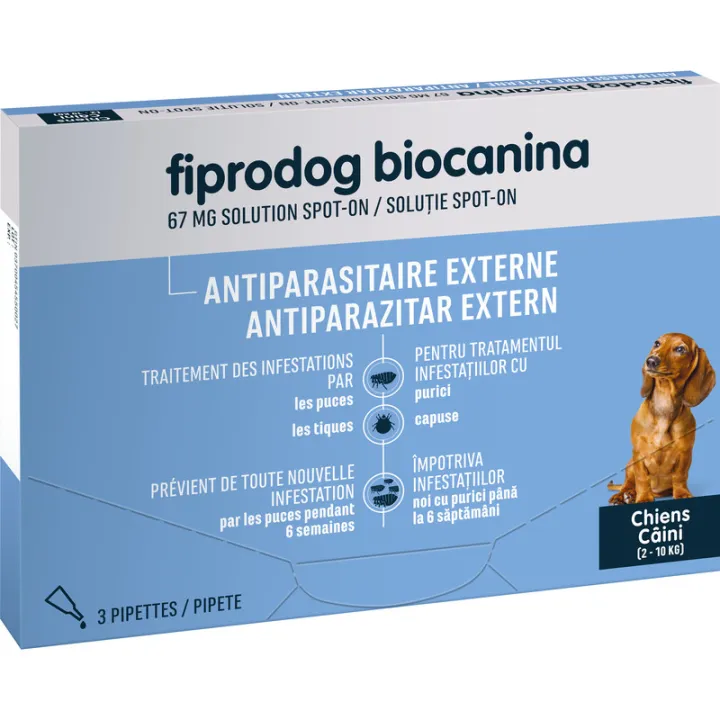
Fyperix is an external antiparasitic veterinary medicine based on fipronil, a substance of the phenylpyrazole family, presented as a spot-on solution. Each box contains 3 pipettes, whose dose depends on the species and weight: one pipette for cats, and four strengths for dogs, from small dogs over 2 kg to very large dogs of 60 kg.
It is indicated for the treatment of flea and tick infestations in cats and dogs, and for the treatment of biting lice infestations in dogs. Like other flea treatments for dogs and cats, it can be part of a treatment programme for flea allergy dermatitis (FAD), when this diagnosis has been made by the vet.
In dogs, the insecticidal action against new infestations by adult fleas lasts up to 8 weeks. The action against ticks lasts up to 3 weeks for Ixodes ricinus and up to 4 weeks for Rhipicephalus sanguineus and Dermacentor reticulatus.
In cats, protection against fleas and against Ixodes ricinus lasts up to 4 weeks, and up to one week against Dermacentor reticulatus and Rhipicephalus sanguineus. In both species, fipronil does not prevent ticks from attaching: they generally die within 24 to 48 hours, often before they have fed on blood, which reduces the risk of disease transmission without eliminating it.
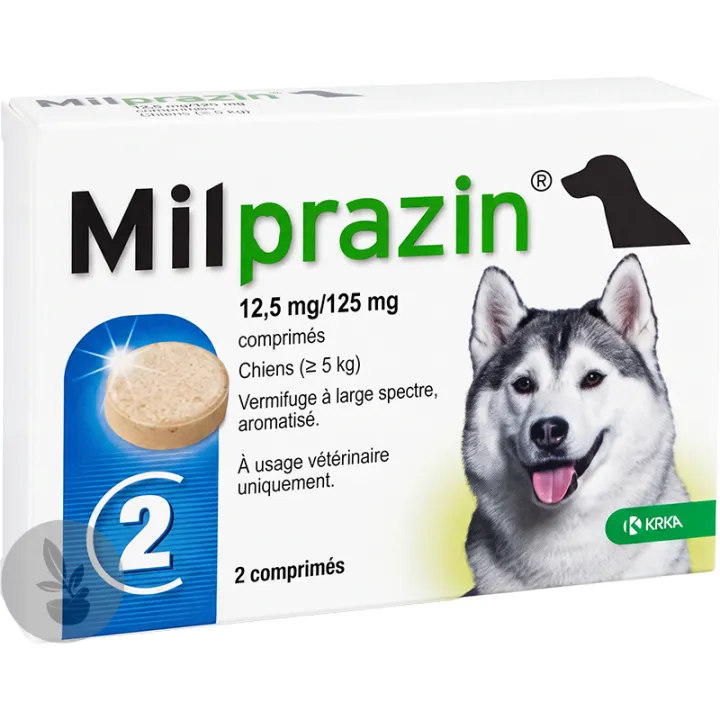
Fleas are the host of the tapeworm Dipylidium caninum: a dog that swallows a flea while grooming can become infected. For this, we suggest Milprazin wormer for dogs, which acts against flatworms and roundworms in the intestine, whereas fipronil acts on parasites of the skin and coat.
How do I apply this fipronil pipette?
Dosage
One pipette per animal, chosen according to its weight determined as accurately as possible, applied to the skin between the shoulder blades after parting the hair; in cats, empty the pipette at two points, at the base of the skull and then 2 to 3 cm further down. Leave at least 4 weeks between two treatments.
| Variant | Animal's weight | Pipette volume |
|---|
| Cat | 1 kg and over | 0.5 ml |
| Small dog | over 2 kg to 10 kg | 0.67 ml |
| Medium dog | over 10 kg to 20 kg | 1.34 ml |
| Large dog | over 20 kg to 40 kg | 2.68 ml |
| Very large dog | over 40 kg to 60 kg | 4.02 ml |
Above 60 kg, combine one very large dog pipette with the pipette suited to the remaining weight.
Precautions
- Do not use in kittens under 8 weeks of age or weighing less than 1 kg, or in puppies under 2 months of age or weighing less than 2 kg.
- Do not use in sick or convalescent animals.
- Never use in rabbits: adverse reactions, sometimes fatal, have been observed.
- Never apply a dog pipette to a cat: risk of overdose.
- Do not use in cases of known hypersensitivity to fipronil or to any of the excipients.
- Pregnant or lactating females: use is decided with the vet, after a benefit/risk assessment.
- Apply to healthy skin, in a place the animal cannot lick, and prevent treated animals from licking each other. Do not apply to a wound. Avoid contact with the animal's eyes; in case of contact, rinse thoroughly with water.
- In dogs, avoid any bathing or immersion in water for two days after application. Fipronil is dangerous for fish and aquatic organisms: do not let the animal swim in a river or pond during this period.
- In case of heavy infestation, also treat baskets, bedding and resting areas, and vacuum regularly. Treat all dogs and cats in the household.
- For the person applying the product: avoid contact with the mouth and eyes; in case of contact with the eyes, rinse with water and see a doctor if irritation persists, showing them the package leaflet. Do not eat, drink or smoke during application, and wash your hands after use. People allergic to fipronil, dimethyl sulfoxide or any of the excipients should avoid all contact with the product.
- Do not stroke the animal and do not let children play with it until the application site is dry. Treat preferably in the early evening, and do not let the treated animal sleep with its owners, especially children.
- The coat may look sticky or greasy at the application site for about 24 hours.
- Very rare adverse reactions: skin reaction at the application site (redness, itching, hair loss), excessive salivation, vomiting, reversible neurological signs. Brief salivation may also occur if the animal licks the application site. If a reaction occurs, consult the vet.
- Store the pipettes in their original packaging, protected from light and moisture. Leave the pipette at room temperature (above 14 °C) for about an hour before application. Throw the pipette away as soon as it has been used, without disposing of it in drains or watercourses. Keep out of the reach of children.
Read the package leaflet carefully before use. Ask your pharmacist or vet for advice.
What is the composition of Fyperix?
Active substance
| Variant | Fipronil per pipette |
|---|
| Cat | 50 mg |
| Small dog | 67 mg |
| Medium dog | 134 mg |
| Large dog | 268 mg |
| Very large dog | 402 mg |
Excipients with known effect
Butylhydroxyanisole (E320), 0.2 mg per ml of solution, Butylhydroxytoluene (E321), 0.1 mg per ml of solution.
Other excipients
Polysorbate 80, Povidone K25, Dimethyl sulfoxide.
Presentation
Spot-on solution. Box of 3 single-dose pipettes, each in a sachet.
Our expert advice on Fyperix
The mistake that matters here is not forgetting an application, it is mixing up pipettes. The very large dog pipette contains eight times the dose of the cat pipette, and the cat is precisely the species that does not tolerate fipronil dosed for a dog. In a household with both a cat and a dog, keep each box separately, and weigh the animal before buying rather than guessing.
The re-treatment schedule depends on the parasite targeted: in dogs, protection against fleas lasts longer than protection against ticks. In tick season, it is therefore the duration against ticks that sets the calendar, not the one against fleas, without ever bringing two treatments closer than the stated interval.
FAQ
Can I use Fyperix on my ferret?
No. Fyperix is authorised for cats and dogs only. Another product in the same range, Fyperix Combo for cats and ferrets, combines fipronil and methoprene and its authorisation covers ferrets. The choice is made with the pharmacist or vet.
Can I bathe my dog regularly during treatment with Fyperix?
Repeated baths shorten the protection. In trials, a one-minute immersion every week reduced efficacy against fleas in dogs to 7 weeks instead of 8. There are no data on the effect of shampoos, or on bathing in cats.
Can I split a large dog Fyperix pipette between two small dogs?
No. Each pipette is a single dose, calculated for one animal of a given weight range. Splitting it means applying an inaccurate dose to each dog, which can reduce efficacy or lead to overdose. Each dog receives the pipette for its own weight range.
Does Fyperix protect my dog against mosquitoes?
No. Fyperix is indicated against fleas and ticks, and against biting lice in dogs. It has no indication against mosquitoes or sandflies, vectors of leishmaniasis, for which other products exist.