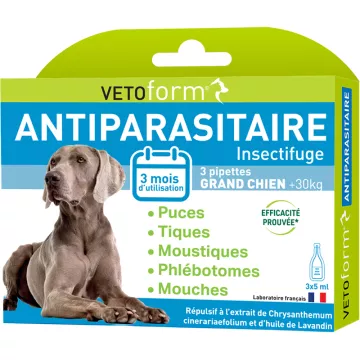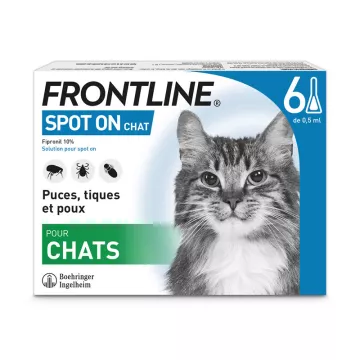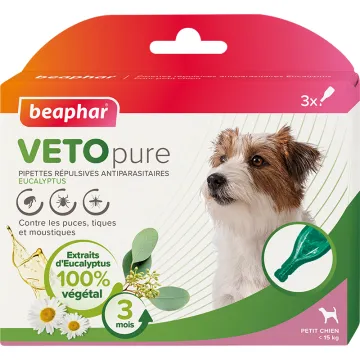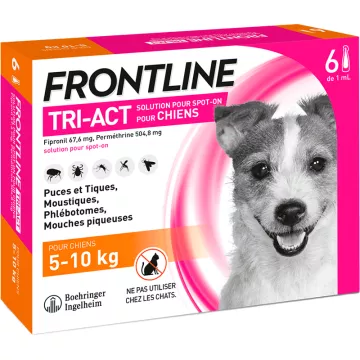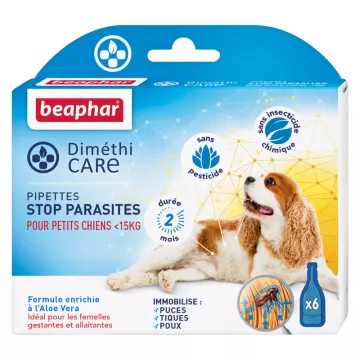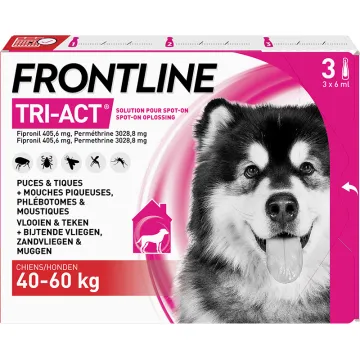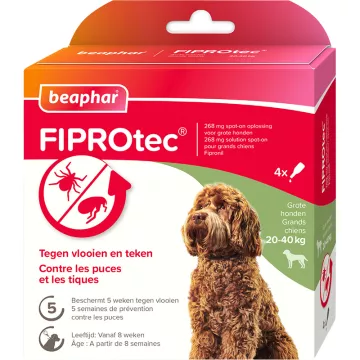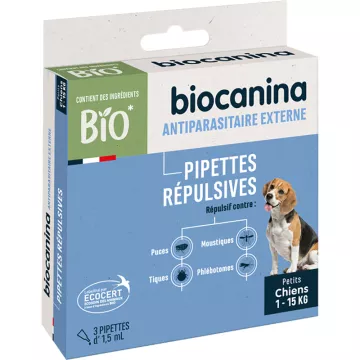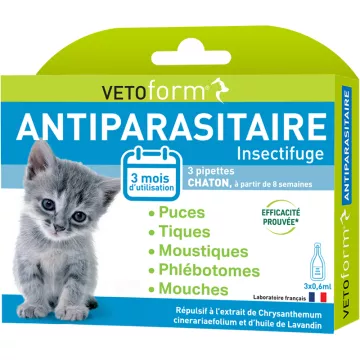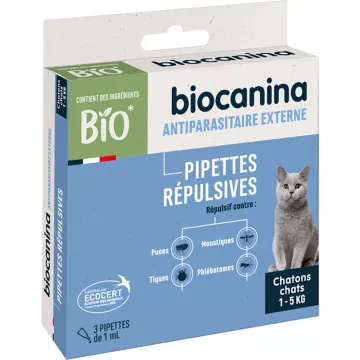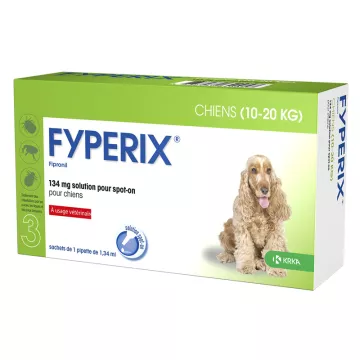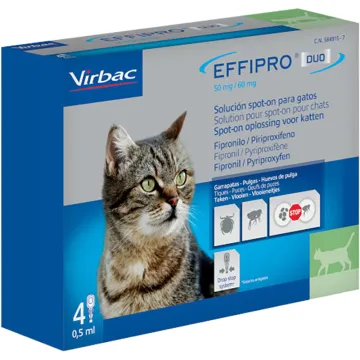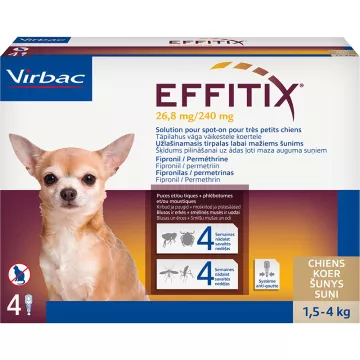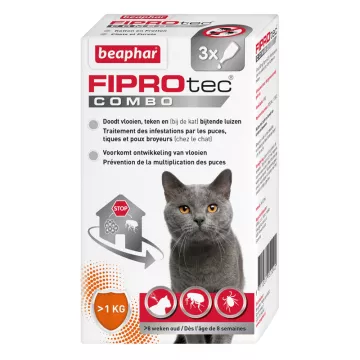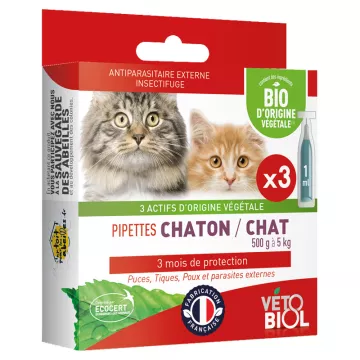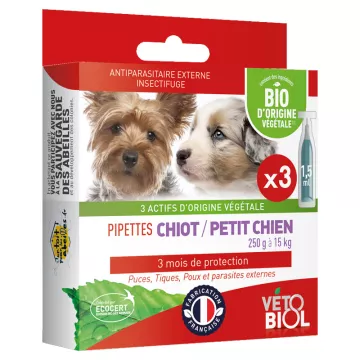
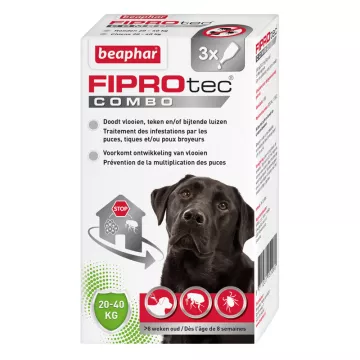
Pest control pipettes fall into two main categories: those containing synthetic insecticides (fipronil, imidacloprid) and natural or organic pipettes made with plant-based active ingredients. Natural pipettes use essential oils with repellent properties (geraniol, lavender, lemon eucalyptus, neem, citronella) that keep insects away through olfactory repulsion—they do not eliminate existing parasites but prevent them from settling on the animal. Dimethicone (a non-toxic silicone, or physical agent) works differently: by mechanically coating the insects and blocking their respiratory spiracles, it kills fleas without using any chemical active ingredients. Natural spot-on treatments generally have a more favorable safety profile for puppies, kittens, pregnant or nursing females, and animals with sensitive skin.
Repellent spot-on formulas combine several essential oils to cover a broad spectrum of pests:
These active ingredients are diluted in a base of vegetable oil or dimethicone to ensure their stability and gradual release. Java citronella (citronellal + geraniol) is the most commonly used natural odor-based repellent in organic formulas for animals.
The effectiveness of natural spot-on treatments depends more on regular application than chemical ones—their protection lasts for a shorter period (2 to 4 weeks compared to 4 to 8 weeks for synthetic products). Apply directly to dry skin—on the nape of the neck or the area between the shoulder blades—while holding the animal still for a few minutes. Reapplication every one or two months is essential during periods of high parasite infestation. Rose geranium (Pelargonium x asperum, geraniol + citronellol) is one of the repellent plants best tolerated by cats and puppies—unlike tea tree or cinnamon, which can be irritating or neurotoxic at high concentrations. Supplement with an essential oil repellent collar between applications to maintain continuous protection.
Pest control spot-on treatments—whether natural or synthetic—work exclusively on the skin’s surface against ectoparasites (fleas, ticks, mosquitoes). They do not protect against intestinal parasites. However, pinworms and other worms are common in dogs and cats that hunt or go outside regularly. A comprehensive parasite control regimen therefore combines external repellent spot-on treatments with regular internal deworming (every 3 months for an adult, every month for a puppy). Protection against roundworms is particularly important in young animals whose immune systems are still immature.
Pregnant or nursing females require special precautions. Most spot-on treatments containing synthetic insecticides are not recommended during pregnancy (potential teratogenic risk) or while nursing (risk of exposure to the puppies or kittens). Dimethicone-based spot-on treatments (non-absorbed, non-systemic) and certain low-concentration geraniol formulations have a more favorable risk profile—but any use must be approved by a veterinarian. Environmental measures (treating the whelping box, frequent vacuuming, treating other animals in the household) are the safest approach to protecting the mother and newborns during this sensitive period.
Natural spot-on treatments are suitable for prevention and protection in areas with low or moderate parasite pressure. In areas at high risk for leishmaniasis (southern France, the Mediterranean region) or Lyme disease, veterinarians generally recommend synthetic insecticides, whose effectiveness against sand flies and ticks is better documented. In cases of confirmed infestation (visible fleas on the animal or in the environment), natural spot-on treatments alone will not be sufficient to quickly eradicate the colony—they must be supplemented with a chemical treatment for the animal and an environmental treatment. Flying insects such as mosquitoes sometimes require additional measures (mosquito nets, room sprays) in addition to spot-on treatments, particularly during the summer months in regions at risk for vector-borne diseases.