When should these flea treatment pipettes for cats and ferrets be used?
Fipronil/S-Methoprene Viatris for Cats and Ferrets is a veterinary medication for external parasites, available in 0.5-ml spot-on pipettes. Each pipette contains 50 mg of fipronil, an insecticide and acaricide, and 60 mg of (S)-methoprene, a growth regulator that blocks the development of flea eggs and larvae. One pipette is suitable for one cat, regardless of weight, or for one ferret. It is one of the antiparasitic treatments available for cats and kittens.
For cats, it is indicated for the treatment of flea infestations, either alone or in combination with ticks and/or chewing lice. Adult fleas are eliminated for 4 weeks, and the development of eggs, larvae, and nymphs is blocked for 6 weeks.
In cats, it is also effective against ticks, with protection lasting up to 2 weeks, and against chewing lice. It may be used, under veterinary supervision, as part of the treatment for flea bite allergy dermatitis.
For ferrets, it is indicated for the treatment of flea infestations, either alone or in combination with ticks, with efficacy lasting 4 weeks. Cats may be treated during pregnancy and lactation; for female ferrets, use during these periods is subject to a veterinarian’s recommendation.
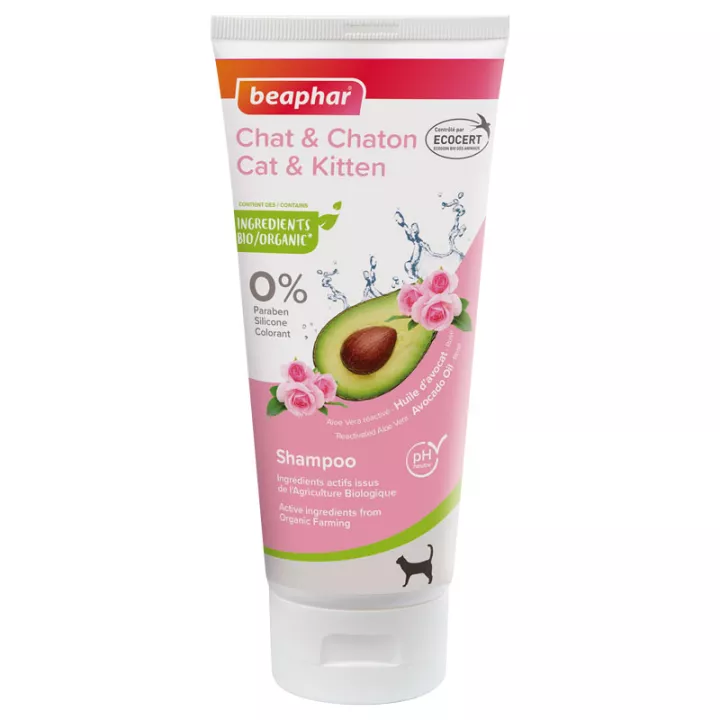
Before treatment, a clean coat facilitates direct application to the skin. We recommend using Beaphar Organic Cat and Kitten Shampoo for this purpose, at least 48 hours before applying the spot-on treatment—never within the two days following application.
How do you apply this spot-on pipette to a cat?
Dosage
For external use only. One 0.5-ml pipette per cat, regardless of weight, or one pipette per ferret. Part the fur at the base of the neck, between the shoulder blades, until the skin is visible; place the applicator tip against the skin and empty the entire pipette in a single spot. Allow a minimum of 4 weeks between treatments.
Precautions
- Do not use on kittens younger than 8 weeks and/or weighing less than 1 kg, or on ferrets younger than 6 months.
- Do not use on sick or convalescing animals, or on rabbits. Do not use in cases of hypersensitivity to the active ingredients or excipients.
- Do not apply to a wound or broken skin; avoid contact with the animal’s eyes.
- Apply to an area that the animal cannot lick, and prevent treated animals from grooming each other. Temporary salivation may occur if the animal licks the application site.
- Do not bathe the animal within 2 days of application.
- Local skin reactions, itching, excessive salivation, or vomiting have been reported very rarely: consult your veterinarian if any adverse reaction occurs.
- Do not handle the animal and keep children away until the application site is dry; wash your hands after use.
- Store the pipettes in their original packaging. Keep out of the sight and reach of children.
Read the package insert carefully before use and ask your pharmacist or veterinarian for advice.
What are the ingredients in these fipronil cat pipettes?
Active ingredients and excipients with known effects, per 0.5-mL pipette
| Component |
Amount |
| Fipronil |
50 mg |
| (S)-methoprene |
60 mg |
| Butylhydroxyanisole (E320) |
0.1 mg |
| Butylhydroxytoluene (E321) |
0.05 mg |
The complete list of excipients is provided in the package insert.
Packaging
Box of 3 single-dose 0.5-mL spot-on pipettes, providing three months of treatment at a rate of one application every 4 weeks for cats.
Our Expert Advice on Fipronil/S-Methoprene Viatris for Cats and Ferrets
For cats, the most serious mistake is using a pipette intended for dogs: some contain permethrin, which is fatal to cats. This product is specifically designed for cats, but always check the species indicated on the package, especially in households with both dogs and cats.
The protection against ticks lasts for a shorter period than against fleas—two weeks for cats: if a cat hunts outdoors in the spring, check it upon return, and remove any ticks with a tick remover, without using any product. In an infested household, treat all pets on the same day and wash their bedding at 60 °C.
FAQ
Is Viatris Cat and Ferret Fipronil/S-Methoprene suitable for kittens?
Yes, for kittens 8 weeks of age or older and weighing at least 1 kg. The treatment is not suitable for kittens younger than this or weighing less than this.
How long does a Viatris Fipronil/S-Methoprene pipette last in cats?
It eliminates adult fleas for 4 weeks, prevents the development of eggs and larvae for 6 weeks, and is effective against ticks for up to 2 weeks.
Can Viatris Fipronil/S-Methoprene be used on rabbits?
No. Rabbits are among the contraindications for this medication: they should never be treated with these pipettes.