When should Biocanina Triodental be used for oral hygiene?
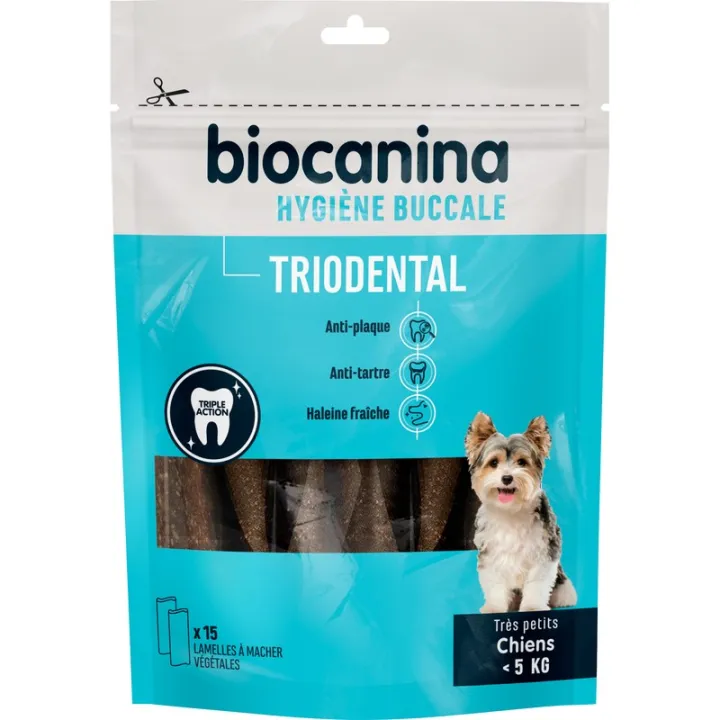
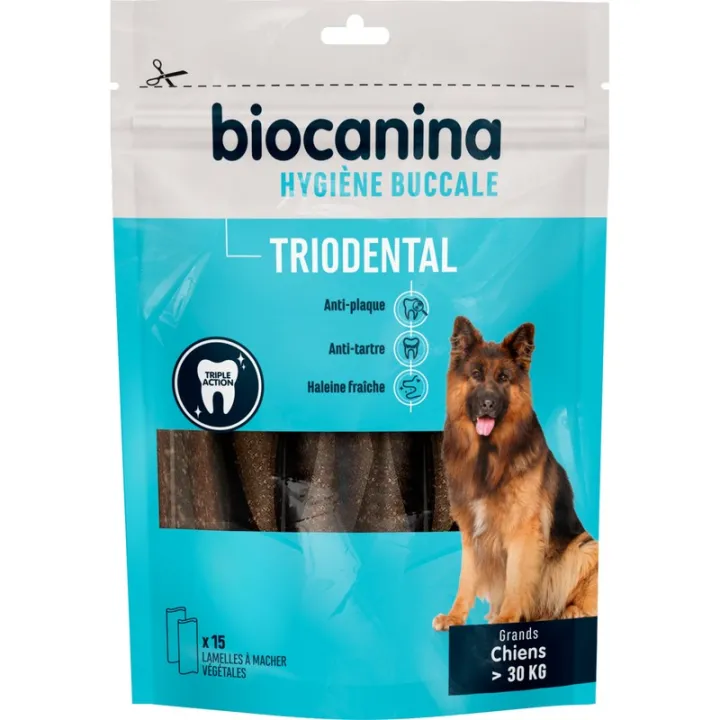
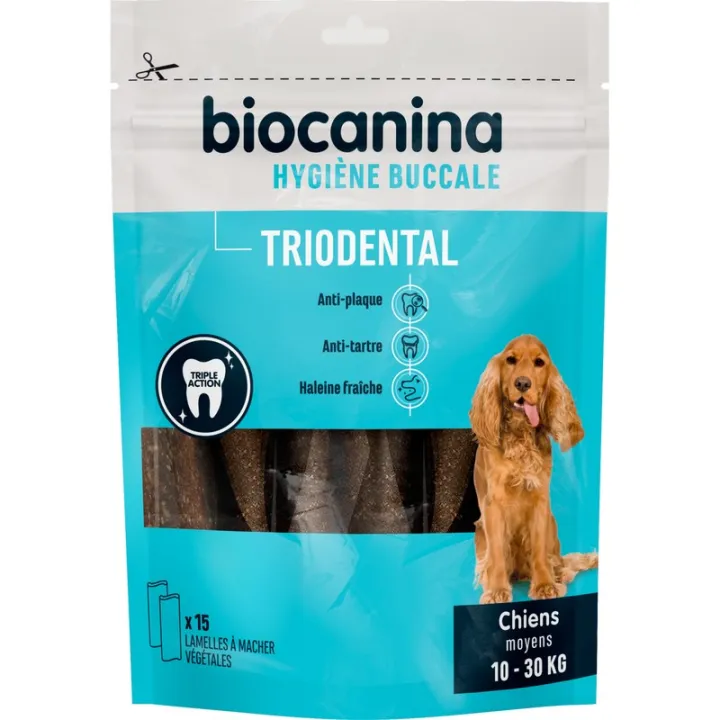
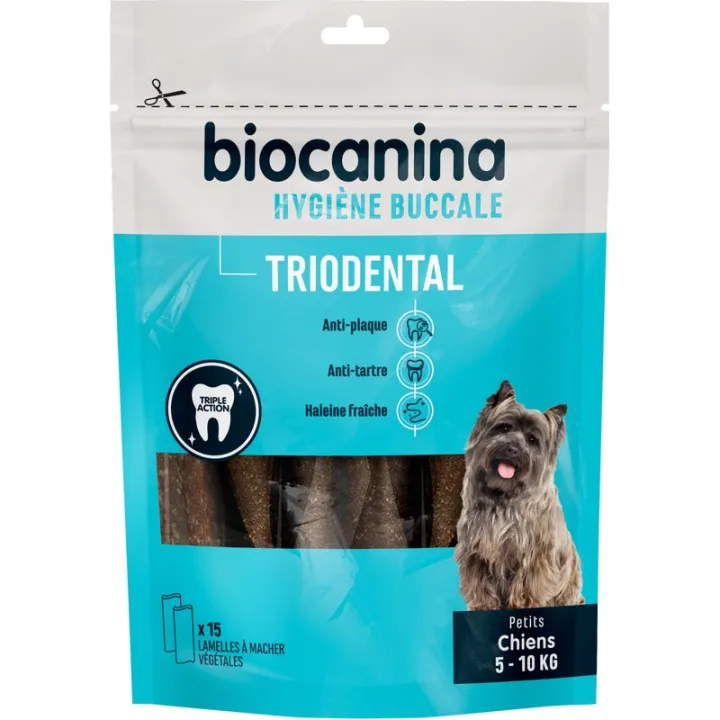
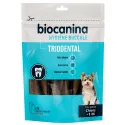
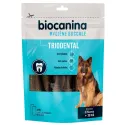
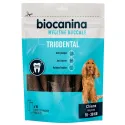
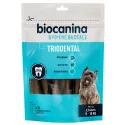
Biocanina Triodental is a dietary supplement for dogs that comes in the form of chewable vegetable strips. Each strip combines cornstarch, soy protein, rice flour, brewer’s yeast, and pomegranate concentrate in a Z-shaped design with a deliberately abrasive texture. It comes in four sizes to ensure the strip is proportionate to the dog’s jaw.
It all comes down to chewing. As the dog chews, the surface of its teeth rubs against the abrasive texture, and the ridges of the Z-shape reach into the spaces between the teeth. This mechanical cleaning, repeated daily, helps reduce the buildup of plaque and tartar—the film that forms after meals and hardens if not removed.
This same action helps improve dental hygiene and maintain fresh breath—two benefits that owners often mention first. The strip fits right in among other oral hygiene products for dogs and cats, and is the easiest to administer.
It is particularly beneficial for very small dogs, whose teeth, tightly packed in a narrow jaw, easily trap debris. It is given as a daily treat—upon returning from a walk or after a meal—making it a ritual the dog looks forward to rather than a treatment it endures.
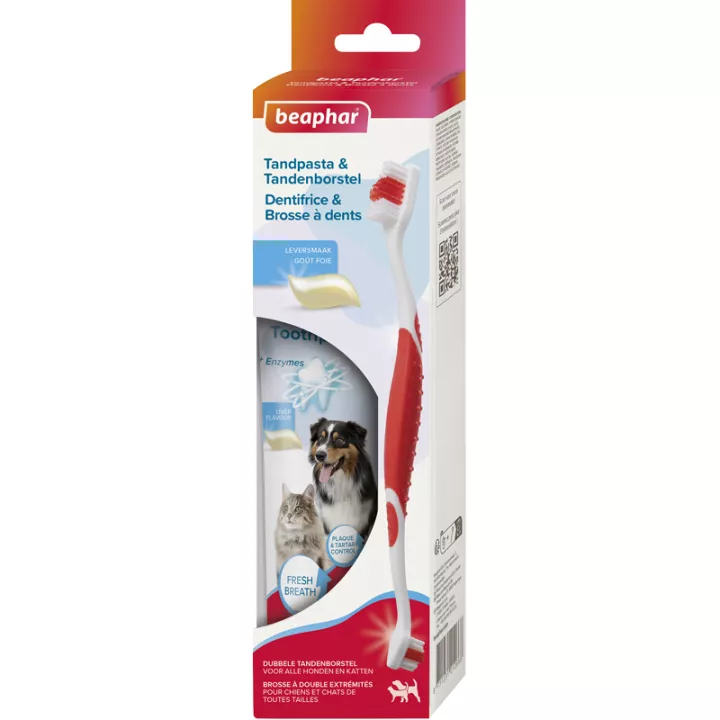
We recommend using it in combination with the Beaphar Combi-Pack Toothpaste and Toothbrush. The two methods complement each other: the chew strip works on the surfaces the dog chews, while the brush and enzymatic toothpaste clean the area where the tooth meets the gum—an area that chewing alone doesn’t reach as effectively.
How should you give these chew strips to your dog?
Directions for Use
Give your dog 1 chew strip per day and provide a bowl of fresh water.
Share your feedback on the usage instructions and dosage for Biocanina Triodental Dog Oral Hygiene 15 Chew Strips with our partner. Reviews are verified after your purchase.
Precautions
- Dietary supplement for dogs: this product is not a substitute for a complete and balanced diet.
- Do not exceed the recommended daily amount. The polyols in the formula (sorbitol, erythritol) may cause soft stools if consumed in excess.
- For dogs only.
- Choose the size appropriate for your dog’s weight. A strip that is too small for your dog’s jaw may be swallowed without being chewed, posing a risk of choking or digestive obstruction.
- Monitor your dog while it is chewing, especially if it eats quickly, and remove the last piece if it becomes small enough to be swallowed whole.
- Puppies under 6 months old whose baby teeth have not yet been replaced: consult your veterinarian before starting.
- Senior dogs, dogs with broken or loose teeth, or dogs that experience pain when chewing: Since the texture is firm, have the dog’s mouth examined by a veterinarian before starting.
- Dogs allergic or intolerant to any of the ingredients, particularly soy, corn, rice, or brewer’s yeast: Do not feed.
- Dogs being treated for kidney failure, an acute digestive disorder, or obesity, or those on a veterinary diet: consult your veterinarian. The strips provide energy that should be factored into the daily food allowance.
- Persistent bad breath despite daily use, red or bleeding gums, or difficulty chewing: consult your veterinarian; these symptoms are not related to a dietary supplement.
- Not intended for human consumption.
- Store at room temperature in a dry place. Close the bag tightly after use. Keep out of reach of children and dogs.
What are the ingredients in these vegetable strips for dogs?
Ingredients
Corn starch, glycerin, soy protein concentrate, rice flour, brewer’s yeast, sorbitol, corn cobs, polyol (erythritol), chicory inulin, pomegranate concentrate.
Analytical Constituents of Biocanina Triodental
| Analytical Constituent |
Content |
| Crude Protein |
19.0% |
| Crude ash |
1.8% |
| Crude fiber |
1.3% |
| Crude fat |
0.9% |
Packaging
Pack of 15 chew strips, enough for 15 days at a rate of one strip per day. Four sizes: very small dogs under 5 kg, small dogs from 5 to 10 kg, medium dogs from 10 to 30 kg, and large dogs over 30 kg.
Our expert advice on Biocanina Triodental for oral hygiene
Choosing the right size is the most important purchasing decision, and it determines the most critical consideration on this list. The effectiveness comes from the time spent chewing: a dog that finishes a strip in just a few bites gets almost no benefit from it. Pay attention to the first few strips. For a dog on the cusp between two sizes—around 5, 10, or 30 kg—the larger size is the safest choice: it requires more chewing.
Next, consistency is key—far more so than quantity. Once a month, lift the dog’s lips and check the large back molars, where tartar first appears. A yellow or brown discoloration that sets in at the gum line despite daily use of dental strips is a sign that, for this dog, chewing alone is no longer enough.
FAQ
Can Biocanina Triodental strips replace brushing my dog’s teeth?
No. Brushing remains the gold standard for canine oral hygiene, ideally several times a week. The strip is used as a supplement on days when you don’t brush, or for dogs that won’t tolerate a toothbrush.
Does Biocanina Triodental remove tartar that has already formed on my dog’s teeth?
No. Its mechanical action targets the formation of plaque and tartar, not already hardened deposits. Established tartar must be removed by a professional scaling at the veterinarian’s office; the strip is then used to maintain the results.
Is Biocanina Triodental suitable for my dog with a meat allergy?
Its ingredients list contains no animal-derived ingredients, and its protein comes primarily from soy. It may therefore be suitable for a dog with an allergy to meat proteins.