Benign Prostatic Hyperplasia: Definition and Symptoms
Prostate disorders primarily include benign prostatic hyperplasia (BPH), prostatitis, and prostate cancer. BPH affects 50% of men over the age of 50 and 90% of men over the age of 80. Its symptoms (LUTS):
- Obstructive symptoms: weak urine stream, dysuria, sensation of incomplete bladder emptying.
- Irritative symptoms: frequent urination, nocturia, urinary urgency.
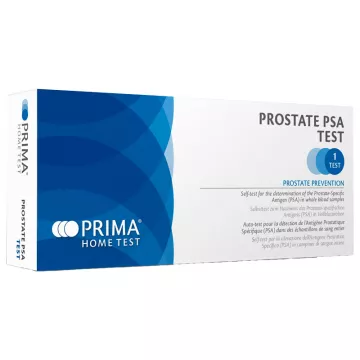
BPH is a benign, non-cancerous condition, but its symptoms can progress and impair quality of life. A urological evaluation (digital rectal exam, PSA test, bladder and prostate ultrasound) is essential as soon as urinary symptoms appear to rule out cancer and tailor treatment.
What hormonal mechanisms cause prostate enlargement?
BPH results from prostate cell proliferation induced by androgens. The central mechanism:
- Conversion of testosterone to DHT by type 2 5α-reductase: DHT is five times more potent at the prostate androgen receptor. Medications (finasteride, dutasteride) specifically target this enzyme.
- Increase in the estradiol-to-testosterone ratio with age and body fat (adipocyte aromatase): potentiates DHT-mediated prostate stimulation.
- Local growth factors (IGF-1, EGF, FGF): stimulate prostate proliferation independently of androgens.
Does stinging nettle support prostate health in BPH?
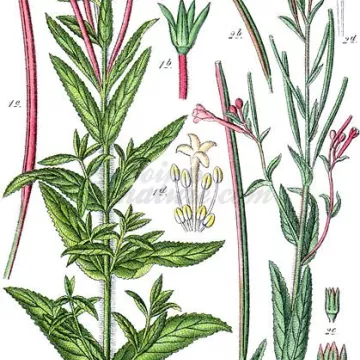
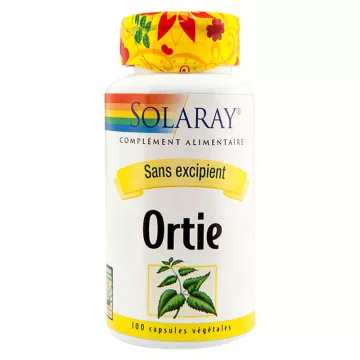
Stinging nettle (Urtica dioica, standardized root extract) is one of the best-documented herbs for prostate support. Its mechanisms:
- Inhibition of SHBG (sex hormone-binding globulin): reduces binding to testosterone, modulating androgenic stimulation of the prostate.
- Partial inhibition of aromatase: reduces the conversion of testosterone to estradiol.
- Inhibition of prostatic Na⁺/K⁺-ATPase: reduces cell proliferation.
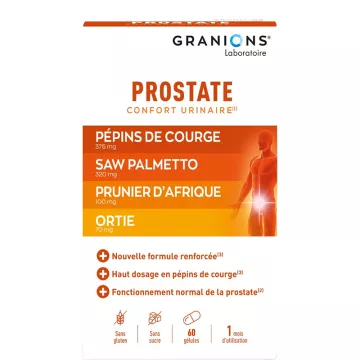
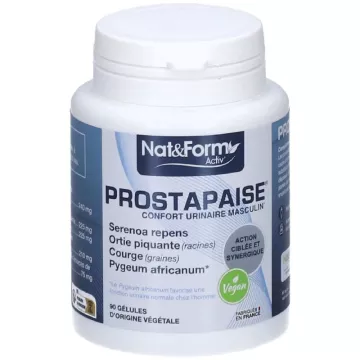
Randomized clinical trials (Safarinejad, 2005; Lopatkin, 2007) show a significant reduction in IPSS scores in patients with BPH. It is often combined with saw palmetto (Serenoa repens) due to their documented synergistic effects.
Lycopene and resveratrol: antioxidant protection for the prostate?
Two antioxidants with complementary mechanisms of action on prostate health:
- Lycopene: accumulates at concentrations 10 times higher in the prostate. It reduces oxidative stress in the prostate, inhibits cell proliferation via IGF-1, and modulates cell differentiation. Meta-analyses show an inverse association between lycopene intake and the risk of prostate diseases. Bioavailability is highest in tomatoes cooked with olive oil.
- Resveratrol: activates SIRT1 and inhibits NF-kB, reducing pro-inflammatory cytokines (IL-6, TNF-α) in prostate tissue. Preclinical studies show an antiproliferative effect on prostate cells. Clinical data remain preliminary.
Do vitamin E and coenzyme Q10 protect the prostate?
Two fat-soluble antioxidants for prostate cell protection:
- Vitamin E (gamma and delta tocotrienols): protects prostate cell membranes against lipid peroxidation. Tocotrienols have demonstrated anti-proliferative activity against prostate cells in vitro, superior to that of conventional tocopherols.
- Coenzyme Q10 (ubiquinol): improves mitochondrial bioenergetics in prostate cells with high metabolic activity. Preliminary studies show a reduction in biomarkers of prostate oxidative stress.
Diet and Lifestyle for Prostate Health
The strongest epidemiological evidence pertains to lifestyle factors:
- Mediterranean diet: associated with a reduced risk of BPH in large cohorts. Its key components: omega-3 (fatty fish), lycopene (tomatoes), cruciferous vegetables (sulforaphane), and polyphenols (olive oil).
- Weight control: Abdominal obesity increases aromatase activity and exacerbates prostate stimulation. A 5–10% weight loss improves LUTS in obese men in intervention studies.
- Regular physical activity: reduces pelvic venous congestion, improves insulin sensitivity (reducing prostatic IGF-1 levels), and reduces systemic inflammation.
- Regular screening: Annual digital rectal exams and PSA tests are recommended starting at age 50 (age 45 if there is a family history of prostate cancer).