What is vitamin E, and why is it essential?
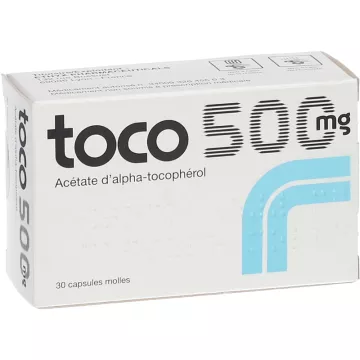
Vitamin E refers to a family of eight fat-soluble molecules (tocopherols and tocotrienols), of which α-tocopherol is the most biologically active form. As the body’s primary fat-soluble antioxidant, it protects cell membranes against lipid peroxidation by neutralizing free radicals that attack the polyunsaturated fatty acids in membrane phospholipids. Unlike many antioxidants, it is directly incorporated into the lipid bilayers of cells. For details on chemical forms and cosmetic applications, visit our tocopherol page. Explore our vitamin E formulations and natural antioxidants.
- Membrane antioxidant role: Cell membranes contain polyunsaturated fatty acids (PUFAs) that are extremely sensitive to free radicals (singlet oxygen, hydroxyl radical, peroxyl) → initiation of a lipid peroxidation chain reaction → membrane damage — vitamin E “stops” this chain reaction by donating a hydrogen atom to the lipid radical → it is itself oxidized and then regenerated by vitamin C
- RDA and optimal requirements: Adult RDA (ANSES) = 12 mg/day of α-tocopherol — increased requirements: a diet rich in polyunsaturated fatty acids (increases the number of substrates to be protected) — smokers — elite athletes — seniors — people on low-fat diets (reduced absorption) — pregnant women: 15 mg/day recommended
- Vitamin E deficiency: rare in developed countries (due to vegetable oils) — occurs mainly in cases of fat malabsorption (IBD, cystic fibrosis, cholestasis, abetalipoproteinemia) — signs: peripheral neuropathy (tingling, coordination problems) — spinocerebellar ataxia — pigmentary retinopathy — muscle weakness — hemolytic anemia (fragility of red blood cells)
- Bioavailability: absorbed with dietary lipids (bile + pancreatic lipase) — transported by chylomicrons in the lymph and then by LDL and HDL in the blood — the hepatic protein α-TTP ensures preferential retention of α-tocopherol — always take vitamin E with a meal containing fat to optimize absorption
- Storage: stored in cell membranes, adipose tissue, and the liver — highest concentrations in the liver, lungs, heart, and adrenal glands — long half-life (several weeks in adipose tissue)
Dietary sources and foods richest in vitamin E
- Vegetable oils: wheat germ oil (150 mg/100 mL—the most concentrated source)—sunflower oil (56 mg/100 mL)—hazelnut oil (47 mg/100 mL) — safflower oil (43 mg/100 mL) — extra virgin olive oil (14 mg/100 mL, mostly γ-tocopherol) — 1 tablespoon of sunflower oil ≈ 5–6 mg of vitamin E
- Nuts and seeds: almonds (26 mg/100 g — a convenient daily source) — hazelnuts (15 mg/100 g) — sunflower seeds (35 mg/100 g) — pine nuts (9 mg/100 g) — a small handful of almonds (30 g) ≈ 8 mg of vitamin E
- Vegetables and fruits: avocado (2.1 mg/100 g — a source of β-tocopherol) — raw spinach (2 mg/100 g) — cooked broccoli (1.4 mg/100 g) — kale (1.5 mg/100 g) — mango (0.9 mg/100 g) — green vegetables are primarily a source of γ-tocopherol (anti-inflammatory against nitrogen-based ROS)
- Animal products: low in vitamin E — eggs (1.1 mg/100 g) — fatty fish (0.5–1 mg/100 g) — cannot meet daily requirements on their own
- Destruction: Vitamin E is sensitive to oxidation, high heat, and light — oils heated to high temperatures (frying) lose their tocopherol content — store vitamin E-rich oils in opaque bottles, away from heat and light
Vitamin E, Immunity, Cardiovascular, and Eye Health
- Immunity and inflammation: Vitamin E is concentrated in immune cells (T lymphocytes, macrophages, neutrophils)—at 200 mg/day, it improves the immune response in older adults (positive clinical studies—Meydani SN et al.)—inhibits 5-lipoxygenase → reduces the production of leukotrienes (inflammatory mediators) — γ-tocopherol is particularly active against nitrogen-containing ROS (peroxynitrite) — at dietary doses (12–15 mg/day): moderate immunostimulatory + anti-inflammatory effect
- Cardiovascular health: prevents LDL oxidation (oxidized LDL = triggers of atherosclerosis) — antiplatelet at high doses (inhibits thromboxane) — improves endothelial vasodilation — observational studies showing a reduction in cardiovascular risk with a high dietary intake of vitamin E — studies on isolated supplementation (HOPE, HOPE-TOO) have been disappointing → suggests that the complex dietary matrix (natural mixture of tocopherols + polyphenols) is more effective than isolated α-tocopherol
- Eye health: the photoreceptors of the retina are very rich in PUFAs → particularly vulnerable to oxidative stress and blue light — vitamin E protects retinal photoreceptors against lipid peroxidation — combination of vitamin E + vitamin C + zinc + beta-carotene (lutein + zeaxanthin) → AREDS-2 study: 25% reduction in the risk of progression to advanced AMD
- Fertility: Vitamin E protects reproductive cells (sperm, eggs) from oxidative stress — improves sperm motility and reduces damage to sperm DNA — combined with CoQ10 and zinc for male fertility — in women: plays a role in endometrial quality and luteogenesis
- Neurodegeneration and aging: Vitamin E protects neurons (which are very rich in PUFAs) against oxidative stress — epidemiological studies link high vitamin E intake with a reduced risk of cognitive decline — a more pronounced neuroprotective effect for tocotrienols (clinical trials ongoing) — aging = gradual decrease in vitamin E concentrations in tissues + increase in oxidative stress
Supplementation, synergies, precautions, and interactions
- When to supplement with vitamin E: fat malabsorption (IBD, cystic fibrosis, cholestasis) — very low-fat diet — populations at high risk of oxidative stress (smokers, elite athletes, older adults) — deficiency confirmed by blood testing — in combination with omega-3s (to protect them from peroxidation)
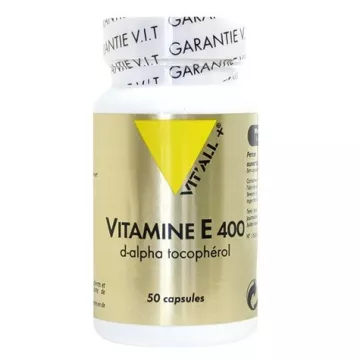
- Recommended forms: natural d-α-tocopherol (2× greater bioavailability than synthetic dl-α) — natural mixture of tocopherols (α + γ + δ) for comprehensive antioxidant coverage — doses: 100–400 mg/day — do not exceed 300 mg/day without medical supervision (EFSA limit) — see the tocopherol page for detailed forms
- Synergy with vitamin C: Vitamin C regenerates oxidized vitamin E → complementary antioxidant network — always combine vitamin E with vitamin C for optimal antioxidant protection
- Precautions and contraindications: VKA anticoagulants (warfarin)—doses > 400 mg/day increase the risk of bleeding → monitor INR, inform your doctor—aspirin + high-dose vitamin E → potentiation of antiplatelet effects—planned surgery → discontinue supplementation 2–4 weeks beforehand (bleeding risk) — chemotherapy → consultation with an oncologist is essential
- Topical application: vitamin E oil or enriched creams — hydration + skin repair — scars (after complete epithelialization) — hair care (protects the cuticle’s lipids) — oily or acne-prone skin: Tocopheryl Acetate (esterified, less comedogenic than pure tocopherol) — explore our vitamin E formulations