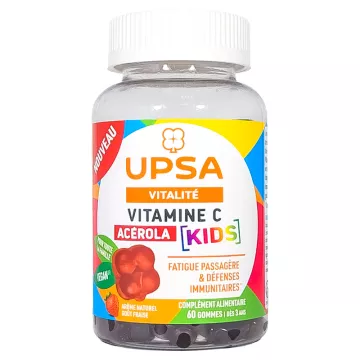
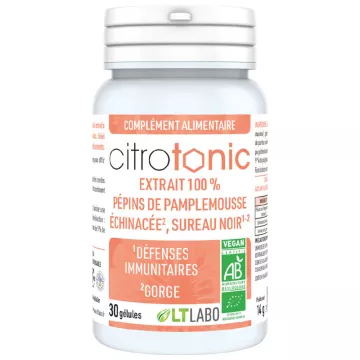
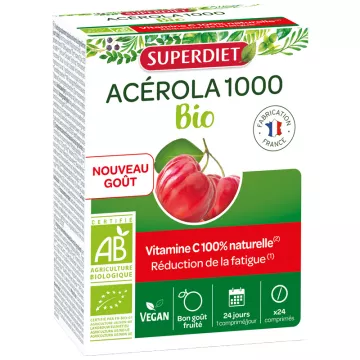
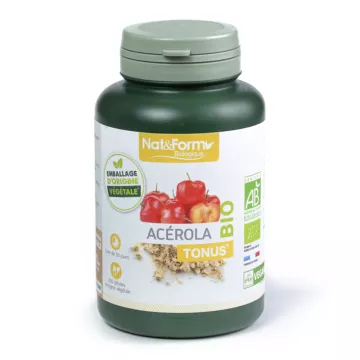
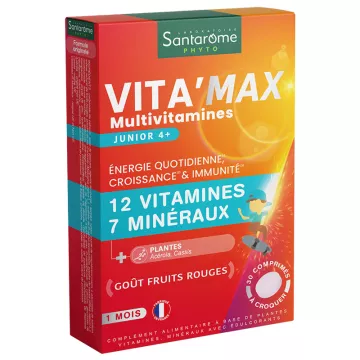
What is acerola?
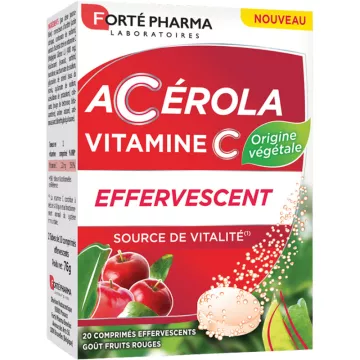
Acerola (Malpighia emarginata or Malpighia glabra) is a small, red tropical fruit belonging to the Malpighiaceae family, native to the Caribbean, Mexico, and northern South America. Its tart pulp contains one of the highest natural concentrations of vitamin C known in the plant kingdom: up to 1,500 to 2,000 mg per 100 g in ripe fruit, which is about 30 to 50 times more than an orange. This unique profile is complemented by bioflavonoids (rutoside, quercetol), anthocyanins, carotenoids, B vitamins, and minerals (calcium, phosphorus, iron, magnesium).
What are the benefits of vitamin C from acerola?
The EFSA-validated health claims for vitamin C apply in full to acerola:
- Contributes to the normal functioning of the immune system, particularly during and after intense physical exertion;
- Contributes to the reduction of physical and mental fatigue;
- Increases the absorption of non-heme iron from plant sources;
- Contributes to the normal formation of collagen in the skin, blood vessels, gums, bones, and cartilage;
- Antioxidant action by protecting cells against oxidative stress;
- Regenerates the reduced form of vitamin E.
Why is this vitamin C more easily absorbed?
The natural vitamin C in acerola is accompanied by a natural complex of cofactors: bioflavonoids, polyphenols, B vitamins, and minerals. These molecules increase the bioavailability of ascorbic acid and prolong its half-life in the body compared to isolated synthetic vitamin C. It is also better tolerated by the digestive system, particularly for people with sensitive stomachs or high stomach acidity, who have difficulty tolerating synthetic ascorbic acid. This is what sets acerola apart from a simple over-the-counter vitamin C tablet.
Does it really boost your immunity in the winter?
Yes, provided you follow a consistent dosage. Vitamin C does not “cure” the common cold, but it supports the normal functioning of the immune system, particularly during periods of stress, overexertion, intense physical activity, or extreme cold. A course of acerola providing 250 to 500 mg of vitamin C per day for 3 to 4 weeks effectively supports the immune system, especially when combined with other ENT herbs.
How does it promote iron absorption?
Vitamin C reduces ferric iron (Fe³⁺) to ferrous iron (Fe²⁺), a form that can be directly absorbed by enterocytes. This property makes it an essential cofactor in plant-based iron regimens, particularly for vegetarians and vegans, or in cases of insufficient iron intake. Ideally, take acerola simultaneously with a food rich in non-heme iron (legumes, leafy greens, whole grains) or with an iron supplement, while avoiding inhibitors (tea, coffee, calcium) during the same meal.
How should it be used according to the appropriate dosage?
The available forms cover all uses:
- Concentrated powder containing at least 17% vitamin C: 1 to 2 g per day in yogurt, a smoothie, or juice;
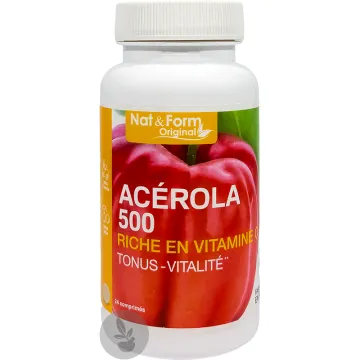
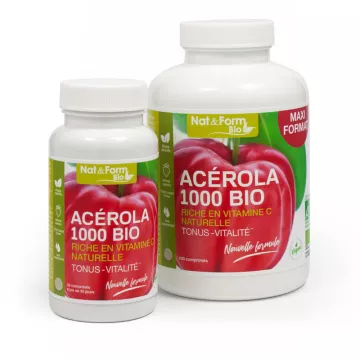
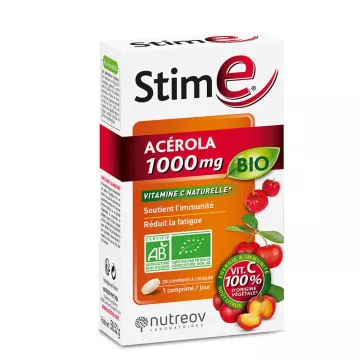
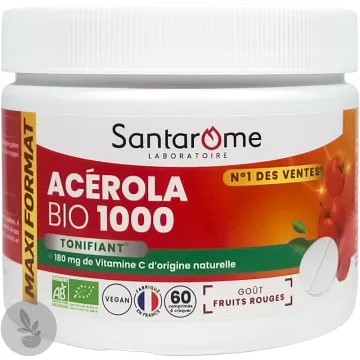
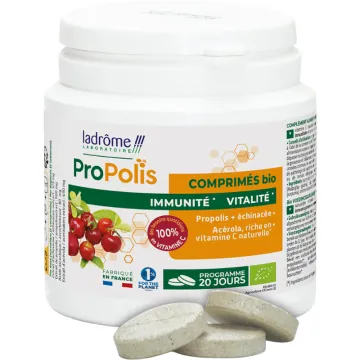
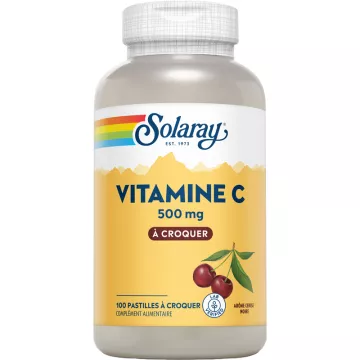
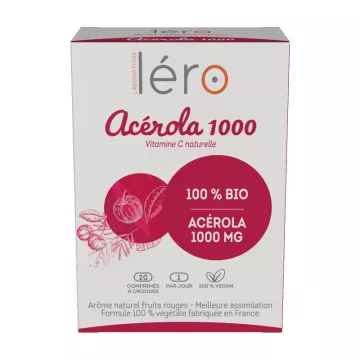
- Chewable tablets: the most convenient form, typically containing 500 to 1,000 mg of powder per tablet;
- Capsules for those sensitive to the tart taste;
- Juices or nectars: choose unsweetened and organic options;
- Typical dosage: 80 to 500 mg of vitamin C per day, preferably in the morning (for a revitalizing effect);
- Treatment course: 3 to 4 weeks during periods of physical exertion, winter, convalescence, or seasonal fatigue.
What precautions should be taken with acerola?
- Do not exceed 1,000 mg of vitamin C per day over the long term without medical advice (EFSA upper safety limit);
- History of oxalate kidney stones or hyperoxaluria: use caution with high doses;
- Iron overload conditions (hemochromatosis): medical advice is essential (vitamin C increases iron absorption);
- Severe kidney failure: consult a doctor before starting treatment;
- Caution is advised when taking anticoagulants (at very high doses);
- Possible side effects at high doses: digestive disturbances, diarrhea, bloating;
- Late-night use: avoid taking in the evening for individuals sensitive to its stimulating effects;
- Tolerance is usually excellent at recommended doses.
Which herbs should be combined with acerola?
Immune-boosting and tonic synergies enhance results:
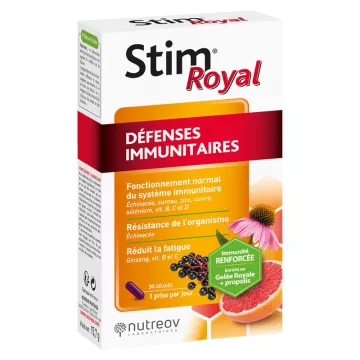
- Echinacea as an immune-boosting treatment at the onset of a winter illness;
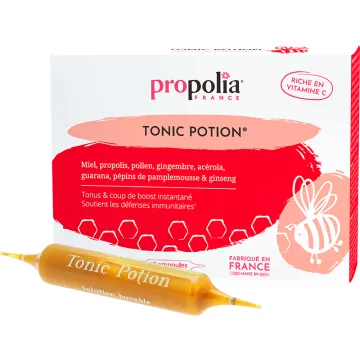
- Propolis for irritated ENT areas;
- Black currant and rosehip to boost natural vitamin C intake;
- Sea buckthorn to add omega-7 fatty acids and carotenoids;
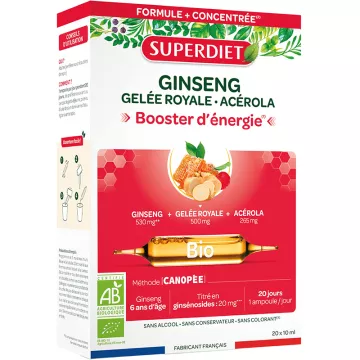
- Royal jelly and ginseng to support sustained vitality during recovery;
- Elderberry for individuals prone to recurrent winter viral infections.