What is tocopherol, and what are its 8 natural forms?
Tocopherol is the chemical name for the vitamin E family, a group of 8 fat-soluble molecules with antioxidant properties. An essential ingredient in cosmetics and nutrition, it protects cell membranes against lipid peroxidation—the breakdown of fatty acids by free radicals. The INCI designation in cosmetics is “Tocopherol” (natural) or “Tocopheryl acetate” (esterified form). For information on the nutritional role of vitamin E, visit our vitamin E page. Explore our vitamin E formulations and natural antioxidants.
- The 4 tocopherols (α, β, γ, δ): α-tocopherol (alpha) — the predominant form in blood and tissues — highest vitamin E biological activity — used as a supplement — found in sunflower and wheat germ oils — γ-tocopherol (gamma)—the most abundant in the North American diet—specific anti-inflammatory activity (traps nitrogen-containing ROS—peroxynitrite—which alpha does not neutralize)—predominant in corn, soybean, and sesame oils
- The 4 tocotrienols (α, β, γ, δ): chemical structure similar to that of tocopherols but with an unsaturated side chain → 50× greater mobility in membranes → 40–60× more potent antioxidant than α-tocopherol in vitro — neuroprotective and anticancer properties documented in preclinical studies — main sources: red palm oil, rice germ, annatto (pure δ-tocotrienol)
- Natural α-tocopherol (d-α-tocopherol) vs. synthetic (dl-α-tocopherol): the natural form is a single stereoisomer (RRR) — bioavailability is 2× higher than that of the synthetic form (a mixture of 8 stereoisomers) — in cosmetics and supplements: always check the label for “d-α” (natural) vs. “dl-α” (synthetic)
- Mixed tocopherols: recommended approach—combines the complementary properties of alpha (classic vitamin E activity) and gamma (nitrogen-based anti-inflammatory) + delta (the most potent antioxidant in the tocopherol series) — better reflects the natural composition of vegetable oils — prefer an extract labeled “natural mixed tocopherols” rather than isolated α-tocopherol
- Storage and metabolism: stored in cell membranes, adipose tissue, and the liver — transported by LDL and HDL in the bloodstream — the hepatic transfer protein (α-TTP) ensures the selective retention of α-tocopherol — Long tissue half-life (weeks to months in adipose tissue)
Antioxidant mechanisms and synergies of tocopherol
- Membrane protection mechanism: cell membranes are composed of phospholipids rich in polyunsaturated fatty acids (PUFAs) — ROS (hydroxyl and superoxide radicals) initiate a lipid peroxidation chain reaction — tocopherol "sacrifices itself" by donating a hydrogen atom to lipid radicals → breaks the chain — the oxidized tocopherol is then regenerated by vitamin C (ascorbic acid) → regeneration of membrane tocopherol
- Tocopherol + vitamin C synergy: vitamin C (water-soluble) acts in the intracellular aqueous environment and plasma — it regenerates the radicalized tocopherol into active tocopherol → the two vitamins form a complementary antioxidant network — The combination of C and E provides greater synergistic protection than either vitamin taken separately
- Tocopherol + CoQ10 synergy: CoQ10 (ubiquinol) is the mitochondrial antioxidant—it also regenerates oxidized tocopherol at the inner mitochondrial membrane—the CoQ10 + vitamin E combination is particularly effective for cardiovascular protection and cellular bioenergetics
- Tocopherol + selenium synergy: Selenium is a cofactor for GPx (glutathione peroxidases), which neutralize lipid hydroperoxides (products of peroxidation)—tocopherol (prevents peroxidation) + selenium/GPx (neutralizes the products of peroxidation) = dual-protection synergy—simultaneous deficiency in vitamin E and selenium = maximum oxidative risk
- Resveratrol + tocopherol: resveratrol activates Nrf2 (genomic antioxidant thermostat) → upregulation of GPx + SOD — in combination with tocopherol → simultaneous membrane and genomic antioxidant protection — visit our vitamins page for the complete overview
Tocopherol in Cosmetics: Applications and Formulations
- INCI forms in cosmetics: Tocopherol — reduced (active) form — powerful antioxidant + absorbed by the skin — used in serums, oils, and rich creams — Tocopheryl Acetate — esterified form (stable, resistant to oxidation) — converted into active tocopherol by the skin — the most widely used form in consumer cosmetics (extends shelf life) — Tocopheryl Linoleate and Palmitate — specific esterified forms for different textures
- Documented cosmetic properties: membrane antioxidant (protects skin lipids against UV-induced oxidation and pollution) — emollient (restores the skin’s lipid barrier) — wound-healing (accelerates epidermal repair) — anti-inflammatory (inhibits COX and reduces pro-inflammatory cytokines in the skin) — photoprotective (synergy with UV filters — does not replace SPF) — anti-aging (prevents lipid peroxidation of sebum + protects collagen)
- Dry and dehydrated skin: tocopherol strengthens the skin barrier by integrating into the lipid bilayers of the epidermis — reduces transepidermal water loss (TEWL) — particularly suitable for dry, mature, or sensitized skin (mild atopy, post-sun exposure)
- Cosmetic precautions: oily or acne-prone skin — pure tocopherol (Tocopherol) is slightly comedogenic at high concentrations—prefer Tocopheryl Acetate (less comedogenic) or lighter formulations—test on a small area before applying to acne-prone skin—scars: pure vitamin E oil applied to a recent scar (after complete epithelialization) → reduces the risk of hypertrophic scarring
- Hair care with tocopherol: integrates into the lipoproteins of the hair cuticle → protection against heat (hair dryers, flat irons) + pollution + hair coloring — prevents breakage (strengthens weakened hair fibers) — masks and oils enriched with vitamin E — a few drops of wheat germ oil (the richest in α-tocopherol: 150–200 mg/100 mL) in a hair mask
Supplementation, dosage, precautions, and interactions
- RDA and optimal requirements: Adult RDA (ANSES) = 12 mg/day (α-tocopherol) — α-tocopherol equivalents (TE): 1 mg d-α-tocopherol = 1.49 IU — optimal intakes based on anti-aging and cardiovascular research: 100–400 mg/day of d-α-tocopherol or a natural blend — increased needs: athletes (post-exercise oxidative stress), seniors, smokers, and individuals on a diet rich in PUFAs
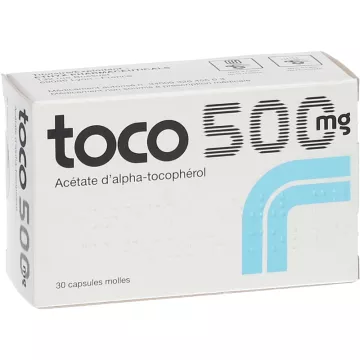
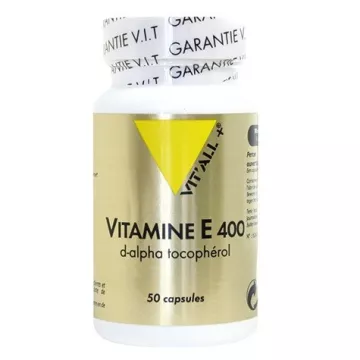
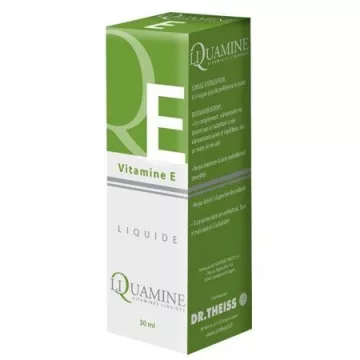
- Recommended forms for supplementation: natural d-α-tocopherol (2× higher bioavailability vs. synthetic dl-α) — natural mixture of tocopherols (α + γ + δ) for comprehensive antioxidant coverage — tocotrienols (innovative, neuroprotective and cardiovascular protection — annatto or rice germ extract) — oil capsules (naturally rich wheat germ oil)
- Safety and maximum limit: EFSA sets the tolerable upper intake level at 300 mg/day — above 1,000 mg/day (1,000 IU) → risk of bleeding (inhibition of vitamin K-dependent coagulation) — long-term overdose: HOPE-TOO study (400 IU/day > 7 years) → slight increase in heart failure → do not exceed 400 IU/day for long-term use without medical supervision
- Drug interactions: VKA anticoagulants (warfarin) — doses > 400 IU/day increase the risk of bleeding → monitor INR, inform the doctor — aspirin + high-dose vitamin E → potentiation of the antiplatelet effect — chemotherapy — some protocols advise against high-dose antioxidants during treatment → oncological consultation required — statins — may slightly reduce circulating tocotrienols
- Recommended combination: tocopherol + omega-3 — omega-3 PUFAs are particularly susceptible to lipid peroxidation → vitamin E protects omega-3s from oxidation in supplements and in the body — always include vitamin E in high-dose omega-3 formulations