What is selenium, and what are its key selenoproteins?
Selenium (Se, atomic number 34) is an essential metalloid incorporated into proteins in the form of selenocysteine (the 21st amino acid, encoded by the UGA codon) — forming selenoproteins, a unique family of ≥ 25 human proteins with major antioxidant, thyroid, and immune functions. Discover our natural antioxidant formulas and our immune-boosting supplements that include selenium in bioavailable forms.
- Glutathione peroxidases (GPx 1–8): an antioxidant enzyme family — GPx1 (cytoplasm, red blood cells) — GPx4 (protects lipid membranes against peroxidation, essential for spermatogenesis) — GPx3 (plasma, erythrocyte protection) — reduce H₂O₂ and lipoperoxides by using glutathione (GSH) as an electron donor
- Thyroid deiodases (DIO1, DIO2, DIO3): selenium-dependent enzymes — DIO1 and DIO2 convert T4 (inactive thyroxine) to T3 (active triiodothyronine) — DIO3 inactivates T3 and T4 — selenium deficiency → T4 ↑ + T3 ↓ → functional hypothyroidism despite normal TSH
- Thioredoxin reductases (TrxR1, TrxR2, TrxR3): regulate cellular redox status — regenerate oxidized thioredoxin — protect DNA from oxidative damage — play a role in DNA repair and cancer cell apoptosis
- Selenoprotein P (SELENOP): the primary form of selenium transport in plasma — ensures the distribution of selenium to the brain and testes (biological priorities) — a more reliable marker of selenium status than serum selenium levels alone
- Selenoproteins and Immunity: selenoproteins regulate the inflammatory response (NF-κB, COX-2) and T-cell proliferation — deficiency → increased viral replication (documented Coxsackievirus mutations) + immunosuppression + increased susceptibility to infections
Selenium and the thyroid: fundamental role and associated pathologies
- Thyroid and selenium: the thyroid gland contains the highest concentration of selenium per gram of tissue in the body — deiodases (DIO1/2) are essential for the production of active T3 — functional hypothyroidism is possible in the event of selenium deficiency even with sufficient iodine
- Hashimoto’s thyroiditis: an autoimmune disease — clinical studies show that selenium supplementation (200 µg/day × 6–12 months) reduces anti-TPO antibodies (thyroperoxidase) by 30–50% and improves quality of life—selenium is recommended as an adjunct to treatment for autoimmune thyroiditis under medical supervision
- Graves’ disease (hyperthyroidism): selenium reduces anti-TRAK antibody levels and the severity of Graves’ ophthalmopathy—the combination of selenium and synthetic antithyroid drugs has been documented
- Iodine and selenium deficiency: complex interaction—if there is a combined iodine and selenium deficiency, correct the iodine deficiency first (selenium without iodine can worsen hypothyroidism in areas where goiter is endemic)
- Thyroid monitoring: if selenium supplementation at therapeutic doses (≥ 200 µg/day) → monitor TSH, T3, free T4, and anti-TPO antibodies every 3–6 months
Dietary sources, forms, and dosage
- Brazil nuts: 1 nut = 70–90 µg of selenium (covers daily requirements) — the world’s most concentrated source — caution: 3–4 nuts/day = approaching the upper limit → do not exceed 1–2 nuts/day for regular consumption
- Seafood and fish: tuna (90 µg/100 g) — oysters (60 µg/100 g) — sardines (45 µg/100 g) — shrimp (30 µg/100 g)
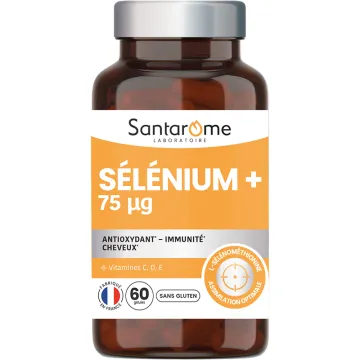
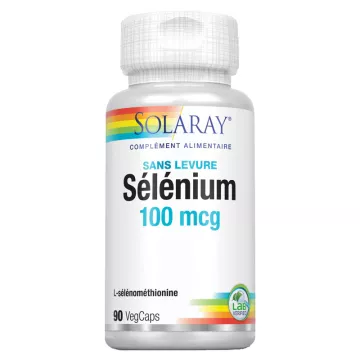
- Selenomethionine (organic selenium): the most readily absorbed form (80–90% vs. 50–70% for dietary selenocysteine) — stored in proteins like methionine — the standard form in supplements — selenium-enriched yeast (L-selenomethionine)
- Sodium selenite (inorganic): Adequate absorption but no storage in proteins — used in clinical settings (severe deficiencies) and veterinary applications — less recommended for long-term supplementation
- RDA for selenium: 55 µg/day for adults — 60–70 µg/day for pregnant and breastfeeding women — tolerable upper intake level: 300 µg/day (EFSA) — threshold for selenosis begins at repeated doses > 400 µg/day
Selenosis, male fertility, cancer, and precautions
- Selenosis (chronic poisoning): diffuse hair loss — brittle nails with white spots — garlic-smelling breath (exhaled dimethylselenide) — digestive disorders — peripheral neuropathy — at doses > 400 µg/day over an extended period — Brazil nuts can cause selenosis if consumed daily in high doses (> 4–5 nuts)
- Male fertility: GPx4 is essential for spermatogenesis — protects sperm from lipid peroxidation of cell membranes — zinc + selenium + vitamin E = the gold standard for male fertility — studies show improved sperm motility and morphology after 3 months of supplementation
- Cancer and selenium: NPC study (Nutritional Prevention of Cancer, 1996): 200 µg/day supplementation → 37–63% reduction in the incidence of prostate, lung, and colorectal cancers — SELECT study (Selenium and Vitamin E Cancer Prevention Trial, 2011): negative results and even an increased risk of prostate cancer at high doses — conclusion: selenium provides protection in selenium-deficient individuals but may be harmful in excess — do not supplement with more than 200 µg/day without medical supervision
- Magnesium + selenium: synergistic in cardiovascular protection — selenium reduces LDL oxidation and protects endothelial cells — combine omega-3 and vitamin E in cardioprotective formulations
- Drug interactions: anticoagulants (VKAs) — monitor INR (selenium may alter hepatic metabolism) — immunosuppressants (selenium modulates immunity) — statins (selenium + statins: may reduce the risk of myopathy) — chemotherapy: consultation with an oncologist is required