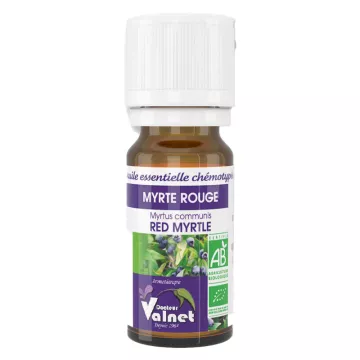
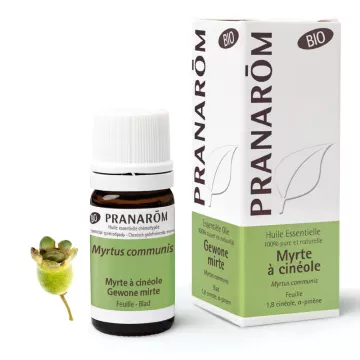
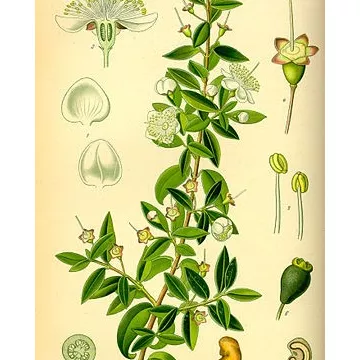
Myrtle (Myrtus communis) is an aromatic Mediterranean shrub rich in antioxidants, flavonoids, and tannins. Valued since ancient times, it is used in aromatherapy, herbal medicine, and cosmetics. Its fresh, woody, and slightly camphor-like fragrance characterizes its essential oils and hydrosols.
What is myrtle?
Myrtle is a medicinal shrub whose leaves, flowers, and berries are used for their properties. Its active compounds—alpha-pinene, 1,8-cineole, and myrtényl acetate—give it expectorant and purifying properties that are well-documented in Mediterranean tradition.
What are the benefits of myrtle?
Myrtle offers a variety of uses depending on the form in which it is used.
- Respiratory comfort: a traditional expectorant, valued for treating coughs and colds
- Purifying action on oily skin and seborrheic scalps
- Antioxidant properties that protect cells from oxidative stress
- Supports digestive comfort when brewed as a traditional herbal tea
- Soothing effect when diffused, promoting relaxation and sleep
In what forms can myrtle be used?
In health stores, myrtle is available in several forms depending on your needs.
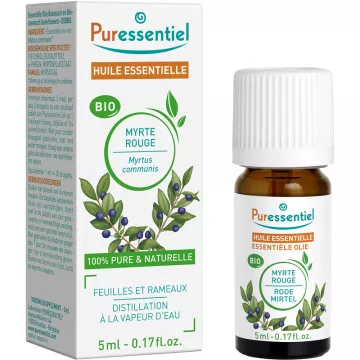
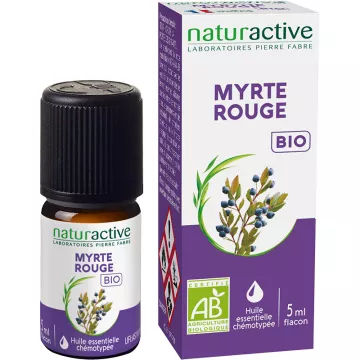
- Essential oil: used in a diffuser to support respiratory comfort, or diluted in a carrier oil for massage
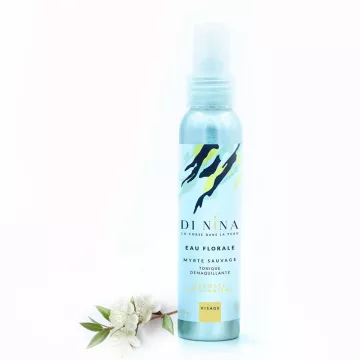
- Hydrosol: as a mist on the skin or in hair care; suitable for sensitive skin
- Herbal tea: dried leaves for traditional digestive support after meals
- Cosmetics: toners, shampoos, and skincare products containing myrtle extract
Is myrtle good for the skin?
Classified in the Myrtaceae essential oil family, myrtle is particularly valued in cosmetics for combination skin.
- Regulatesexcess sebum on combination to oily skin
- Tightens pores and improves skin texture thanks to its astringent action
- Soothes redness and mild irritation when applied topically
Is myrtle suitable for hair care?
Yes, myrtle is a hair care ingredient for scalps prone to oiliness or irritation.
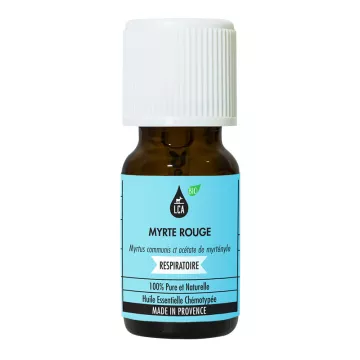
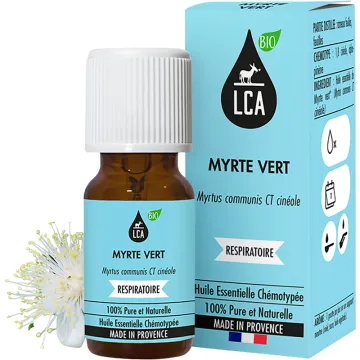
What is the difference between green myrtle and red myrtle?
These two varieties differ in their biochemical composition.
- Green myrtle (Myrtus communis): more common, rich in myrtenyl acetate, with a mild profile suitable for the skin and everyday use
- Red myrtle: higher ketone content, targeted for respiratory use, but requires stricter precautions and is reserved for use under medical supervision
Does myrtle have any contraindications?
Natural does not mean risk-free, especially when it comes to essential oils.
- Not recommended for pregnant or breastfeeding women
- Avoid respiratory use in children under 6 years of age
- Use with caution in cases of asthma or allergies: test on a small area before use
- Always dilute in a vegetable oil for topical application
- Follow the recommended dosages for internal use
Content reviewed by Arnaud, Ph.D. in Pharmacy.