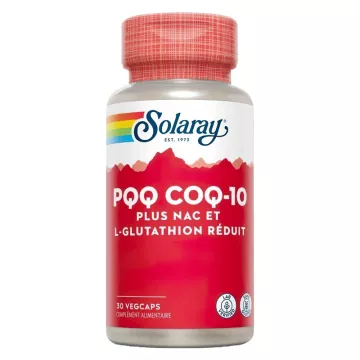
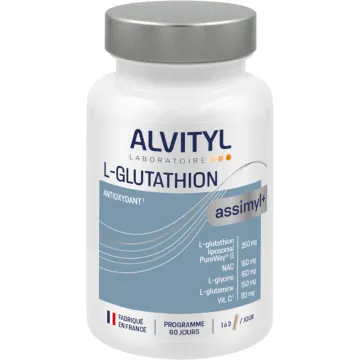
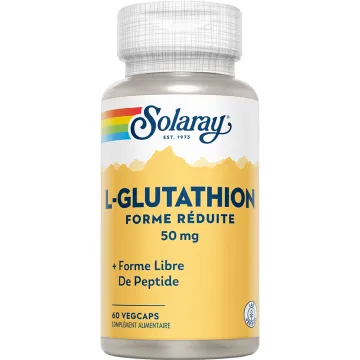
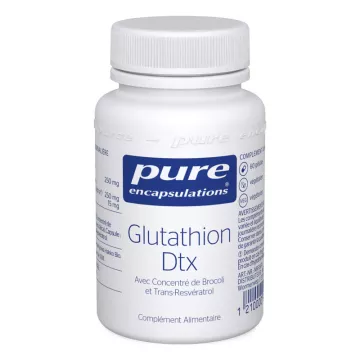
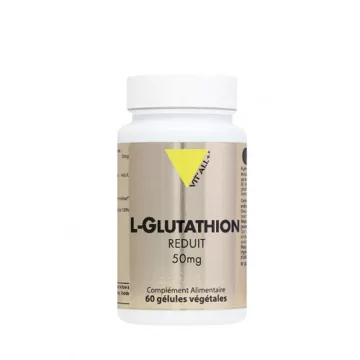
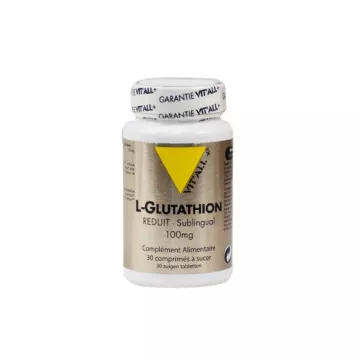
L-glutathione (GSH) is the body’s most abundant endogenous antioxidant—found in every cell, it is often referred to as the “master antioxidant.” A tripeptide composed of glutamine, glycine, and L-cysteine, it plays a central role in cellular protection, hepatic biotransformation, and the regulation of skin pigmentation. Its endogenous production decreases with age and under the influence of oxidative stress. Discover our line of natural antioxidants.
What is L-glutathione?
Glutathione exists in two main forms within the cell: GSH (reduced, active form) and GSSG (oxidized, disulfide form). The GSH/GSSG ratio is a marker of cellular antioxidant status—a high GSH/GSSG ratio indicates healthy cells. It is synthesized in two enzymatic steps from its three constituent amino acids, with magnesium and ATP as cofactors. L-cysteine is the rate-limiting amino acid in this synthesis—increasing its intake via cystine or N-acetylcysteine (NAC) is the most effective strategy for supporting endogenous production.
Glutathione and Antioxidant Protection?
Glutathione is the cornerstone of the intracellular antioxidant network.
- It directly neutralizes singlet oxygen, hydrogen peroxide, and lipid peroxides
- It regenerates oxidized vitamin C and vitamin E—prolonging their antioxidant efficacy
- It is regenerated byalpha-lipoic acid and by glutathione reductase (an NADPH-dependent enzyme)
- Coenzyme Q10 complements this network at the level of mitochondrial membranes
- Zinc and selenium are the essential mineral cofactors for glutathione-dependent enzymes
Glutathione and liver function?
The liver has the highest concentration of glutathione—it plays a central role in Phase 2 of hepatic biotransformation.
- Glutathione S-transferase conjugates glutathione to lipophilic compounds to make them water-soluble and eliminable via the bile
- This reaction is a normal step in the liver’s neutralization of xenobiotics (drugs, pollutants)
- Hepatic glutathione deficiency has been documented in cases of liver failure and chronic alcohol exposure
- Supplementation with precursors (NAC) is being studied in the context of hepatology—always under medical supervision in cases of confirmed liver failure
- Chemotherapy and immunosuppressants: It is essential to consult a doctor before taking any glutathione supplements
Glutathione and the skin: skin-lightening effect?
Glutathione is a dermo-cosmetic active ingredient recognized for its effect on skin pigmentation.
- It inhibits tyrosinase—a key enzyme in melanogenesis—thereby reducing melanin production
- It promotes the conversion of eumelanin (brown-black) to pheomelanin (yellow-pink)—resulting in an even skin tone
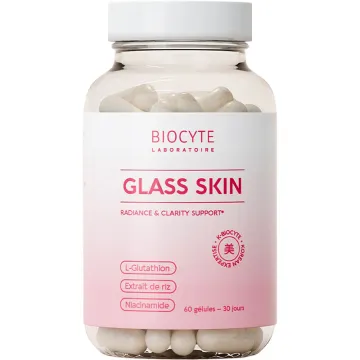
- Used to reduce dark spots, sunspots, and melasma—see our anti-dark spot skincare line
- Combine with viniferin (a powerful tyrosinase inhibitor) and vitamin C in anti-pigmentation regimens
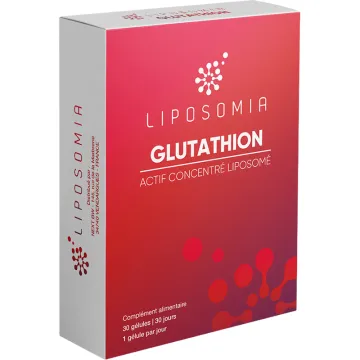
- Liposomal formulas: improved bioavailability for a systemic effect on pigmentation
How can you increase your glutathione levels?
Two complementary strategies can increase glutathione production or stores.
- Through dietary precursors: foods rich in cysteine (broccoli, garlic, onions, eggs) and organic sulfur
- N-acetylcysteine (NAC): the most bioavailable oral precursor—directly increases the intracellular cysteine pool
- Reduced oral glutathione (GSH): effectiveness limited by digestive breakdown—prefer liposomal or sublingual forms
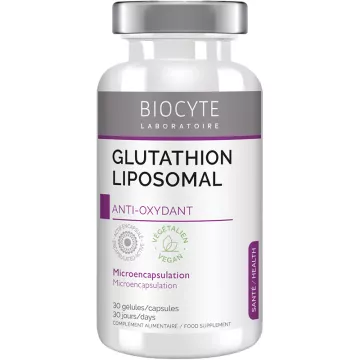
- Liposomal glutathione: a form encapsulated in phospholipid liposomes—passes through the intestinal wall intact
- Synergistic combinations: vitamin C + alpha-lipoic acid for the regeneration of oxidized GSH
How to choose your L-glutathione?
The dosage form is the most important factor—it determines actual bioavailability.
- Liposomal glutathione: better oral bioavailability—the recommended form for systemic effects (skin, liver)
- Sublingual reduced glutathione (GSH): direct absorption through the oral mucosa — avoids digestive breakdown
- NAC (N-acetylcysteine): the most well-documented and widely available precursor—reliably increases intracellular glutathione
- GMP-certified, GMO-free, and free of synthetic solvents—request a certificate of analysis (purity ≥ 98%)
- Severe asthma: precaution—cysteine may affect bronchial mediators in highly sensitive individuals