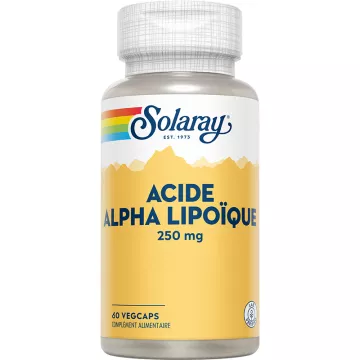
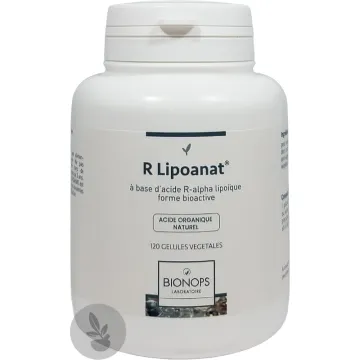
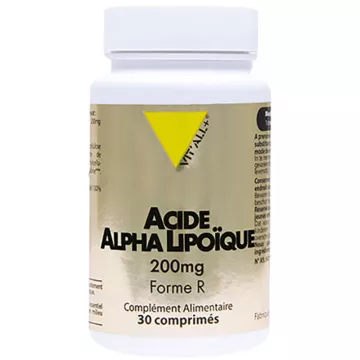
Alpha-lipoic acid (ALA) is an antioxidant naturally present in cells that plays a role in mitochondrial energy metabolism. Its unique property of being both hydrophilic and lipophilic allows it to act in all cellular compartments—a characteristic that sets it apart from other conventional antioxidants.
What is alpha-lipoic acid?
Alpha-lipoic acid is a sulfur-containing fatty acid naturally synthesized by the body in moderate amounts. It acts as a cofactor for two key mitochondrial enzymes (pyruvate dehydrogenase and alpha-ketoglutarate dehydrogenase) involved in ATP production. Its dual water/lipid solubility allows it to neutralize free radicals in both environments and to regenerate other antioxidants such as vitamin C and L-glutathione. It thus contributes to a synergistic antioxidant network with coenzyme Q10.
What are the benefits of alpha-lipoic acid?
Alpha-lipoic acid has several documented mechanisms of action.
- Cellular antioxidant protection: neutralizes free radicals in both aqueous and lipid compartments, helping to limit photoaging of the skin and general oxidative stress
- Energy metabolism: As a cofactor in ATP production, it helps reduce cellular fatigue during periods of increased energy demand
- Support for liver function: helps maintain the liver’s enzymatic functions by regenerating hepatic glutathione
- Blood sugar management: Studies suggest an effect on insulin sensitivity and blood sugar control —should be used under medical supervision when taking antidiabetic medication
- Cognitive support: by protecting nerve cells from oxidative stress
Alpha-lipoic acid and sports?
ALA is used in sports recovery protocols for its role in energy metabolism and antioxidant protection.
- Helps reduce oxidative stress generated by intense exercise
- Supports athletic recovery by replenishing cellular antioxidants depleted during training
- Combines with coenzyme Q10 and vitamin C in post-workout energy and antioxidant support formulas
- Of interest to endurance athletes exposed to chronic free radical production
R-ALA vs. S-ALA: What’s the Difference?
Alpha-lipoic acid exists in two stereoisomeric forms with distinct properties.
- R-ALA: natural, bioactive form synthesized by cells—better bioavailability, faster absorption
- S-ALA: synthetic form—lower biological activity than R-ALA
- Standard supplements often contain a racemic R/S mixture—pure R-ALA formulas have a higher concentration of the active form
- Choose formulas that specify the R/S ratio or guarantee an R-ALA-enriched form
How should alpha-lipoic acid be used?
The dosage form and timing of intake determine the effectiveness of supplementation.
- Usual dosage: 300 to 600 mg per day, depending on your goals
- Best taken on an empty stomach, 30 minutes before a meal—food significantly reduces its absorption
- Available forms: capsules, tablets, enriched R-ALA formulations
- 4- to 8-week course—to be repeated as needed
- Recommended combination: vitamin C + coenzyme Q10 + resveratrol for comprehensive antioxidant protection
Side effects and precautions?
Alpha-lipoic acid is well tolerated at recommended doses. A few precautions should be observed.
- Mild digestive upset is possible (nausea, diarrhea)—take on an empty stomach only if well tolerated
- People on diabetes medication: risk of additional hypoglycemia—be sure to inform your doctor before taking any supplements
- Pregnant and breastfeeding women: avoid as a precaution (insufficient data)
- Possible vitamin B1 (thiamine) deficiency with high doses and long-term use—monitor intake
- Rare allergic skin reactions—discontinue use if a rash develops