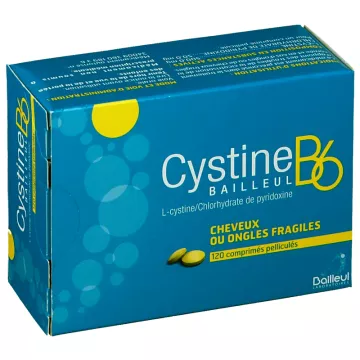
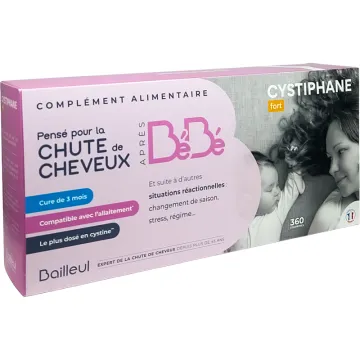
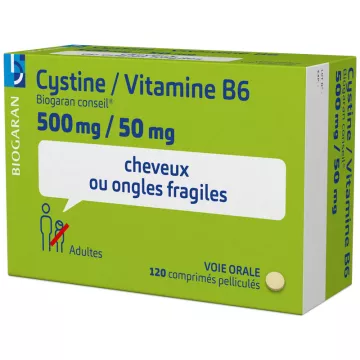
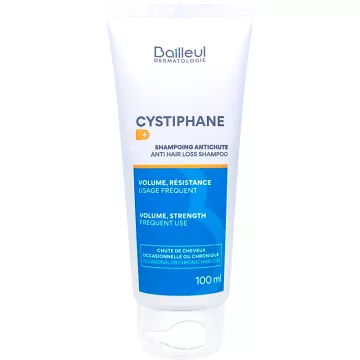
Cystine is a sulfur-containing amino acid formed by the combination of two cysteine molecules. It is a major structural component of keratin—the protein found in hair, nails, and the outermost layer of the skin. It is also a precursor to glutathione, one of the most powerful cellular antioxidants. Check out our selection of supplements for hair and nail loss.
What is cystine and what is it used for?
Cystine accounts for approximately 10 to 14% of the composition of hair keratin. Its high sulfur content gives it a unique structural property: the disulfide bonds between cysteine molecules stiffen the hair shaft and give nails their hardness. As a precursor to L-glutathione, it also helps protect cells against oxidative stress. Discover the full range of available amino acids.
Cystine and Hair: What Are the Benefits?
Cystine is the most abundant amino acid in the hair shaft. Supplementation is recommended in several situations.
- Seasonal or stress-related hair loss: a course of supplementation supports hair quality during the shedding phase—see our hair loss line
- Weakened hair shaft: Cystine helps strengthen the hair’s resistance to environmental aggressors (heat, coloring, pollution)
- Density and shine: by restructuring keratin, it helps promote hair’s luster and suppleness
- Formulas combining cystine, zinc, and biotin are the most commonly used for hair health
Cystine and nails and skin: what role does it play?
Beyond hair, cystine contributes to nail structure and skin health.
- Nails: Nail keratin contains a high proportion of cystine—a deficiency manifests as soft, ridged, or brittle nails
- Skin: Through glutathione, cystine exerts an antioxidant effect that helps protect the skin against oxidative stress and UV rays
- It helps maintain the integrity of the skin barrier, particularly in dry and fragile skin
- Its directly absorbable form, L-cysteine, is available as a specific dietary supplement
Where can you find cystine in your diet?
Cystine is found in foods rich in sulfur-containing proteins.
- Lean meats and poultry: chicken, turkey, beef
- Fish and seafood: salmon, tuna, shrimp
- Eggs: the yolk is particularly rich in cystine
- Legumes: lentils, chickpeas, kidney beans
- Nuts and seeds: almonds, Brazil nuts, sunflower seeds
How should you take a cystine supplement?
To see results on your hair and nails, cystine supplementation should follow well-defined protocols.
- Recommended minimum duration: 3 months —corresponding to the natural hair renewal cycle
- Usual dosage: depending on the formula chosen, between 250 and 500 mg of cystine per day
- Optimal combinations: cystine + biotin + zinc for hair and nails; cystine + L-glutathione for antioxidant effects
- Available dosage forms: capsules, ampoules, tablets—oral dosage forms only
Precautions and side effects of cystine?
Cystine is well tolerated at recommended doses. A few points to keep in mind.
- Mild digestive issues at high doses: bloating, discomfort—split doses
- Kidney or liver conditions: not recommended without medical advice (liver metabolism)
- Pregnant and breastfeeding women: Consult a healthcare professional before starting any course of treatment
- Children and adolescents: supplementation should be supervised by a healthcare professional
- Possible drug interactions—inform your doctor if you are taking any medications