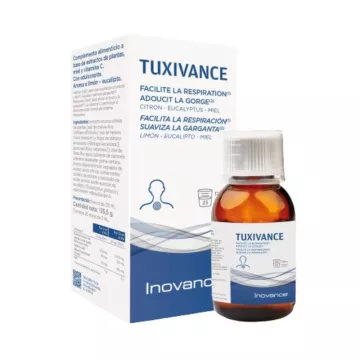
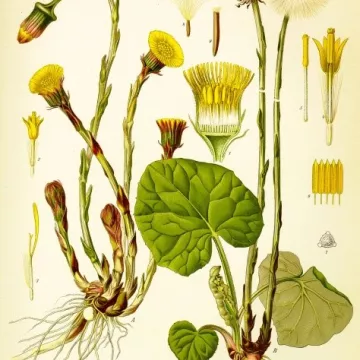
A cough suppressant is a substance—whether medicinal or natural—that reduces or suppresses the cough reflex. The cough reflex is a protective mechanism for the respiratory tract: it helps expel secretions, foreign bodies, and pathogens. Suppressing a productive cough (one with mucus) is generally contraindicated because it can lead to the buildup of secretions and secondary bacterial infections. Cough suppressants are indicated only for dry, irritating coughs —without expectoration—that disrupt sleep or daily life and serve no defensive purpose. Natural cough syrups and remedies are available in the store’s dry cough and respiratory health sections.
Medicinal cough suppressants fall into two categories. Central cough suppressants (codeine, dextromethorphan, oxeladine) act on the cough center in the medulla oblongata, inhibiting the reflex regardless of the irritant—codeine is available by prescription only. Peripheral cough suppressants (helicidine, pholcodine) reduce local irritation of the bronchial mucosa without affecting the central nervous system. For productive coughs andrespiratory congestion, mucolytics and expectorants are preferable to cough suppressants.
Codeine (an opioid) carries significant risks that should be noted:
Several plants and natural substances have an antitussive and soothing effect on the respiratory tract, without the risks associated with central antitussives. English ivy (Hedera helix —leaf extract standardized in saponins) is the best-documented herbal antitussive in Europe—a mild bronchodilator and expectorant, available as a syrup and in capsules, with well-established use according to the EMA, CI: pregnancy. Honey (Manuka or wildflower) is endorsed by the WHO as a natural cough suppressant for mild coughs in children over 1 year of age—taken by the spoonful or as a warm herbal tea. Ginger (gingerols, which have anti-inflammatory effects on the bronchial mucosa) as a fresh infusion soothes irritating coughs.Eucalyptus radiata (1,8-cineole—which thins secretions and acts as a bronchial antispasmodic) used in a diffuser or via steam inhalation soothes irritated airways. Propolis spray (which has antiviral and antibacterial effects on the pharyngeal mucosa) complements these approaches. Drinking plenty of fluids (warm water, broths) is a simple but essential step to thin secretions and soothe the irritated mucosa.