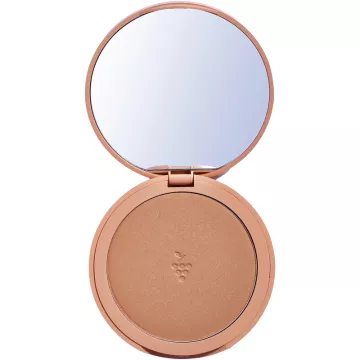
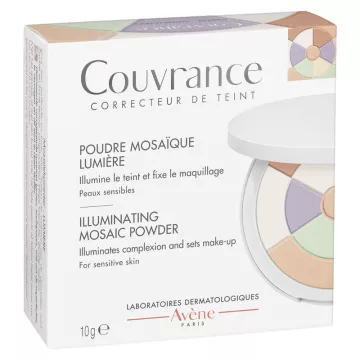
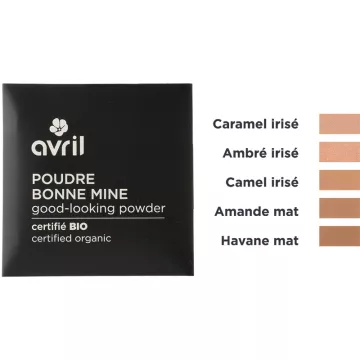
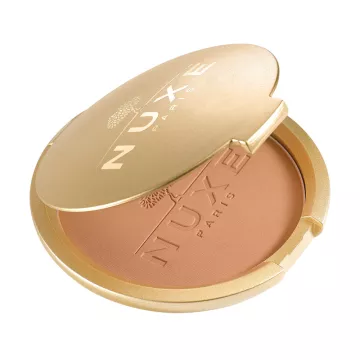
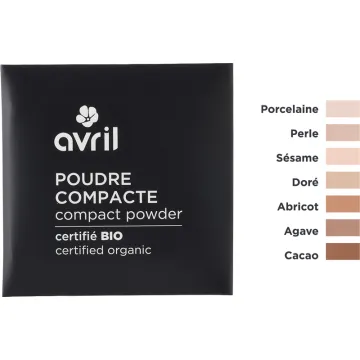
Bronzing powder is a cosmetic product formulated to give the skin a sun-kissed, glowing appearance, mimicking a light, natural tan. It contours the face and warms the complexion without the need for sun exposure or chemical self-tanners.
For effective application, use a wide, soft brush and sweep the powder over the areas where the sun naturally hits the face: the tops of the cheekbones, the forehead, the bridge of the nose, and the chin. A light application on the neck and upper décolletage evens out the appearance and prevents a “mask-like” effect. The golden rule: start with very little product, tap off the excess on the back of your hand, and gradually build up the intensity with light layers. Bronzing powder is one of the essentials in the makeup category and is a key part of a natural-looking sun-kissed complexion routine.
Several types of bronzing powders cater to different needs and preferences. The type you choose determines the final look.
Four main categories. Matte bronzing powder is ideal for a natural, shine-free look, particularly suited for combination to oily skin and subtle contouring. Highlighter bronzer contains very fine reflective particles that provide a subtle luminous effect, perfect for radiant complexions and evening occasions. Mineral powder, formulated with iron oxides and titanium dioxide, is suitable for sensitive skin thanks to its minimalist formula free of fragrance and problematic preservatives. The distinction between pressed powder (convenient for touch-ups and travel) and loose powder (a lighter, more airy application, ideal for use in the salon or at home) also affects how easy it is to use on a daily basis.
The ideal shade depends on your skin tone and undertone. A poorly chosen shade can look artificial or ashy, whereas a well-chosen shade instantly brightens the face.
For fair to porcelain skin, opt for light, golden shades—never too dark or too orange, or you risk looking “spotted.” For medium skin tones, caramel, honey, or soft terracotta shades add a boost of radiance without altering your natural look. For olive to dark skin tones, choose deeper, earthy shades (chocolate, bronze, burnt earth) that really come into their own. For black skin, bronzers with coppery undertones or red-brown pigments provide true radiance. Undertones matter too: warm undertones (skin turns golden in the sun) pair well with golden bronzers; cool undertones (skin turns red) pair well with more neutral or taupe bronzers. Always test the powder on your jawline or the top of your neck in natural light—never under fluorescent lighting.
A few common mistakes can immediately ruin the look. Identifying them improves the result without changing products.
Applying too much creates an artificial, “orange,” or “dirty” look. Always start with a minimal amount and build it up gradually. Choosing the wrong color (a shade that’s too dark or too saturated for your skin tone) remains the most noticeable mistake: test before buying, and opt for a shade that’s too light rather than one that’s too dark. Failing to blend between the tanned and natural areas creates a visible line, especially in daylight. Always soften the edges with a clean brush. Forgetting the transition areas (neck, ears, hairline) creates a disconnect between the face and the rest of the body: lightly blend the powder into these areas for color consistency. Finally, applying powder all over the face instead of targeting areas where natural light hits adds no dimension and makes the look appear heavy.
Yes, matte bronzer is one of the most versatile products for natural contouring. It’s a great alternative to very neutral or grayish bronzers that can make features look harsh.
For effective contouring, choose a matte shade—one to two shades darker than your skin tone—in taupe or earthy tones. Apply with a tapered or angled brush beneath the cheekbones (in the hollows), along the sides of the nose, on the sides of the forehead (temples), and along the jawline to redefine the face’s contours. Apply lightly: the goal is to create subtle shadows, not harsh lines. Carefully blend the edges with a clean brush or a slightly damp sponge to blend the product into the skin. This technique using a matte bronzer is particularly well-suited for mature skin and everyday looks where overly defined contouring would be inappropriate.
The order in which you apply bronzer during your makeup routine affects the final look and overall visual harmony. A few simple rules will help you achieve the best results.
Apply the bronzer after foundation and any concealer, on perfectly prepped skin. Start by adding warmth to the complexion (bronzer), then add color to the cheeks (blush) as a second layer, and finally add radiance (highlighter) to the areas that catch the light (top of the cheekbones, bridge of the nose, Cupid’s bow). This “bronzer-blush-highlighter” sequence creates a sculpted and luminous face—neither too tanned nor too pale. For oily skin types that have trouble keeping powder in place, applying a mattifying powder to the T-zone beforehand significantly improves staying power. For a minimalist look, bronzer alone on moisturized skin and a touch of mascara are enough to achieve a “healthy glow.”
Bronzing powder offers several specific advantages over other bronzing formats (self-tanner, lotion, spray). It’s also important to be aware of its limitations to choose the right product for the occasion.
The first advantage is precise control over intensity: you can adjust the amount in real time, touch up throughout the day, and quickly remove it if you’ve applied too much. The second advantage is immediate removability: unlike self-tanner, which colors the skin for several days, bronzer can be removed with makeup remover in just a few seconds. The third advantage is its compatibility with all skin types, including sensitive skin, thanks to hypoallergenic formulations with a short INCI list. The fourth advantage isthat it doesn’t leave a “spotty” effect when your skin tone varies between seasons. Limitations to be aware of: bronzing powder is a surface-level product that requires touch-ups if you sweat or wear it for long periods; for a long-lasting effect, cosmetic self-tanner is still the better option. A selection of self-tanners and sun prep products rounds out the approach.
The longevity of bronzing powder depends as much on skin preparation as on the product itself. A few simple steps can significantly extend its wear.
Apply a suitable primer before makeup to create a smooth base and improve the adhesion of foundation and powder. Set the foundation with a fine powder (translucent or very lightly tinted) on the areas most prone to oiliness (T-zone, sides of the nose) before applying the bronzer: the powder adheres better to powder than to fresh foundation. Apply in very thin, layered coats rather than a single thick layer. Finish with a setting spray held 30 cm from your face to seal the entire look. Avoid touching your face frequently, and plan to make light touch-ups midday using a clean brush and just a minimal amount of product—without layering bronzer over bronzer that’s already in place.
Yes, bronzing powder can be suitable for all skin types, provided the formulation is tailored to your skin type. The texture is just as important as the shade.
For oily skin, opt for matte formulas that reduce shine and stay in place without sliding off. For dry skin, choose formulas enriched with moisturizing agents or a creamy powder that won’t accentuate dry patches. For combination skin, balancing formulas applied in very thin layers work well. For sensitive skin, look for mineral powders that are fragrance-free and free of irritating preservatives, with a short INCI list, ideally hypoallergenic and dermatologically tested. Before using a new product for the first time, it’s important to perform a tolerance test on a small area of the jawline for 48 hours, especially for those with atopic skin.
Bronzer blends seamlessly with other products in your complexion routine to create a sculpted, cohesive look. The “bronzer-blush-highlighter” approach effectively contours the face.
After applying the bronzer, apply blush to the tops of the cheekbones to add a fresh touch of color: pink or peach pairs well with a golden bronzer, while raspberry or plum complements a more earthy bronzer. Add a hint of highlighter to the face’s prominent features (top of the cheekbones, bridge of the nose, Cupid’s bow, inner corner of the eye) to illuminate without overdoing it. For an intense golden glow, combine powder bronzer with a golden dry oil on your shoulders and décolletage during the summer. For minimalist routines, a simple combination of bronzer, tinted balm, and a touch of mascara is all you need for a polished look in just a few minutes.
Removing bronzer requires gentleness and a methodical approach, especially on areas where the product has been layered. Thorough removal protects the skin’s natural radiance and prevents breakouts.
The double-cleansing method remains the most effective. Start with a cleansing oil, balm, or two-phase cleanser that dissolves pigments and cosmetic ingredients, massaging gently for one minute. Follow up with a gentle cleanser (gel, foam, milk, or micellar water) suited to your skin type to remove any residue and excess oil. Gently focus on the areas where bronzer was applied (cheekbones, sides of the nose, hairline), without scrubbing aggressively. Finish bymoisturizing the skin with a suitable cream and an eye contour treatment. The selection of facial makeup removers includes essential products, which can be complemented by natural makeup removal options for users seeking clean formulas.