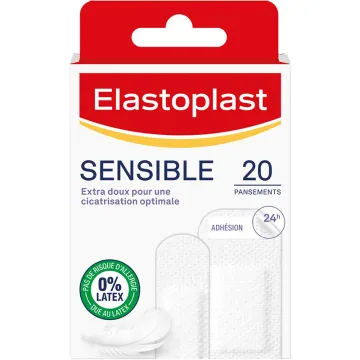
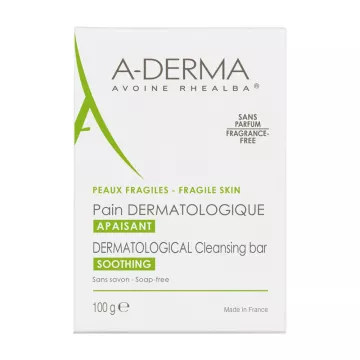
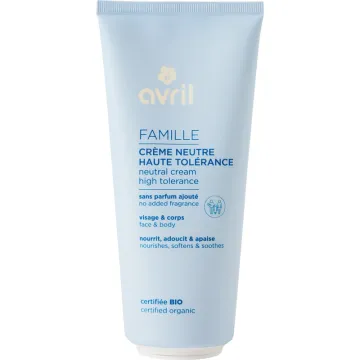
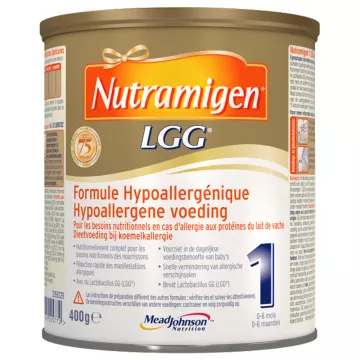
What is a hypoallergenic product?
A hypoallergenic product is formulated to minimize the risk of allergic reactions by avoiding substances known to be the main cosmetic allergens. This label appears on many products designed for sensitive skin, but what it actually means varies widely depending on the manufacturer. It is primarily a marketing claim, not a regulated label in the strict sense. Understanding what it promises—and what it does not promise—is essential for making informed choices when selecting cosmetics.
What is the origin of this label?
The term “hypoallergenic” first appeared in the 1950s in the United States, at a time when the cosmetics industry was seeking to reassure consumers about the safety of its products. The prefix “hypo” means “less than” or “below.” The term therefore does not mean “zero risk” but rather “reduced risk” compared to a standard product. From the very beginning, its commercial use has far exceeded its precise scientific meaning—a 1975 report by the U.S. Food and Drug Administration already concluded that the term has “no clear meaning” from a dermatological standpoint. The issue remains relevant today.
Is there a strict regulatory framework?
No, there is no uniform framework. This is the most important point to understand:
- In the European Union (Regulation (EC) No. 1223/2009), the term “hypoallergenic” is permitted on labeling but is not associated with any harmonized specifications;
- Each manufacturer defines its own criteria for using this term;
- However, its use must comply with the general principle of the European Regulation on cosmetic claims (EU Regulation 655/2013): “truthfulness, evidence, sincerity, fairness, and informed decision-making”;
- In practice, reputable manufacturers document their approach: exclusion of major known allergens, clinical testing on sensitive skin, and dermatological evaluation;
- Less rigorous manufacturers may use the term with a minimalist approach, or even one that is purely declarative.
How can you interpret a “hypoallergenic” label?
A few useful tips when shopping in stores or pharmacies:
- Read the INCI list: the shorter it is, the simpler the formula;
- Check that the 26 fragrance allergens subject to mandatory declaration are absent (linalool, limonene, citronellol, geraniol, etc.);
- Look for the phrase “fragrance-free” or “allergen-free fragrance”;
- Identify preservatives: avoid methylisothiazolinone (MIT) and methylchloroisothiazolinone, currently the top cosmetic allergens in Europe;
- Choose products with a limited numberof ingredients that may cause allergies (essential oils, sensitizing preservatives);
- Look for the label “dermatologically tested” or “tested under pediatric supervision,” which provides an added level of assurance;
- Consult a pharmacist for skin types with known allergies.
How do these differ from “non-comedogenic” and “high tolerance”?
Three terms that are often confused but address distinct concerns:
- Hypoallergenic: aims to reduce allergic reactions by limiting known allergens;
- Non-comedogenic: designed not to clog pores, beneficial for blemish-prone skin, with no direct connection to allergies;
- High tolerance: strict pharmaceutical standards, minimalist formulation, sterile packaging, testing on skin with medical conditions—higher standards than “hypoallergenic”;
- A single formula may carry all three labels or just one—ideal for skin that is both reactive and acne-prone.
Which allergens do manufacturers exclude?
The main ingredients excluded from a truly hypoallergenic formula:
- Fragrances and fragrance allergens subject to mandatory disclosure;
- Sensitizing preservatives (MIT, MCI, formaldehyde, formaldehyde releasers);
- Lanolin and its derivatives (a common allergen);
- Synthetic dyes with no functional purpose;
- Certain essential oils with high allergenic potential (cinnamon, peppermint, tea tree at high concentrations);
- Nickel (which may contaminate certain mineral pigments);
- Drying alcohols and irritating solvents that can increase the penetration of allergens.
How can you test a product before regular use?
Testing on the inner elbow is still the best practice, even for hypoallergenic products:
- Apply a small amount to the inner elbow or behind the ear;
- Leave it on for 24 to 48 hours without rinsing, if possible;
- Watch for any redness, itching, tingling, swelling, or blisters;
- If there is no reaction, gradually increase your use of the product;
- For facial cosmetics, first test on a small area (cheekbone or temple) for a few days;
- Monitor the skin barrier for 1 to 2 weeks after introducing a new skincare product.
This test does not protect against delayed allergies (24 to 72 hours), which may appear later. If in doubt, consulting a dermatologist or allergist is highly recommended.
When should you see an allergist?
A consultation is necessary in several situations:
- Recurring reactions despite the use of so-called hypoallergenic products;
- Suspectedcontact allergy to a specific ingredient (patch tests required);
- Reactions extending beyond the application site (systemic allergy);
- Significant personal or family history (chronic eczema, asthma, allergic rhinitis);
- Onset of generalized hives, facial swelling, or difficulty breathing: a life-threatening emergency—call 15 or 112 immediately (suspected angioedema or anaphylaxis).
The community pharmacist remains the first point of contact to guide the selection of cosmetics and to report situations that warrant medical evaluation.