What is spasmophilia, and what are its physiological mechanisms?
Spasmophilia (also known as latent tetany or latent tetany syndrome) refers to a clinical picture of neuromuscular and autonomic symptoms—cramps, tingling, palpitations, and tightness—occurring against a background of neuromuscular hyperexcitability. This term, commonly used in France, is not recognized as a distinct diagnosis in international classifications (DSM-5, ICD-11); specialists view it as a multifactorial syndrome whose causes must be medically investigated. A comprehensive medical evaluation is essential to identify the cause and rule out other conditions. Discover our magnesium products available at pharmacies, our calcium products, and our anti-stress formulas.
- Mechanism of neuromuscular hyperexcitability: the excitability of nerve and muscle membranes depends on the ratio of ionized calcium to magnesium at the membrane channels—a decrease in ionized calcium (hypocalcemia) or magnesium → lowered excitation threshold → spontaneous discharges from nerve and muscle fibers → cramps, spasms, tingling, palpitations
- Role of hyperventilation and hypocapnia: stress and anxiety cause hyperventilation → excessive elimination of CO₂ → respiratory alkalosis → increased calcium-protein binding → decreased free ionized calcium despite normal total calcium → spasmophilia attack — this mechanism explains why attacks often occur during states of stress or intense emotion
- Hypomagnesemia: one of the most common causes of functional spasmophilia — magnesium deficiency → neuromuscular hyperexcitability + anxiety + palpitations + tingling — 70% of the population is deficient — chronic stress exacerbates the deficiency (increased urinary excretion due to cortisol) — measurement of erythrocyte magnesium (more reliable than plasma magnesium levels)
- Hypocalcemia: rarer, but must be ruled out — causes: hypoparathyroidism, vitamin D deficiency, malabsorption — classic symptoms: Chvostek’s sign (facial contraction upon percussion) + Trousseau’s sign (carpal spasm upon compression of the arm) — blood tests for calcium, PTH, and vitamin D are essential
- Essential differential diagnosis: panic attack (clinically very similar) — tremors of other origins — epilepsy — hypoglycemia — hyperthyroidism — chondrocalcinosis — a physician must be consulted to rule out these causes before concluding that the condition is functional spasmophilia
Laboratory Tests and When to Seek Care
- Recommended initial workup: serum calcium + ionized calcium — plasma magnesium + erythrocyte magnesium (more reliable) — serum phosphorus — 25-OH vitamin D3 — PTH (parathyroid hormone) — TSH (hyperthyroidism) — blood glucose (hypoglycemia) — complete blood count
- Screening EMG (electromyogram): sometimes performed to objectively confirm neuromuscular hyperexcitability — ischemia test (forearm ischemia + hyperpnea) — positive if doublets/triplets/multiplets are observed on EMG — allows for objective confirmation of latent tetany
- Specialists to consult: primary care physician first (evaluation and referral) — endocrinologist if hypocalcemia or hyperthyroidism is confirmed — neurologist if atypical neurological presentation — psychiatrist or psychologist if there is a predominant anxiety component (panic disorder, GAD) — gynecologist if linked to the menstrual cycle (hormonal fluctuations can worsen spasmophilia)
- Spasmophilia and the menstrual cycle: progesterone and estrogen influence magnesium and calcium metabolism — symptoms often worsen during the premenstrual phase (drop in progesterone) — magnesium and vitamin B6 deficiency exacerbates premenstrual syndrome
- Medical emergency: A true tetanic crisis with bilateral carpal spasms, laryngospasm, or convulsions requires urgent hospital care (IV calcium in cases of severe hypocalcemia)
Magnesium, calcium, vitamin D3, and natural remedies
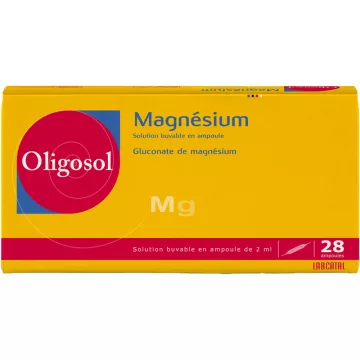
- Magnesium bisglycinate: the first-line natural treatment for functional spasmophilia associated with hypomagnesemia—regulates neuromuscular excitability by antagonizing intracellular calcium — 300–400 mg/night for adults — results often visible within 2–4 weeks for cramps, tingling, and palpitations — bisglycinate or glycerophosphate forms preferred (better digestive tolerance and bioavailability) — explore our marine magnesium product lines
- Calcium: in cases of confirmed hypocalcemia — calcium gluconate or citrate (better absorbed than carbonate) — always combine with vitamin D3 for optimal absorption — do not supplement with calcium without laboratory testing (risk of vascular calcifications if calcium levels are normal) — explore our calcium formulas
- Vitamin D3: essential for intestinal calcium absorption and calcium-phosphorus regulation—common deficiency in France (fall-winter) — 1,000–2,000 IU/day or a weekly loading dose depending on test results — 25-OH-D3 blood test required before significant supplementation
- Omega-3s: reduce neuroinflammation and nervous system reactivity — particularly useful if anxiety is associated with spasmophilia — 1–2 g EPA+DHA/day — to be combined with magnesium
- Vitamins B6 and B12: B6 (cofactor for magnesium metabolism + serotonin/GABA — often combined with magnesium in spasmophilia formulations) — B12 (myelination of peripheral nerve fibers; tingling sensations may indicate B12 neuropathy) — B-complex as a 4–8-week course — check out our stress and sleep formulas
Stress Management, Breathing, and Lifestyle
- Controlling hyperventilation: a key technique for spasmophilia — slow diaphragmatic breathing (inhale through the nose for 4 seconds, exhale through the mouth for 6 seconds) — prevents hypocapnia, which triggers an attack — cardiac coherence (365: 5 min, 6 breaths/min, 3×/day) — during an attack: breathe into a paper bag (to recapture CO₂) or hold your breath after exhaling
- Meditation and relaxation: reduce stress and anxiety, which trigger attacks — yoga pranayama (breathing techniques) is particularly suitable — biofeedback (measuring heart rate or exhaled CO₂) to learn how to control hyperventilation — MBSR for forms with a chronic anxiety component
- Diet rich in magnesium and calcium: legumes, nuts (almonds, walnuts), pumpkin and sesame seeds — leafy greens (spinach, kale, broccoli) — dairy products or fortified plant-based alternatives — whole grains — dark chocolate > 70% — avoid coffee and alcohol (they increase magnesium excretion)
- Sleep and consistency: Fatigue and lack of sleep lower the threshold for triggering attacks — 7–9 hours per night + a fixed wake-up time — magnesium in the evening + relaxation before bed to reduce nighttime cramps and tingling
- CBT and anxiety management: if a component of anxiety (panic disorder, GAD) is identified by the doctor — CBT = HAS-recommended standard of care — MonPsy (partial reimbursement for up to 8 sessions per year) — see our anxiety page for complementary approaches