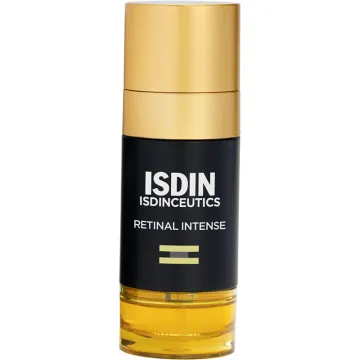
Retinol: What Is It and Why Use It?
Retinol is a cosmetic form derived from vitamin A and belongs to the large family of retinoids. Extensively studied in dermatology for over 40 years, it is now one of the most clinically well-documented anti-aging ingredients. When used regularly, it helps promote superficial cell renewal, reduce the appearance of wrinkles, refine skin texture, and improve skin tone evenness.
It is important to distinguish between:
- Cosmetic retinol (free, encapsulated, or esterified—retinol palmitate): an over-the-counter active ingredient available in drugstores, in moderate doses.
- Medical retinoids (tretinoin, adapalene, isotretinoin): prescription-only medications that are much more potent and subject to strict regulations (notably a pregnancy prevention program for oral isotretinoin, which is highly teratogenic).
What are the benefits of retinol for the skin?
Cosmetic retinol has been studied for several effects on skin quality:
- Visible reduction of wrinkles and fine lines with regular use over several months.
- A firmer, smoother appearance of the skin, thanks to support for cell renewal.
- An even skin tone and a reduction in the appearance of superficial dark spots.
- Refined skin texture with a more even appearance.
- Support for skin with retention-related imperfections (mild keratolytic effect).
- Prevents photoaging, when used in conjunction with strict sun protection.
- A radiant complexion thanks to the gradual removal of cells from the stratum corneum.
- Can be used in combination with other active ingredients such ashyaluronic acid, niacinamide, peptides, and vitamin C.
Results appear gradually, generally after 8 to 12 weeks of regular use. Cosmetic retinol is less potent than medical retinoids: its effects are milder but also better tolerated.
How should you use retinol to get the most out of it?
Retinol is a powerful active ingredient that requires a gradual introduction:
- Use only in the evening, in a serum or cream, on clean, dry skin (allow the skin to dry for 20 to 30 minutes after cleansing to minimize irritation).
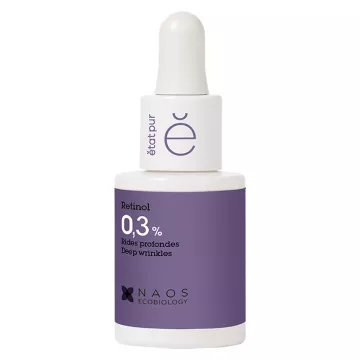
- Start with a low concentration: 0.1% to 0.3% retinol to allow the skin to adjust. Higher concentrations (up to 0.5–1% in cosmetics) should only be considered after several months of good tolerance.
- Gradual frequency: 1–2 times per week for the first two weeks, then 2–3 times, increasing as tolerated.
- “Sandwich” method for sensitive skin: Apply a moisturizer before AND after retinol to minimize irritation.
- Always use SPF 30–50 sunscreen in the morning: retinol makes the skin more sensitive to sunlight and accelerates skin renewal.
- If you experience significant redness, stinging, or flaking: space out applications or temporarily discontinue use.
Does retinol have any contraindications?
Retinol is generally well-tolerated when used correctly, but certain precautions are essential.
Major contraindications:
- Pregnancy and breastfeeding: as a precaution, all dermatologists recommend avoiding cosmetic retinol. Medical retinoids (tretinoin, isotretinoin, adapalene, acitretin), on the other hand, are strictly contraindicated due to their well-documented highly teratogenic nature.
- Skin with active eczema, irritant dermatitis, or active rosacea: consult a dermatologist beforehand.
- Combination with potent exfoliants (AHAs, high-concentration BHAs, chemical peels, mechanical scrubs): avoid or alternate with caution.
- Use without sunscreen.
Possible side effects at the start of use (the “retinization” phase): redness, tingling, dryness, and mild flaking. These symptoms generally subside within 2 to 4 weeks with an appropriate dosage.
In what forms is retinol available?
Cosmetic retinol comes in several formulations and chemical forms:
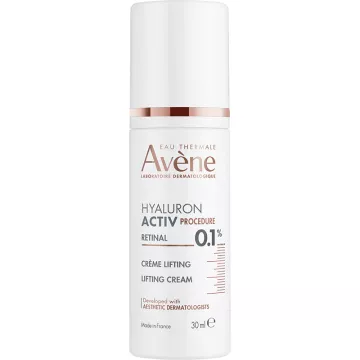
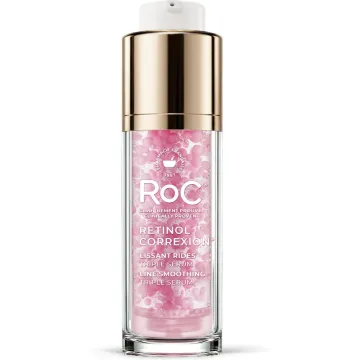
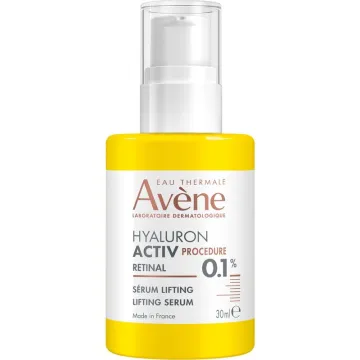
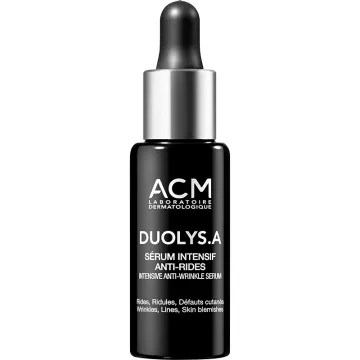
- Anti-aging serums and creams: the most common form, in varying concentrations (0.1% to 1%).
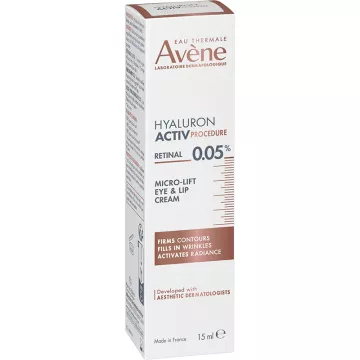
- Targeted eye care products: formulations with concentrations tailored to the delicate nature of this area.
- Products for blemish-prone skin: combinations of retinol and sebum-regulating active ingredients.
- Encapsulated retinol (liposomes, microcapsules): greater stability, gradual release, less irritation.
- Retinol esters (retinyl palmitate, propionate, linoleate): gentler but also less active than free retinol.
- Bakuchiol: a plant-based alternative sometimes described as “retinol-like.” Clinical data are promising but less extensive than those for retinol. May be a useful alternative during pregnancy, following professional advice.
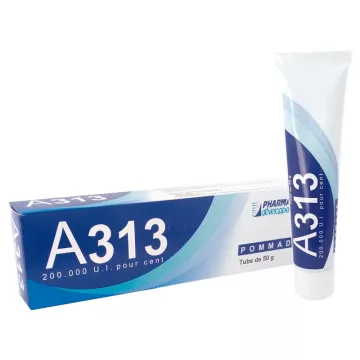
Stronger retinoids (tretinoin, adapalene) remain prescription-only medications.
Is retinol effective against wrinkles and sagging skin?
Yes, retinol is one of the most clinically well-documented anti-aging ingredients, particularly for fine to moderate wrinkles and skin smoothing. On mature skin, regular use over several months helps maintain a more even skin texture.
However, it is less potent than medical retinoids (tretinoin): deep, structural wrinkles do not disappear with cosmetic retinol alone. For mature skin seeking more pronounced results, a dermatology consultation can help explore complementary treatment options (prescription retinoids, chemical peels, aesthetic treatments).
Is retinol suitable for sensitive skin?
Retinol can cause irritation on sensitive skin, but suitable formulations are available: encapsulated retinol with gradual release, very low concentrations (0.1%), and formulas enriched with ceramides, niacinamide, and hyaluronic acid to support the skin barrier.
Bakuchiol may be a gentler alternative, although the clinical evidence is less robust. For atopic skin or active rosacea, it is recommended to consult a dermatologist before use.
Is retinol effective against acne?
Cosmetic retinol can be beneficial for acne-prone skin, particularly for non-inflammatory acne (microcysts, blackheads) and the appearance of post-inflammatory marks. Its gentle keratolytic action helps reduce pore blockage.
For inflammatory, cystic, or severe forms of acne, cosmetic retinol is not sufficient: a dermatology consultation remains essential to explore appropriate treatments (topical medical retinoids such as adapalene, antibiotics, or isotretinoin for severe cases).
Does retinol help reduce dark spots?
Retinol helps reduce the appearance of superficial dark spots by promoting renewal of the stratum corneum and regulating melanogenesis. It is often combined with topical vitamin C and niacinamide for an enhanced effect on skin tone evenness.
Deep or long-standing dark spots (such as melasma or pronounced solar lentigines) often require dermatological treatment combining specific active ingredients, chemical peels, and targeted laser therapies. Strict sun protection remains an essential part of any treatment for dark spots.
Can retinol be used in the summer?
Retinol makes the skin more sensitive to sunlight: it can still be used in the summer but requires extra caution. Practical recommendations:
- Apply strictly in the evening, away from sun exposure.
- Apply SPF 50 sunscreen every morning in sufficient quantity, reapplying as needed during sun exposure.
- Temporarily reduce the frequency (once a week) during vacations or prolonged sun exposure.
- Discontinue use for 7 to 10 days before and after intense sun exposure (beach, mountains, outdoor sports).
For regular users, however, many dermatologists recommend taking a summer break from retinol, replacing it with a vitamin C antioxidant serum that is better suited for use during sun exposure.
How do you choose a high-quality retinol product?
For a well-tolerated and effective retinol product, consider the following criteria:
- A concentration suited to your skin’s tolerance level: 0.1% to 0.3% to start, 0.5% for an established routine, and 1% reserved for skin accustomed to retinol (maximum cosmetic concentrations in Europe).
- Stabilized form (encapsulation, microspheres) for gradual release and better tolerance.
- Opaque, airtight packaging: Retinol is sensitive to air and light, which cause it to degrade rapidly.
- Formula free of denatured alcohol at the beginning of the INCI list and irritating fragrances.
- Contains active ingredients that support the skin barrier: ceramides, niacinamide, hyaluronic acid, and allantoin.
- Consult a pharmacist or dermatologist to tailor your skincare routine and choose a formula suited to your skin type.
The effectiveness of retinol depends as much on the quality of the formula as it does on consistent use and following safety precautions.