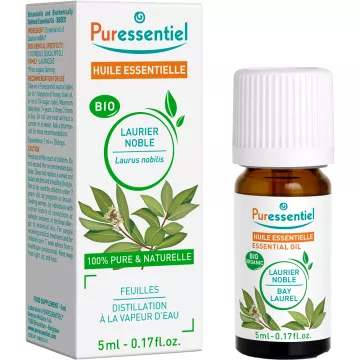
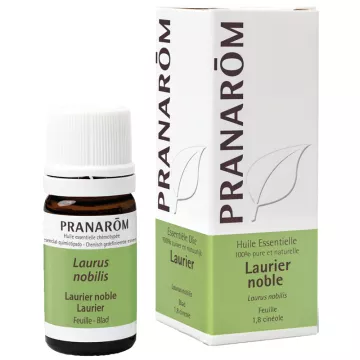
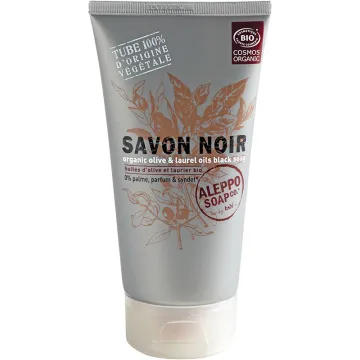
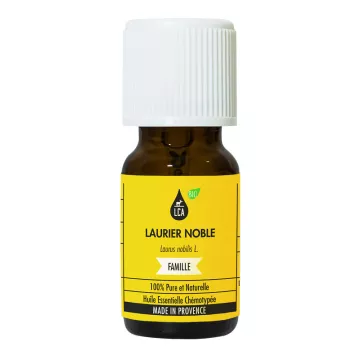
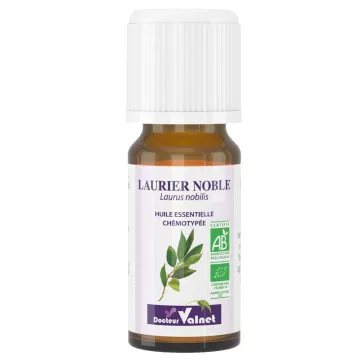
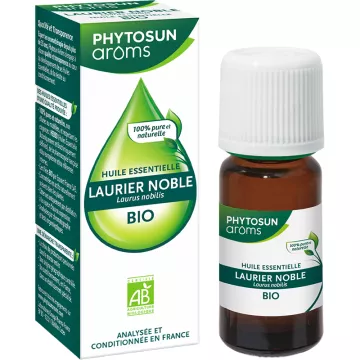
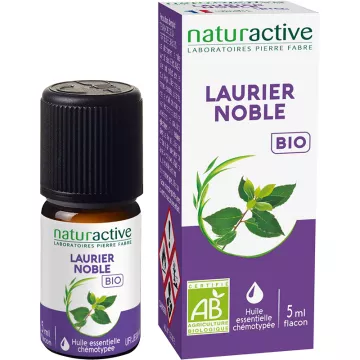
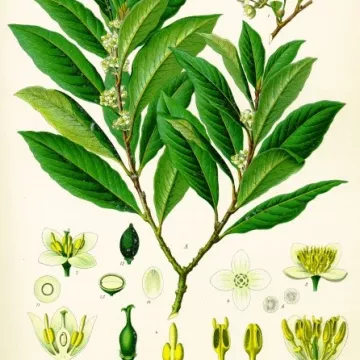
The noble laurel (Laurus nobilis) is one of the most versatile essential oils in Mediterranean aromatherapy—it supports the immune system, aids respiratory health, relieves muscle tension, and enhances concentration. Its chemical profile—1,8-cineole + α-terpinyl acetate + eugenol—gives it a versatility that many more specialized essential oils lack. And it is the only tree from which two distinct products are derived: leaf essential oil (the most commonly used) andlaurel berry oil from Aleppo soap—which are very different. Explore our aromatherapy line.
Leaf essential oil vs. berry oil: two products that shouldn’t be confused?
Confusion is common—and the two products are completely different in terms of their uses.
- Noble laurel essential oil (leaves, distillation): 1,8-cineole 30–50% + α-terpinyl acetate 10–15% + eugenol—classic essential oil, used in aromatherapy, diluted for topical application, and diffusion
- Laurel berry oil (“bay laurel” in soapmaking): maceration of the berries in a vegetable oil—rich in lauric acid + resinous-woody compounds—the main active ingredient in Aleppo soap (percentage varies from 5 to 55%)
- Aleppo soap contains olive oil + laurel berry oil — the higher the laurel berry oil content, the more potent and darker the soap — suitable for acne-prone, dry, or eczema-prone skin
- Never use leaf essential oil as a substitute for laurel berry oil in cosmetics—they have completely different profiles
Noble laurel and winter immunity?
This is its natural habitat—one of the most effective and best-tolerated immunostimulatory essential oils.
- The combination of cineole and α-terpinyl acetate stimulates the natural defenses of the mucous membranes and acts on the upper respiratory tract—supportingimmunity during the winter months
- Preventive diffusion: 6–8 drops of bay laurel + ravintsara + eucalyptus radiata —the classic winter trio, 20 minutes morning and evening
- Application to the chest and back: 3% in calophyllum oil—for children over 6 years old and adults—respiratory support during episodes of congestion
- Dry inhalation: 2 drops on a tissue, a few breaths—rapid decongestion of the nasal passages
Bay laurel and joint and muscle comfort?
The eugenol in bay leaf is one of the most well-documented analgesic active ingredients in aromatherapy—the same as in cloves, but milder.
- Massage for muscle and joint tension: 3–5% in calophyllum or St. John’s wort oil — slightly spicy note, gradual warming effect
- Joint synergy: bay laurel + marjoram + wintergreen—the pain-tension-heat trio—apply via massage to painful areas twice a day
- See our joint pain range
Bay laurel and concentration?
The least-known aspect of bay leaf—and yet one of the most well-documented in cognitive aromatherapy.
- 1,8-cineole stimulates the sympathetic nervous system like rosemary and eucalyptus—but with α-terpinyl acetate, the effect is more balanced: stimulating without causing nervous agitation
- Diffusion: 8 drops in your workspace for 15–20 minutes—a warm, woody-spicy note that supports concentration and mental clarity
- On wrists: 1 diluted drop, inhaled directly before a task requiring concentration—more balancing than pure rosemary
Laurel and hair care?
A traditional Mediterranean use—and a direct link to Aleppo soap and bay oil.
- Hair rinse: 5 drops of essential oil in a final cold rinse — supports the scalp, reduces dandruff, and adds shine
- Scalp mask: 2% essential oil in jojoba oil—apply 30 minutes before shampooing—purifies and stimulates follicular microcirculation
Precautions?
- Pregnant and breastfeeding women: essential oil use is not recommended
- Children under 6 years old: contraindicated—for children 6 and older, use only for short periods in a well-ventilated room
- Epilepsy: seek medical advice—high doses of cineole and eugenol may lower the epileptogenic threshold
- Dilute to 2–5% for topical use—eugenol is dermocaustic in its pure form
- Allergy to laurel or the Lauraceae family (cinnamon, camphor): perform a skin test before extensive use