What is a runny nose, and what causes it?
A runny nose (rhinorrhea) refers to excessive mucus production by the submucosal glands in the nasal cavities and increased vascular permeability. Nasal mucus plays an essential protective role—it traps foreign particles and pathogens—but its hypersecretion becomes bothersome when it exceeds the body’s natural drainage capacity. ENT care products are available in the ENT section of the store.
- Viral infections: the leading cause— the common cold (rhinovirus, RSV) and the flu—mucus that is initially clear and runny, then becomes thicker toward the end of the illness—resolves in 7 to 10 days—a runny nose is the earliest symptom
- Allergic rhinitis: release of histamine by mast cells in response to allergens (pollen, dust mites, animal dander)—clear, watery, and profuse — accompanied by bouts of sneezing and nasal and ocular itching — persists as long as exposure continues — see management ofallergies and nasal congestion
- Sinusitis: a common complication of the common cold—mucus trapped in the sinus cavities—postnasal drip into the pharynx—associated periorbital and frontonasal pressure pain
- Environmental irritants: pollution, tobacco smoke, cold and dry air (humidity < 40%) — vasomotor rhinitis (nasal discharge triggered by temperature changes, strong odors, alcohol)
- Naso-sinus polyps (chronic bilateral obstruction with progressive loss of smell—consult an ENT specialist)—persistent unilateral rhinorrhea without infection (a symptom requiring medical evaluation to rule out a structural cause)
How can allergic and infectious rhinorrhea be distinguished?
- Allergic rhinorrhea: clear, watery, non-thick mucus—bouts of sneezing (≥ 5 in a row)—nasal, eye, and sometimes palate itching — no fever — duration varies depending on exposure — seasonal (pollen) or perennial (dust mites) — specific ENT care and desensitization by an allergist if recurrent
- Infectious rhinorrhea (common cold): mucus changing from clear to yellowish (not necessarily indicating a bacterial superinfection) — possible moderate fever (< 38.5 °C) — associated body aches and fatigue — sore throat — spontaneous resolution within 7 to 10 days
- Complications to watch for: otitis media (ear pain, sensation of a blocked ear—common in children due to Eustachian tube dysfunction)—bacterial sinusitis (fever > 38.5 °C, persistent greenish mucus > 10 days, unilateral facial pain)—these forms require medical evaluation
What natural remedies and treatments are available for a runny nose?
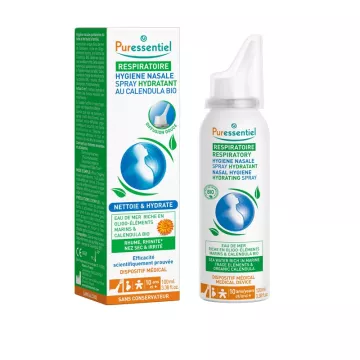
- Salinenasal irrigation: a priority—mechanically removes mucus, allergens, and viruses—thins residual mucus — 2 to 4 times a day during the acute phase — isotonic saline solution or seawater — if accompanied by a stuffy nose: alternate between rinsing and a topical decongestant if necessary
- Steam inhalation: hot water at 42–45 °C, 10 minutes, with a towel over the head — a few dropsof eucalyptus (mucolytic cineole) or peppermint (mucus-thinning menthol) diluted — moisturizes the mucous membrane and thins mucus — contraindicated for children under 7 years of age
- Warmhoney: in herbal tea with ginger — soothes a throat irritated by postnasal drip — mild antibacterial properties (hydrogen peroxide) — contraindicated in infants under 1 year of age
- Prevention of seasonal allergies: monitor pollen reports (RNSA) — keep windows closed during peak pollen times (morning and late afternoon) — HEPA air purifiers — wash hair in the evening (to remove pollen) — take oral antihistamines preventively before high-risk seasons — allergen immunotherapy (desensitization) administered by an allergist for persistent forms