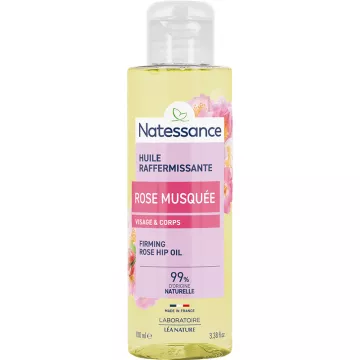
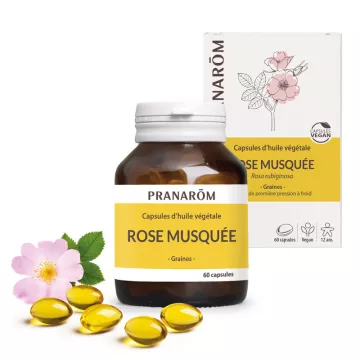
What is rosehip oil, and why isn't it an essential oil?
Rosehip oil (Rosa rubiginosa, syn. Rosa mosqueta) is a vegetable oil —not an essential oil. It is extracted by cold-pressing the seeds contained in the rosehips (fruits) of the Chilean shrub. This distinction makes all the difference: it is not used in diffusion or traditional aromatherapy, but rather applied directly to the skin as a pure treatment or incorporated into cosmetic formulations.
Its composition is exceptionally rich: linoleic acid (omega-6, 40–50%), alpha-linolenic acid (omega-3, 30–35%), oleic acid, and a retino-active fraction (natural trans-retinoic acid in trace amounts), which accounts for much of its effectiveness in promoting skin cell renewal.
Why is the trans-retinoic acid in rosehip a unique active ingredient?
It is the most distinctive property of rosehip oil—and the one most often misunderstood.
The oil naturally contains trace amounts of trans-retinoic acid (a retinoid), which is also the active ingredient in tretinoin (a prescription medication for acne and wrinkles). This doesn’t mean that rosehip is a medication—the concentrations are incomparably lower. But it explains its actual effect on skin renewal,skin radiance, and mild pigmentation spots, areas where many plant oils remain less effective.
- This retinoid-active fraction makes it slightly photosensitizing—best used in the evening, or in the morning with sunscreen of at least SPF 30
- Do not confuse with medical retinoids (tretinoin, isotretinoin, adapalene)—which are teratogenic and require a prescription—rosehip oil is a cosmetic, not a medication
- Pregnant women: as a precaution, avoid it—the presence of trans-retinoic acid, even in low doses, justifies this recommendation
What are the practical uses of rosehip oil for the skin?
It is the most versatile plant-based oil for natural anti-aging skincare—its complementary omega-3/omega-6 profile is ideal for skin lacking density.
- Dry and matureskin: Apply 2–3 drops undiluted in the evening to slightly damp skin—the omega-3 and omega-6 fatty acids penetrate quickly and restore the skin’s lipid barrier
- Acne-prone skin with scars: its high linoleic acid content makes it one of the few non-comedogenic oils effective against acne scars—apply 1 drop in the evening to affected areas
- Pigment spots and uneven skin tone: trans-retinoic acid accelerates keratinocyte renewal—visible results after 4–8 weeks of regular use
- Anti-aging combination: rosehip + neroli (0.5%) — the most comprehensive duo for mature skin lacking firmness
- See our anti-aging serums and anti-aging facial treatments
How does rosehip oil compare to other plant-based oils?
It occupies a unique position in the triangle of cosmetic plant oils.
Whereas argan oil is primarily used for shine and light nourishment (high in oleic acid), and borage oil is an ultra-hydrating oil for very dry skin (high in GLA), rosehip oil is the oil for skin renewal. Its nearly balanced omega-3 to omega-6 ratio is rare among plant oils—this is what gives it both good absorption and an active effect on skin quality.
- Compared to rose (essential oil or hydrosol): rosehip is a plant oil with no strong botanical connection to the essential oils of Rosa damascena or Rosa centifolia—it has a completely different profile
- Borage + rosehip combination: the two complement each other perfectly for very dry skin showing signs of aging
What precautions should be taken with rosehip oil?
- Mild photosensitization (trans-retinoic acid): best used in the evening, or with SPF 30 in the morning
- Pregnant and breastfeeding women: not recommended as a precaution (retinoids)
- Allergy to Rosaceae (strawberry, peach, almond): perform a skin test before extended use
- Storage: opaque glass bottle; refrigerate after opening—omega-3s oxidize quickly—observe best-by date (6–12 months after opening)
- Choose a cold-pressed, virgin, and organic oil—refined oils have lost most of their active ingredients