In aromatherapy and cosmetics, the rose is more than just a fragrance. It encompasses several very different products—an ultra-precious essential oil, an absolute, a daily hydrosol, and a vegetable oil (musk rose)—and each has its own specific uses. Knowing which one to use for what is already half the battle. Discover our anti-aging skincare products and our aromatherapy line.
Rose essential oil, absolute, hydrosol, musk rose oil: which one for what?
Four products, four price points, four uses—here’s how to navigate them.
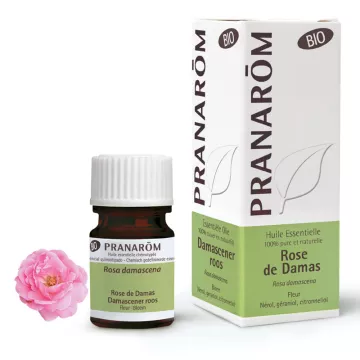
- Damask rose essential oil (Rosa damascena, distilled): the most precious—about 3–5 metric tons of petals per 1 kg of essential oil—deep emotional effect, very sensitive and mature skin, luxurious diffusion—expect to pay 30–80 € per 1 mL
- Rose absolute (centifolia from Grasse or damascena): solvent or CO₂ extraction—a richer and “more rose-like” scent profile than distilled essential oil—a heart note in natural perfumery
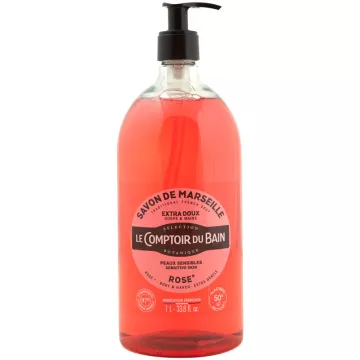
- Rose hydrosol (rose water): a byproduct of distillation—gentle, accessible, and safe—daily facial toner, for sensitive skin, eye compresses, and babies
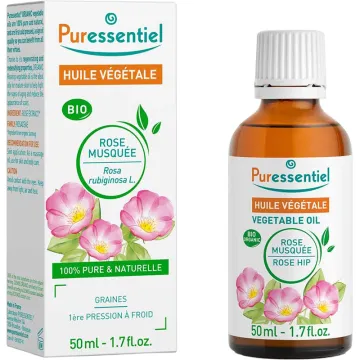
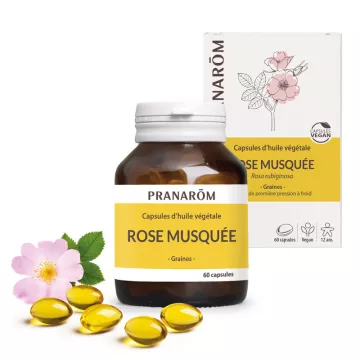
- Rosehip vegetable oil (Rosa rubiginosa): vegetable oil, not an essential oil — rich in natural trans-retinoic acid and omega-3/6 fatty acids — the best value for daily anti-aging skincare
- To get started with rose without investing in essential oil: begin with the hydrosol and rosehip oil—the results on the skin speak for themselves
Roses for the Skin: Which Product for Which Result?
Each type of rose has its own specific effect on the skin.
- Rose hydrosol: Use as a facial toner in the morning on a cotton pad—light hydration, soothes redness, soft floral scent—works for all skin types
- Rosehip oil: 2–3 drops mixed into a serum in the evening on slightly damp skin—gradual reduction of dark spots, early wrinkles, and mild scars—regeneration thanks to essential fatty acids
- 0.5% rose essential oil in musk rose: a luxurious nighttime facial treatment for dull and mature skin —reserve for occasions when you really want to pamper your skin
- Mature Skin Care Combination: rosehip + 0.5% neroli essential oil — the most effective floral duo in aromatherapy for skin over 40
- See our anti-aging serums
Rose in diffusion and emotional aromatherapy?
Rose essential oil is a concentrate of emotional balance—just a few drops are enough.
- 2–3 drops of rose essential oil in a diffuser for 15–20 minutes—a deeply soothing effect on states of anxiety, grief, or emotional imbalance
- The phenylethyl alcohol in rose essential oil modulates the responses of the autonomic nervous system—documented support for relaxation through the sense of smell
- Emotional duo: rose + ylang-ylang —an enveloping floral note, for evenings when you need to refocus
- Sleep support: 2 drops of rose + 5 drops of lavender + 3 drops of neroli —the most luxurious floral synergy for difficult nights
- On a handkerchief or your wrists: 1 diluted drop—gentle inhalation—one of the gentlest essential oils to carry with you
Damask rose vs. centifolia rose: which one should you choose?
Both are used in perfumery and aromatherapy—their profiles differ slightly.
- Rosa damascena (Bulgarian or Turkish rose): geraniol + nonadecane—a warm, spicy floral note—the global benchmark in luxury perfumery and emotional aromatherapy
- Rosa centifolia (Grasse rose, Moroccan rose): phenylethanol + citronellol — a lighter, more powdery note — used in high-end cosmetics and Grasse rose absolute
- For an essential oil distilled for aromatherapy: Rosa damascena (more extensively clinically documented)
- For perfumes and sophisticated cosmetic products: Rosa centifolia absolute from Grasse is the gold standard
Precautions?
- Rose essential oil: dilute to 0.5–1% for topical use — pregnant women (1st trimester): avoid
- Allergy to Rosaceae: Perform a skin test before any extensive use
- Rose hydrosol and rosehip oil: very well tolerated, suitable for even the most sensitive skin
- Phenyl ethanol (allergen under EC Regulation 1223/2009): present in essential oil and absolute—use with caution on highly reactive skin