Dust mites are tiny arachnids invisible to the naked eye that thrive in household textiles—mattresses, pillows, carpets, and upholstered furniture. Their feces are one of the main indoor allergens responsible for rhinitis, asthma, and eczema. Reducing their presence requires a combination of hygiene measures, humidity control, and appropriate products.
What is a dust mite, and where does it live?
The house dust mite (Dermatophagoides pteronyssinus) is an arachnid measuring 0.1 to 0.3 mm that feeds on dead human and animal skin cells. It thrives at temperatures between 20 and 30 °C with humidity levels above 60%. Areas with the highest concentrations include mattresses, pillows, comforters, sofas, and carpets. Their feces contain allergenic proteins (Der p 1) that, when inhaled, trigger immune reactions in sensitive individuals.
How can you recognize a dust mite allergy?
A dust mite allergy manifests as persistent symptoms, which are often worse upon waking and at night.
- Allergic rhinitis: sneezing, a stuffy or runny nose, chronic nasal itching
- Conjunctivitis: red, watery, irritated eyes
- Asthma: wheezing, chest tightness, shortness of breath—requires medical monitoring
- Atopiceczema: worsening of flare-ups during periods of high exposure
- Sleep disturbances: nighttime nasal congestion and sneezing that disrupt sleep cycles
How can you eliminate dust mites from your home?
Complete eradication is impossible—the goal is to significantly reduce the allergen load.
- Wash bedding at a minimum of 60°C once a week—the only temperature that kills dust mites and their eggs
- Vacuum with a HEPA filter: mattresses, box springs, rugs, and sofas—twice a week in the bedrooms
- Use certified dust mite-proof covers (mesh size <6 µm) on mattresses, pillows, and comforters
- Keep indoor humidity below 50% (hygrometer) and the temperature below 20°C in bedrooms
- Expose bedding to sunlight: UV rays are lethal to dust mites
Which anti-dust mite products should you choose?
Several types of treatments complement mechanical hygiene measures.
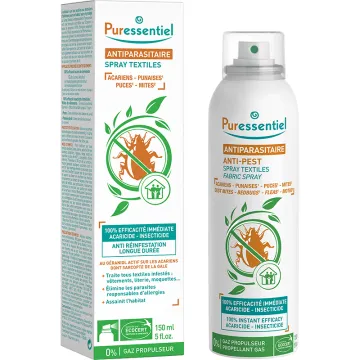
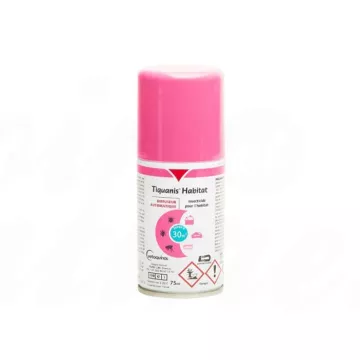
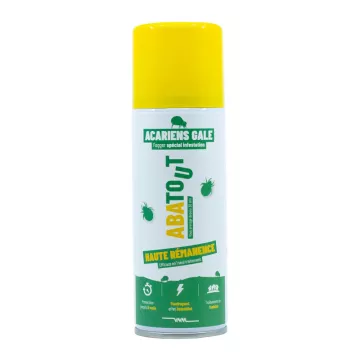
- Anti-dust mite fabric sprays: apply to mattresses, carpets, and sofas that cannot be washed—reapply as directed by the product
- Anti-dust mite additives for the washing machine: add to the wash cycle for fabrics that cannot withstand 60 °C
- Natural solutions: eucalyptus and lavender essential oils in a diluted spray — provides additional repellent effects
- Anti-allergy selection: supplements and supportive products for people with sensitivities
How can you prevent dust mites from multiplying?
Sustainable prevention relies on controlling the conditions that favor their growth.
- Air out the bedroom for 10 minutes every morning and remove the blankets to let the mattress dry
- Avoid carpeting in the bedrooms of people with allergies—opt for hard floors
- Limit stuffed animals in children’s bedrooms—wash them at 60°C or freeze them for 48 hours if they cannot be washed
- Reduce household dust by regularly wiping down surfaces with a damp cloth
Dust Mites and Seasonal Allergies: Is There a Link?
Unlike pollen, dust mites cause a year-round allergy rather than a seasonal one.
- Symptoms worsen in the fall and winter when homes are less ventilated and warmer
- If you have both dust mite allergies and seasonal allergies, the total allergen load increases—consult an allergist for an evaluation
- Desensitization (immunotherapy) is a medical option to discuss with your primary care physician