What is eau de toilette, and what sets it apart?
Eau de toilette is a fragrance containing between 5% and 15% aromatic compounds dissolved in a base of alcohol and water. This intermediate concentration places it:
This position makes it the benchmark concentration for everyday use: a noticeable yet discreet sillage, lasting freshness, and a presence that isn’t overpowering. It’s particularly well-suited for professional settings, busy days, warm seasons, and people who prefer a subtle olfactory signature.
How do you choose the right eau de toilette for you?
Several criteria guide your choice:
- Personal scent preferences: favorite fragrance families (floral, citrus, woody, aromatic, fougère, chypre, aquatic, light gourmand). First, identify the general direction.
- Occasions for use: work, sports, casual outings, travel. A versatile eau de toilette is more useful than a fragrance that’s too specific.
- Season:
- Summer: citrus (bergamot, lemon, mandarin, grapefruit), aquatic, aromatic (mint, basil, lavender), white tea.
- Winter: light spicy notes, vanilla, white musk, soft woody notes (cedar, sandalwood).
- Skin test: essential. Fragrance interacts with your skin’s pH, sebum, and body temperature. A fragrance can smell different on two different people.
- Scent development over time: Observe the notes 5 minutes, 30 minutes, and then 2 hours after application. The base notes, which linger as a long-lasting trail, are often the most defining.
- Budget and quality: Natural essences are more expensive than synthetic molecules (though this doesn’t necessarily reflect the final quality). Compare the ingredients and reviews.
What are the differences between eau de toilette and eau de parfum?
The distinction lies mainly in the concentration of aromatic compounds and its practical implications:
- Eau de toilette: 5–15% extracts, lasts 3–5 hours, light to moderate sillage, ideal for hot weather, sports, quiet environments, and skin sensitive to alcohol.
- Eau de parfum: 15–20% fragrance concentration, lasts 5–8 hours, pronounced sillage, more complex olfactory depth.
In everyday use, eau de toilette may require reapplication midday to maintain the scent signature. Many brands offer the same fragrance in both eau de toilette and eau de parfum: the former offers a lighter, airier scent profile, while the latter offers a richer, more intense one.
The choice depends on personal habits and the environment: those who prefer a constant and pronounced scent tend to choose eau de parfum; those who favor discretion, freshness, and versatility across different settings opt for eau de toilette.
Where should you apply eau de toilette for optimal projection?
Eau de toilette unfolds best on pulse points where body heat is highest:
- Wrists (without rubbing after spraying).
- The base of the neck and behind the ears.
- The crooks of the elbows and behind the knees for a more subtle trail.
- The décolletage (on the skin, not on light-colored clothing or delicate jewelry).
A few tips:
- Spray from 15–20 cm away from the skin for even distribution.
- Prepare the skin: apply the fragrance to moisturized skin (unscented body lotion or a matching scented cream ) to prolong its longevity; dry skin retains fragrance less effectively.
- Do not rub your wrists together: this breaks down certain fragile molecules and alters the development of the fragrance notes.
- Spraying the fragrance onto your hair from a distance—and only along the lengths—extends the scent’s trail. Avoid the scalp (drying alcohol).
- Sun safety: Avoid immediate sun exposure after application to certain areas, particularly if the fragrance is rich in unrectified citrus essences (possible photosensitization due to furocoumarins).
How long should a bottle of eau de toilette be kept?
Typical shelf life:
- 3 to 5 years for an unopened bottle under optimal storage conditions.
- 1 to 3 years after opening, depending on the complexity of the formulation and storage conditions.
To preserve quality:
- Keep away from direct light and sunlight: UV light degrades pigments and certain natural essences.
- Store ata stable temperature between 15 and 22 °C: avoid the bathroom (humidity, temperature fluctuations), windowsills, and the interior of a car.
- Close the cap tightly after each use to minimize oxidation.
- Store inthe original case or a closed cabinet, in an upright position.
- Do not refrigerate unless specified by the manufacturer: rapid temperature fluctuations can alter the fragrance’s balance.
Signs of deterioration: change in color (turning brown or dark yellow), change in scent (dominant sour or alcoholic notes), sediment at the bottom of the bottle. A deteriorated fragrance can irritate the skin and should no longer be applied directly to the skin.
When are the best times to wear eau de toilette?
Eau de toilette is naturally suited to many occasions:
- Workday: Its subtlety is appropriate for open-plan offices and meetings without leaving a scent trail that’s too overpowering.
- Light physical activity, walking, travel: a refreshing, clean scent.
- Informal get-togethers, days outdoors, brunches, and outdoor cafes.
- Trips to the movies, air-conditioned restaurants, and public transportation where an overly intense fragrance might be bothersome.
- Air or train travel: a discreet presence is appreciated.
- Summer: the perfect time when eau de toilette outshines heavier fragrances.
For more special occasions (parties, events, dinners), many prefer an eau de parfum, whose scent will linger longer.
Can you mix several eaux de toilette to create a unique signature?
Fragrance layering is becoming increasingly popular and can reveal interesting personal signatures:
- Horizontal layering: applying two different fragrances to distinct areas (for example, a floral note on the wrist and a woody note on the neck).
- Vertical layering: apply a lighter eau de toilette over a richer eau de parfum from the same line.
- Product layering: combine shower gel, body lotion, scented cream, and eau de toilette from the same line for an enveloping effect.
To create a successful blend:
- Choose two fragrances that share at least one common note (vanilla, white musk, vetiver, citrus) to ensure consistency.
- Avoid combining two already very complex compositions: the scent becomes too confusing.
- Test the result on your skin for several hours before wearing it out.
- Adjust the quantities: don’t overdo it, especially with oriental or gourmand top notes.
How can you recognize a high-quality eau de toilette?
Here are a few guidelines:
- Balanced composition: no single note should overwhelmingly dominate the others; the olfactory pyramid (top, heart, base) unfolds gradually.
- Evolution on the skin: a good fragrance reveals multiple facets over the course of several hours rather than a single, flat note.
- Presence of natural essences or high-quality synthetic molecules in the formula. Natural and organic cosmetics emphasize plant extracts.
- Reasonable longevity: 3 to 5 hours expected for an eau de toilette.
- Transparent composition: fragrance families described, regulated fragrance allergens listed (EC 1223/2009).
- Quality of packaging: glass bottle, precise spray nozzle, sturdy case.
- User reviews on longevity, sillage, and how the scent evolves on the skin.
Is giving eau de toilette a good gift idea?
Eau de toilette makes a great gift, provided you tailor it to the recipient’s tastes:
- Take note of the person’scurrent fragrances: preferred fragrance families, preferred intensity.
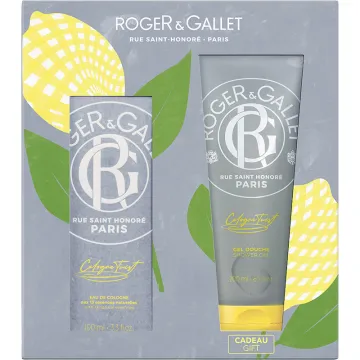
- Opt for fragrance sets that include an eau de toilette along with complementary products (shower gel, body lotion, scented cream) to enhance the sensory experience.
- Consider a women’s or men’s gift set based on their preferences, oropt for unisex fragrances to play it safe.
- Keep the receipt in case an exchange is needed, and check that the store accepts returns on unopened fragrance products.
- Include a personal message or a note explaining why you chose the fragrance—it’s a thoughtful touch that’s sure to be appreciated.
For someone whose preferences you don’t know, it’s best to opt for a multi-fragrance discovery set that lets the recipient discover their own tastes.
What is the environmental impact of eau de toilette?
The fragrance industry is gradually moving toward more responsible practices:
- Sustainable sourcing of raw materials: organic farming, traceability, certifications (Ecocert, Fair Trade, FSC for wood and cardboard packaging).
- Organically sourced alcohol is used in an increasing proportion of formulations.
- Synthetic substitutes for essences derived from endangered species (cultivated oud, synthetic white musk replacing animal musk).
- Eco-designed packaging: recycled glass, refillable bottles, and reduced plastic overpackaging.
- Reduction of phthalates and controversial compounds in the most environmentally conscious formulas.
- Carbon footprint measured by some brands.
As a consumer, there are several steps you can take to reduce your footprint: choose refillable bottles, finish your perfumes before buying new ones, recycle empty bottles (separating glass and metal caps), and avoid accumulating unused fragrances. Checking the ingredients to avoid controversial substances (phthalates, parabens, allergenic preservatives) remains a good habit when purchasing from socially responsible brands.