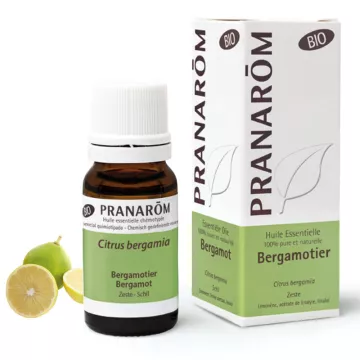
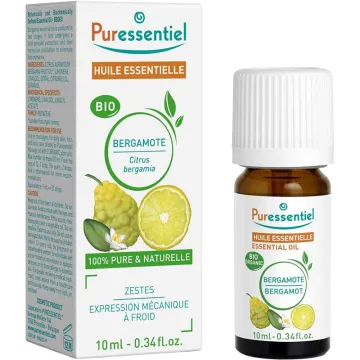
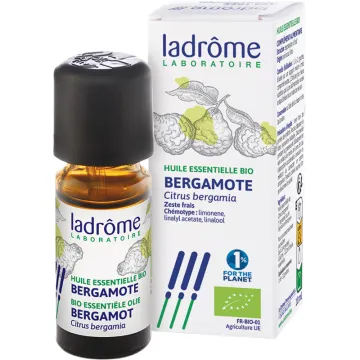
Bergamot essential oil (Citrus bergamia, cold-pressed zest) is one of the most complex oils in the citrus family. Its main components are:
It is the rare combination of linalool and linalyl acetate (typically found in true lavender) with limonene (typically found in citrus fruits) that gives bergamot its unique therapeutic profile: both fresh and floral, invigorating and calming. Sandalwood (α-santalol) is a complementary essential oil for meditation and deep-seated stress—its warm, woody note balances the citrusy freshness of bergamot.
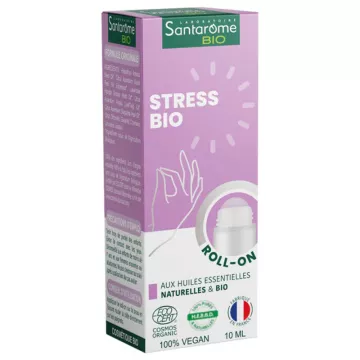
Bergamot is the most well-documented essential oil for anxiety in aromatherapy—several clinical trials (in hospital and school settings) show a significant reduction in state anxiety following 15- to 30-minute inhalation sessions. Its mechanism: the aromatic molecules (linalool, linalyl acetate) activate olfactory receptors that transmit signals to the limbic system (amygdala, hippocampus), causing a decrease in salivary cortisol and prefrontal cortex activity. Santarome Organic Stress Roll-On (bergamot + lavender + marjoram + vetiver) is applied directly to the wrists, temples, and solar plexus during episodes of acute stress. Marjoram (terpinene-4-ol) is the essential oil that works most synergistically with bergamot to address anxiety accompanied by restlessness and palpitations.
Bergamot is the go-to essential oil for mild depression and temporary low spirits—its linalyl acetate modulates serotonin and dopamine through the sense of smell. Its dual action is unique: stimulating (limonene, at the start of diffusion) then soothing (linalool, after 15–20 minutes of continuous inhalation)—ideal for difficult mornings and winter blues. Earl Grey tea is traditionally flavored with bergamot extract—the most widely consumed dietary source of bergamot. Cineole-rich rosemary complements bergamot in morning diffusion—it stimulates mental clarity while bergamot balances emotions.
Bergamot is photosensitizing due to its bergapten (5-methoxypsoralen, furanocoumarin)—its primary safety concern. After any topical application, avoid exposure to sunlight or artificial UV light for 12 to 18 hours (risk of irreversible brown spots and severe phototoxicity). This precaution does not apply to diffusion into the air. FCF bergamot (Furanocoumarin-Free, with bergapten removed by vacuum distillation) is preferred for skincare and massage—it does not cause photosensitization but has a slightly modified profile. Patchouli (patchoulol) is a non-photosensitizing essential oil that shares bergamot’s balancing and anti-stress properties—their combination creates a deep, rich fragrance accord that is highly prized in perfumery.
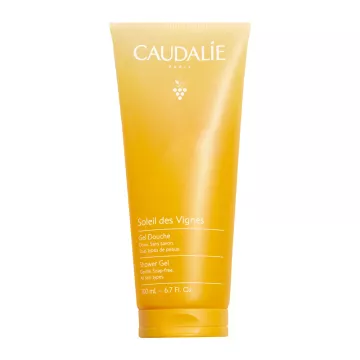
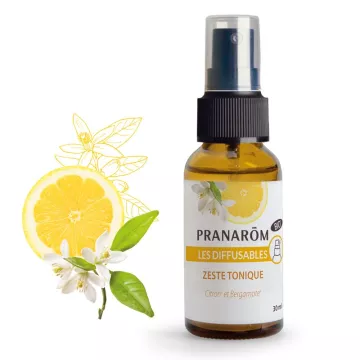
In a diffuser: 3 to 5 drops, 20–30 minutes, 2 to 3 times a day—alone or in a classic anti-stress blend (lavender + bergamot + petitgrain bigarade, ratio 2:2:1). Pranarom’s Les Diffusables Organic Zesty Toning Spray (bergamot + lemon + mandarin + grapefruit) is a ready-to-diffuse formula that creates an energizing and uplifting atmosphere. For direct inhalation: 1 to 2 drops on a tissue when stress or anxiety arises. Bergamot is used in many cosmetic products (such as Caudalie’s Soleil des Vignes Shower Gel) for its fresh and bright scent. Violet (Viola odorata, α- and β-ionone) is a rare floral essential oil whose poetic scent profile is often paired with bergamot in soothing emotional blends.