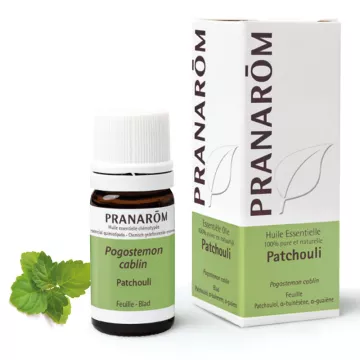
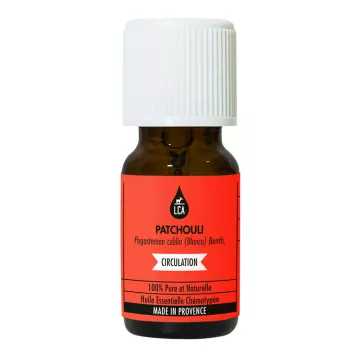
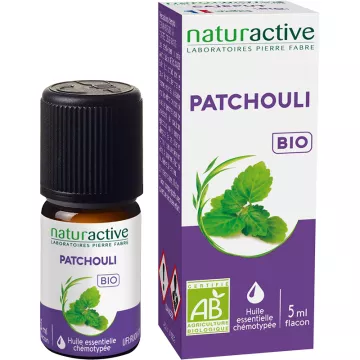
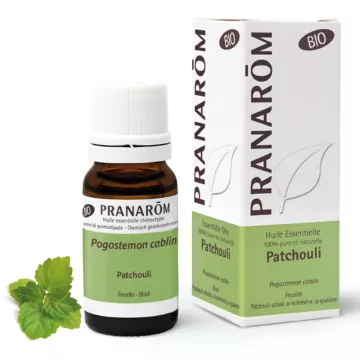
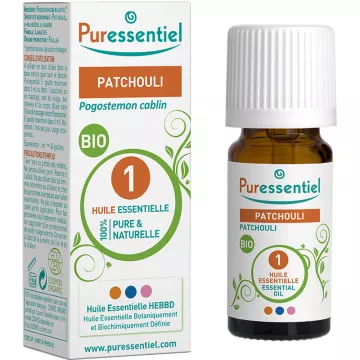
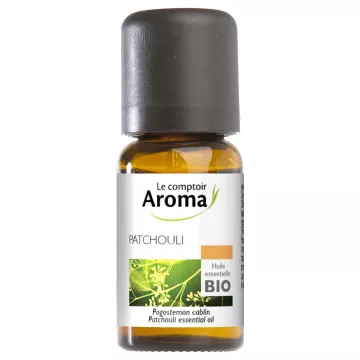
Patchouli (Pogostemon cablin) is one of the most recognizable base notes in perfumery—earthy, woody, animalic, and long-lasting. Its essential oil is produced in Indonesia and India from dried and fermented leaves: the drying process is essential, as it develops the characteristic sesquiterpenes (patchoulol, α-bulnesene, α-guaiene). It ages and improves with time, much like a fine wine. Explore our aromatherapy line.
Patchouli: Why Is This Scent So Unique?
Its profile is unique—no other essential oil truly resembles it.
- Patchoulol (35–45%): a sesquiterpenol responsible for the characteristic earthy-woody note—stable, long-lasting, and a natural fixative in perfumery
- α-bulnesene and α-guaiene: sesquiterpenes that contribute to the deep woody note
- β-caryophyllene (also found in black pepper essential oil): has a soothing effect via the CB2 receptors of the endocannabinoid system
- Patchouli essential oil improves with age—a 5-year-old oil is often richer and rounder than a fresh one—don’t be alarmed if the color darkens over time
- In natural perfumery: the ultimate fixative—a few drops in a blend extend the longevity of all other essential oils by up to 2–3 times
Patchouli in a diffuser and emotional well-being?
Its earthy base note creates a cozy, cocooning atmosphere—very different from floral or citrus essential oils.
- 3–5 drops in a diffuser for 20 minutes—a lingering, grounding note, ideal for moments of meditation or recovery after a busy day
- Supports relaxation and sleep: β-caryophyllene modulates the nervous system via CB2—a documented calming effect
- Enveloping scent blend: patchouli + ylang-ylang + sweet orange—a warm, floral, woody trio for a soothing evening atmosphere
- Grounding blend: patchouli + sandalwood + vetiver — for stressful moments when you need to refocus
- Note: Patchouli can be slightly sedative in high doses—stick to a maximum of 3–5 drops when diffusing
Patchouli on the skin?
Its patchoulol makes it a true cosmetic active ingredient—not just a fragrance.
- Mature and dullskin: 1% in jojoba or rosehip oil—patchoulol supports skin firmness and helpsbrighten the complexion
- Blemishes and acne: 1–2% in jojoba oil—purifying action, regulates sebum, and leaves a subtle scent after absorption
- Post-bath body care: 2% in sweet almond oil—nourishes the skin and leaves a long-lasting scent
- Skin-balancing blend: patchouli + rose geranium + jojoba oil—a sebum-regulating and toning duo for combination skin
Patchouli for circulation and drainage?
A lesser-known but well-established use in practical aromatherapy.
- Leg drainage massage: 3% in calophyllum oil—upward strokes from the feet toward the knees—supports venous return and relieves heavy legs
- Patchouli exerts a mild vasoconstrictive and toning effect on capillary walls—supports local lymphatic drainage
- Circulatory blend: patchouli + cypress + Egyptian geranium in calophyllum oil—the classic veinotonic, draining trio
Patchouli as a repellent?
Its lingering scent and sesquiterpenes make it a natural supplementary repellent.
- Patchoulol repels mosquitoes and clothes moths—a traditional use in Southeast Asia for centuries
- Homemade repellent spray: 5 drops of patchouli + 5 drops of lemongrass in 50 mL of water + a dispersant — spray on exposed areas
- Textile protection: a few drops on a cotton ball placed in drawers—keeps moths away and scents your linens
- See our range of natural mosquito repellents
Precautions?
- Pregnant and breastfeeding women: not recommended
- Mildly sedative in high doses—avoid before driving or activities requiring alertness
- Perform a skin test before extended use—possible allergy to the Lamiaceae family (which includes patchouli)
- Dilute to 1–3% for topical use—never apply undiluted
- Note on color: As the essential oil ages, it darkens (from amber to brown)—this is normal, and the properties improve