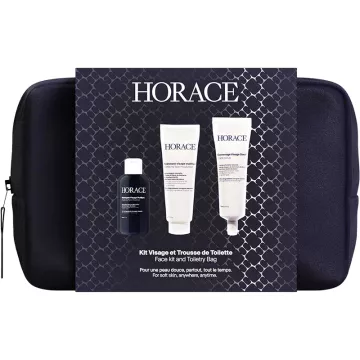
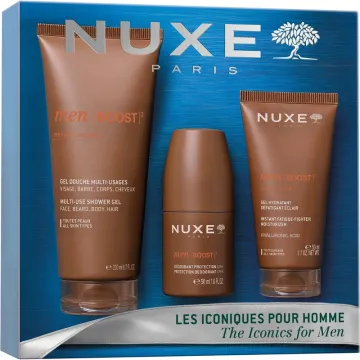
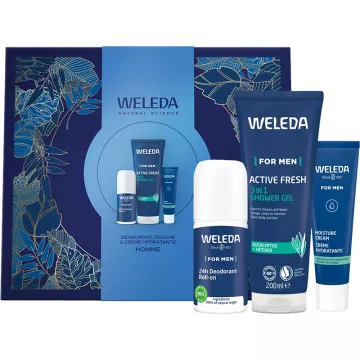
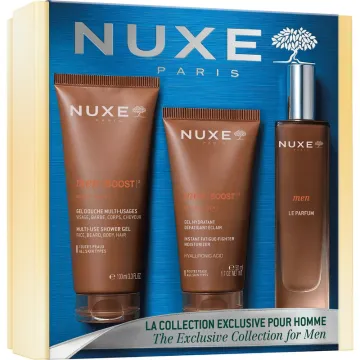
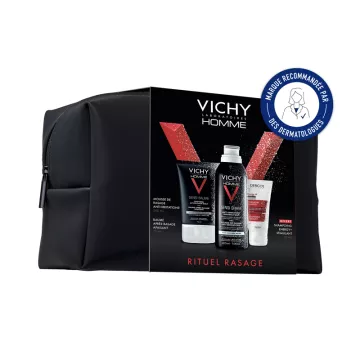
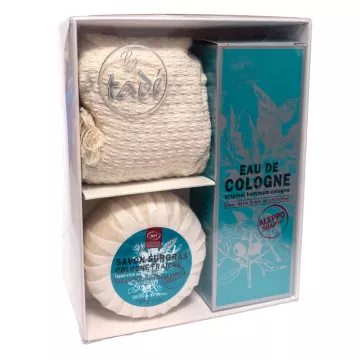
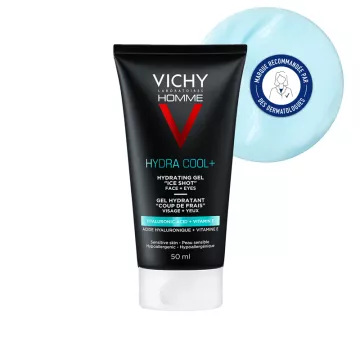
Giving—or treating yourself to—a natural men’s skincare set makes much more sense than a generic set from a big-box store—as long as you understand which products truly complement each other. A well-curated set follows a logical skincare routine: a cleanser, a targeted treatment, a moisturizer, and a beard care or aftershave product. Consistency in active ingredients is essential—there’s no point in mixing a clay-based detox gel with an ultra-rich moisturizer on combination skin: the two will cancel each other out.
For a man aged 25–35 with combination, clean-shaven skin: a charcoal or glycolic acid cleansing gel + a vitamin C or niacinamide serum + an aftershave balm with D-panthenol and bisabolol. For men aged 40–55: a CoQ10 or peptide treatment + a caffeine-based eye cream. Accurately identifying your skin type and routine determines everything else.
In the olfactory pyramid of a scented skincare set, citrus notes open the fragrance. Bergamot essential oil (Citrus bergamia) is the most sophisticated citrus note in natural men’s perfumery—its linalyl acetate gives it a floral roundness that transcends mere freshness. Found in 30% of niche men’s fragrances, it is at once fresh, slightly bitter, and earthy. Its linalool has a documented anxiolytic effect, particularly valued in relaxing skincare products for active men.
Yuzu (Citrus junos), a Japanese citrus fruit whose breakthrough in Western perfumery has been recent but meteoric, offers a complex olfactory profile—mandarin, lemon, grapefruit, and a distinctive floral note. Its limonene and gamma-terpinene have documented antioxidant activity for the skin. The only drawback: it is photosensitizing at high concentrations, so it should be formulated with caution in leave-on products.
Sweet orange essential oil (Citrus sinensis) bridges the gap between fresh and warm notes in a scented men’s skincare product. Its limonene (90%) dissolves surface sebum—hence its inclusion in cleansing gels. Olfactory-wise, its warm, juicy accord is universally perceived as positive and energizing; its mild anxiolytic effect, measured in EEG studies, makes it an ideal note for morning skincare.
Less well-known but remarkably effective, myrtle (Myrtus communis) contains 1,8-cineole, a skin antiseptic, and myrtényl acetate, which has woody-balsamic properties distinct from those of eucalyptus. At concentrations of 0.5 to 1% in men’s facial skincare, it regulates sebum production and soothes post-shave redness, with better tolerability than eucalyptus on reactive skin.
These two base notes ground men’s skincare in a deep and lasting dimension.Frankincense (Boswellia serrata) has made a strong comeback in premium men’s cosmetics. Its incensole acetate activates TRPV3 channels and induces a state of open calm—a measurable neurological mechanism—while its boswellic acid inhibits cutaneous 5-lipoxygenase, reducing local inflammation. Applying it to the face after shaving soothes both irritation and the mind.
Fir (Abies balsamea), rich in borneol and bornyl acetate, offers a fresh, balsamic coniferous note distinct from pine. A mild topical analgesic, it is particularly well-suited for post-workout balms. Its forest-like scent, combined with studies on shinrin-yoku (Japanese forest bathing), measurably reduces cortisol levels within minutes of inhalation.
Beyond the active ingredients, consistency in use is what makes a gift set valuable. Three key factors to consider: the routine (morning or evening, before or after shaving), skin type (oily/combination vs. dry/sensitive), and the intensity of the fragrance (subtle vs. bold). A man who shaves every day has different needs than a bearded man, and a man exposed to urban pollution has different priorities than an outdoor enthusiast.
The olfactory harmony between the products is just as important as their effectiveness. A set in which all the scents clash—bergamot + patchouli + incense + ylang-ylang all at once—becomes unusable for daily use. A good natural gift set chooses a dominant scent family (fresh woody, citrus-spicy, sweet oriental) and consistently applies it across all products.
A set of topical skincare products, no matter how well formulated, acts only on the surface. The quality of men’s skin is also built from the inside out. Lycopene (15 to 30 mg/day) is the most well-documented photoprotective carotenoid for men’s skin—its concentration in the skin is inversely correlated with UVA damage, according to epidemiological studies. Taurine is a cytoprotective amino acid that stabilizes keratinocyte membranes under oxidative stress and improves hair fiber quality at doses of 500 mg to 1 g per day. Ideally, a comprehensive regimen would include targeted dietary supplements alongside topical skincare products—as the “inside-out” approach remains the most comprehensive for men’s skin after age 35.