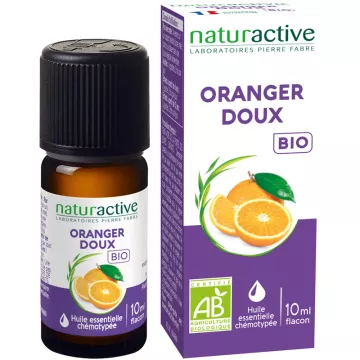
Sweet orange essential oil (Citrus sinensis, cold-pressed peel) consists of 90–95% limonene, supplemented by traces of linalool, myrcene, and α-terpineol. Its key properties:
It differs from bergamot (anxiety/mood) and lemon (focus/immunity). Foraromatherapy via diffusion, there is no risk of photosensitization.
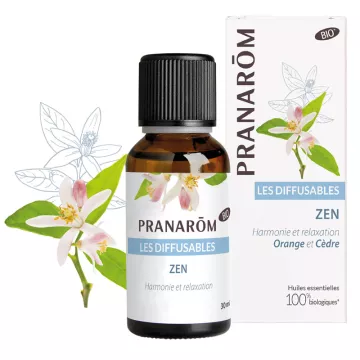
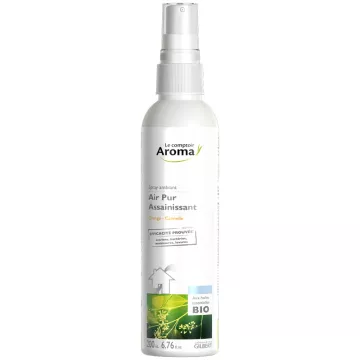
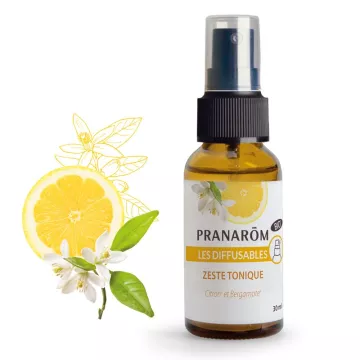
For atmospheric diffusion (ultrasonic or nebulizer), 5 to 10 drops for 30 minutes are sufficient. The most effective blends: orange + cedarwood (grounding and warm), orange + lavender (balancing), orange + cinnamon (wintery), orange + ylang-ylang (relaxing and indulgent). Room sprays (orange + cinnamon, orange + citrus zest) are a convenient alternative if you don’t have a diffuser. Sweet orange bath blends must be diluted with an emulsifier—pure essential oil should never be poured directly into bathwater (risk of skin irritation).
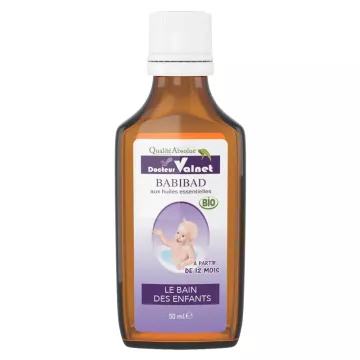
Sweet orange is one of the few essential oils that can be used starting at 3 months of age, either through room diffusion (20–30 minutes, in a room where the baby is not present) or as a highly diluted topical application (0.5–1% in a carrier oil). Its composition—free of ketones, phenols, and dermocaustic aldehydes—makes it a particularly gentle essential oil. Ready-to-use baby bath blends (diluted with emulsifiers) are the safest options for infants. Myrtle (Myrtus communis) is often combined with orange in pediatrics for gentle respiratory synergies—it is one of the few essential oils suitable for children’s upper respiratory tract.
Orange blossom floral water (neroli hydrosol, Citrus aurantium var. amara) is a byproduct of the distillation of bitter orange blossoms—it contains the water-soluble molecules of neroli (geraniol, linalool, linalyl acetate). Distinct from sweet orange essential oil (Citrus sinensis peel),orange blossom floral water can be used as a soothing toner after cleansing, as a moisturizing spray on sensitive skin, or as an aftershave treatment. It is suitable for all skin types and has a calming effect on mild nervousness when inhaled.
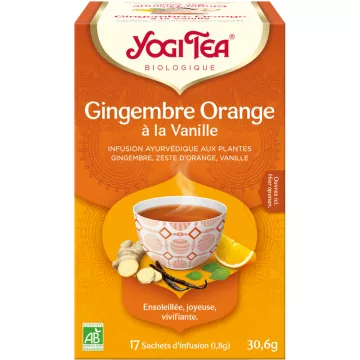
Sweet orange is a paradoxical essential oil—a mood booster in the morning, it promotes relaxation and helps you fall asleep when diffused in the evening thanks to its parasympathomimetic action. Diffusion blends for sleep often combine sweet orange with true lavender, marjoram, and petitgrain bigarade for a synergistic sedative effect (relaxing essential oils). It is also found in relaxation herbal teas for its comforting aromas.
Sweet orange blends well with many aromatic families. With woody essential oils (cedar, sandalwood, patchouli) for an enveloping and grounding effect. With spicy essential oils (cinnamon, ginger) for a warm, wintery atmosphere. With floral essential oils (ylang-ylang, geranium) for hedonistic and soothing synergies. Niaouli (Melaleuca quinquenervia CT cineole) is a less conventional but effective pairing—its camphor-eucalyptus freshness contrasts with the sweet roundness of orange, creating an invigorating synergy that purifies the air during the winter months.