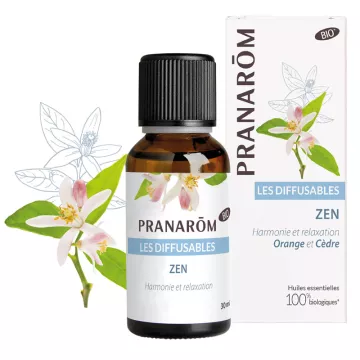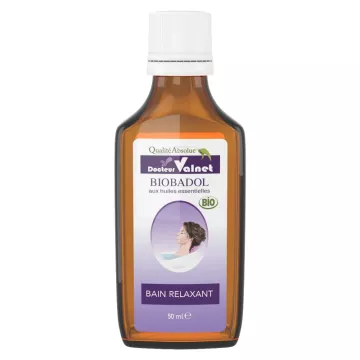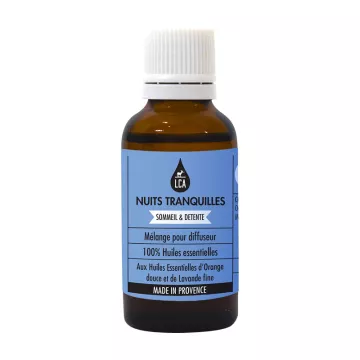
Relaxing essential oils are characterized by their high content of terpenic esters and linalool, molecules known for their soothing effect on the nervous system. Lavender remains the gold standard in this category, prized for its skin-friendly properties and versatility (diffusion, massage, baths). Other oils usefully complement a relaxation routine depending on olfactory preferences and specific needs: soothing citrus, sedative floral notes, or enveloping woody scents—each with its own profile and specific precautions for use.
Diffusion is the simplest way to enjoy a relaxing atmosphere at the end of the day. A 20- to 30-minute session, once or twice a day, in a well-ventilated room, is generally enough to create a soothing atmosphere without the risk of overexposure. Bergamot is particularly popular for diffusion due to its citrus scent, which is both invigorating and soothing, and effective against end-of-day nervous tension.
When used in massage, relaxing essential oils must always be diluted in a carrier oil at a concentration of 2 to 5 percent, depending on the area being treated. A slow massage of the solar plexus, back, or neck promotes muscle and nervous system relaxation.Ylang-ylang, rich in linalool and acetates, is one of the most commonly used essential oils in relaxing massage due to its enveloping floral scent and gentle sedative effect.
A bath with essential oils is a popular relaxation ritual, provided that the essential oil is always diluted in a neutral base (dispersant, vegetable oil, or milk) before adding it to the water, to avoid direct contact with the skin. Petitgrain bigarade, with its green and floral notes, blends particularly well into an evening bath to help ease the transition to sleep.
Not all relaxing essential oils are suitable for sensitive populations. Mandarin is among the best-tolerated; it can be used in a diffuser starting at 3 months of age and is acceptable for occasional use beginning in the second trimester of pregnancy, due to the absence of dermocaustic or emmenagogue compounds in its composition. For any other relaxing essential oil, professional advice is recommended before use on children or pregnant women.
A relaxing effect does not mean there is no risk: certain sedative essential oils can potentiate the effects of anxiolytic or hypnotic treatments and should be used with caution if undergoing such treatment. Marjoram, for example, is not recommended when driving or engaging in activities that require increased alertness due to its pronounced sedative effect. As a general rule, always dilute before applying to the skin, perform a patch test, and never ingest an essential oil without consulting a professional trained in aromatherapy.