Frankincense —or olibanum —comes from the resin of trees of the Boswellia genus (B. sacra, B. carteri, B. serrata, depending on the origin). It is both a distilled essential oil with cosmetic and emotional properties and—in the form of a standardized dry extract—a nutraceutical active ingredient documented to support joint comfort. Two products, two very different modes of action—not to be confused. Explore our aromatherapy line.
Frankincense Essential Oil vs. Boswellia Extract: Two Products, Two Uses?
The term “frankincense” actually refers to two radically different approaches, depending on the form.
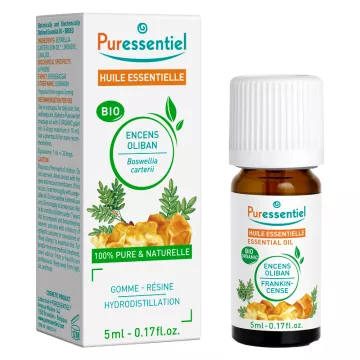
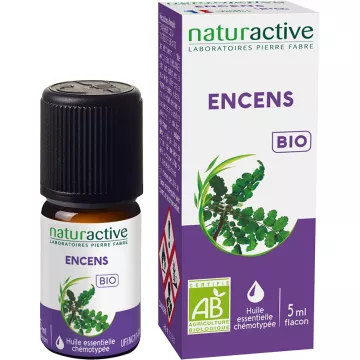
- Boswellia essential oil (B. sacra or B. carteri): distilled from the resin—α-thujene + α-pinene + limonene + bornyl acetate—with a fresh, slightly lemony monoterpene profile—used in cosmetics, aromatherapy, and meditation
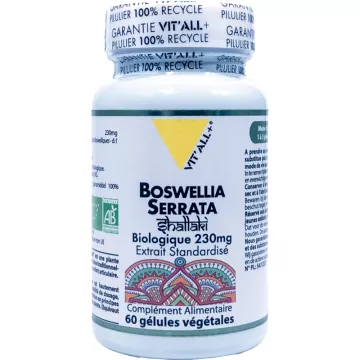
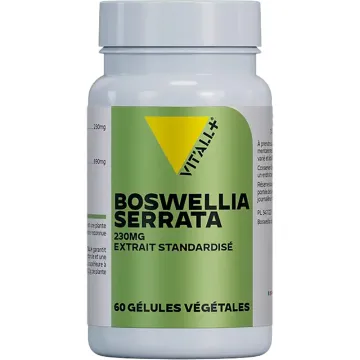
- Boswellia extract (B. serrata, dietary supplement): standardized for boswellic acids (AKBA, AKBAc)—active compounds that inhibit LOX-5 (the inflammatory pathway)—clinically documented support for joint comfort
- The essential oil does not contain boswellic acids in significant quantities—these are non-distillable resinous molecules—there is no possibility of confusion between the two forms
- B. serrata (India): better clinical evidence for joint comfort—check for “AKBA” or “acetyl-11-keto-β-boswellic acid” on supplement labels
Boswellia extract and joint comfort?
This is the most well-established indication—several positive randomized clinical trials.
- Boswellic acids, particularly AKBA, inhibit 5-lipoxygenase—a key enzyme in the leukotriene cascade involved in chronic joint discomfort
- Positive clinical studies (including a 2020 meta-analysis) on support for knee joint comfort and mobility—results visible after 4–8 weeks of treatment
- Effective dosage: 100–300 mg of standardized extract (min. 65% boswellic acids + 30% AKBA) per day—check the label for standardization
- Synergistic combination: Boswellia + turmeric + piperine —the most well-documented phytotherapeutic trio for joint comfort
- See our joint comfort product line
Frankincense essential oil and skincare?
Its monoterpene profile is effective for sensitive and mature skin —with a luxurious scent.
- α-Thujene and α-pinene support cell renewal and skin firmness—a complementary active ingredient to neroli and rose in anti-aging serums
- Night serum: 0.5–1% Boswellia essential oil in musk rose carrier oil—light resinous note, for mature skin lacking density
- Skin prone to rosacea and reactive skin: 0.5% in calophyllum — supports vascular tone and soothes redness
- See our anti-aging serums
Frankincense essential oil and emotional well-being?
Its use in meditation and spirituality dates back millennia—its mechanism of action is olfactory and limbic.
- Diffusion: 5–7 drops, 20–30 min — woody-resinous note with a hint of citrus, grounding and opening the mind — ideal for meditation and moments of intentional calm
- Sleep support: frankincense + true lavender —a grounding evening blend with a warm, soothing note
- Classic spiritual combination: frankincense + myrrh — these two sacred resins diffused together, for creative work or meditation spaces
- Centering atmosphere: frankincense + patchouli + sandalwood — a trio of grounding, woody base notes
Resin vs. Essential Oil: Which Should You Choose?
For therapeutic uses, essential oil is more precise—for atmosphere, resin is unmatched.
- Resin to be burned on glowing charcoal: complex aromatic smoke, ritual uses, and space purification—ventilation required
- Essential oil: smoke-free, with a more defined profile and adjustable dosage—ultrasonic diffusion, topical application, cosmetic care
- Asthmatics and those sensitive to smoke: use essential oils only via ultrasonic diffusion—avoid burning resin in enclosed spaces
Precautions?
- Essential oil (EO): Not recommended for pregnant or breastfeeding women—dilute to 0.5–2% for topical use
- Resin for burning: Always use in a well-ventilated area—inhaling smoke in enclosed spaces can irritate the mucous membranes
- Boswellia extract (supplement): documented drug interactions with NSAID anti-inflammatory medications—inform your doctor
- Asthma: Avoid inhaling resin smoke—essential oil used in an ultrasonic diffuser is better tolerated