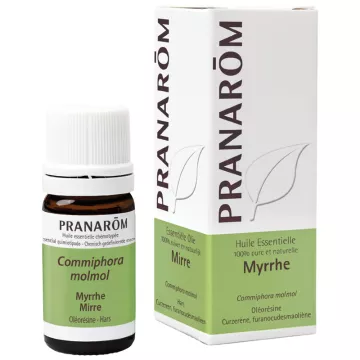
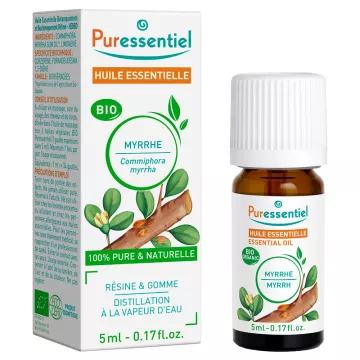
Myrrh (Commiphora molmol, syn. C. myrrha) is an aromatic resin native to East Africa and the Arabian Peninsula—used for 4,000 years in Egyptian, Ayurvedic, and Chinese medicine. Its warm, woody, and slightly bitter scent makes it a staple in perfumery and aromatherapy. But its most well-documented practical use today is less mystical: oral health and the care of dry and mature skin. Explore our aromatherapy line.
Myrrh and Oral Hygiene: The Most Well-Documented Use?
Before industrial toothpastes, there was myrrh. It’s still here—and for good reason.
- Myrrh tincture has been used since ancient times to treat irritated gums, canker sores, and minor mouth sores—a traditional use recognized in herbal medicine
- The sesquiterpenes and resins in myrrh help balance the oral microbiome and soothe inflamed mucous membranes—which is why it’s found in natural toothpastes and mouthwashes
- Homemademouthwash: Dilute 2 drops of myrrh essential oil in 1 c.c. of coconut oil, then add to a glass of lukewarm water—gargle for 30 seconds after brushing
- Apply 1 drop of essential oil to your fingertip and gently dab it on sore gums—for quick, temporary relief
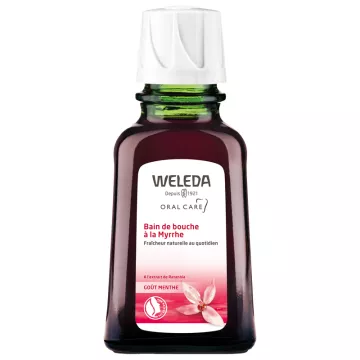
- See our line of natural oral care products
Myrrh for the skin?
Its sesquiterpene profile makes it an ideal active ingredient for dry and aging skin that lacks firmness.
- Dry and very dryskin: 0.5–1% in calophyllum or argan oil—myrrh strengthens the hydrolipidic film and soothes itching in cold weather
- Mature and sagging skin: Myrrh resins have a firming effect—they support skin firmness and enhance the complexion’s radiance in skin lacking density
- Dry feet and cracked heels: 3% in solid coconut oil as a nighttime treatment worn with socks—the resin protects and rebuilds the skin’s protective barrier
- Skin combination: myrrh + patchouli in a vegetable oil—a resin-sesquiterpene duo for very dry and mature skin
- Sensitive skin: Always dilute to 0.5%—test on a small area first
Myrrh vs. Frankincense: Same family, but different profiles?
Both are resins from African trees, often used together—but their essential oils are distinct.
- Myrrh (Commiphora molmol): predominant sesquiterpenes (curzerene, β-elemene) — warm, earthy, slightly bitter note — skin and oral mucous membranes — soothing profile
- Frankincense (Boswellia sacra or carteri): monoterpenes (α-thujene, α-pinene) + boswellic acid in the resin—a fresher, resinous, and lemony note—respiratory health, meditation, joint support
- For diffusion during spiritual practices and meditation: myrrh + frankincense — the classic sacred synergy used for millennia, which remains effective for creating an atmosphere of refocusing
- For skincare: myrrh alone is more suitable—frankincense is less effective on very dry skin
Myrrh in a diffuser and well-being?
Its deep base note creates a grounding atmosphere—ideal for moments of intentional calm.
- 3–5 drops in a diffuser for 20 minutes—a warm, woody, lingering note, less overpowering than patchouli
- Support for relaxation and sleep: myrrh + frankincense + lavender—a grounding evening trio
- Meditation: myrrh alone or with sandalwood—a base note that slows the mind and supports inner focus
Precautions?
- Pregnant and breastfeeding women: not recommended—myrrh may have a uterotonic effect
- Anticoagulants: documented interaction—inform your doctor
- Essential oil: Dilute to 0.5–2% for topical use — viscous; mix thoroughly
- Internal use (tincture, extract): only under the supervision of a qualified healthcare practitioner
- Myrrh essential oil may solidify at low temperatures—this is normal; warm the bottle in your hands