What is an eau de parfum?
Eau de parfum is a fragrance containing between 15% and 20% aromatic compounds diluted in an alcohol base (and a small amount of water). This concentration, which falls betweeneau de toilette (5–15%) and parfum (20–30%), gives it a distinctive character:
- A pronouncedolfactory intensity, with a scent trail detectable at short and medium distances.
- Long-lasting on the skin (4 to 8 hours on average).
- Depth of the olfactory pyramid: the base notes fully unfold.
- Versatility: suitable for both everyday wear and special occasions.
Eau de parfum is now the most common concentration on the fragrance market, ahead of the traditional, lighter eau de toilette.
How do you choose the perfect eau de parfum?
A fragrance is chosen by considering several factors:
- Its fragrance pyramid: top notes (immediate, 0–15 min), heart notes (15 min–2 h), base notes (3 h and beyond). Testing the full scent profile on your skin before purchasing is essential.
- Its main fragrance family: floral, citrus, woody, oriental/amber, chypre, fougère, gourmand, leather, aromatic, aquatic.
- How it interacts with your skin: The fragrance evolves differently depending on pH, temperature, sebum, and skin dryness. The same fragrance can smell different on two different people.
- Occasion for use: a subtle scent for work, a bolder one for evenings, and a fresher one for sports or travel.
- Season: floral, citrus, and aquatic notes in spring/summer; amber, woody, and gourmand notes in fall/winter.
- Your budget and the quality of the raw materials (natural essences are more expensive than synthetic molecules, though this does not necessarily reflect the final quality).
Ideal: Sniff it on a test strip, then on your skin; wait 30 minutes to 1 hour before purchasing; and ideally, take a sample home to test it over several days.
What’s the difference between eau de parfum and eau de toilette?
The distinction lies mainly in the concentration of aromatic compounds and its effects:
- Eau de toilette: 5–15% extracts, lasts 3–5 hours, light sillage, ideal for warm climates, sports, and subtle use.
- Eau de parfum: 15–20% fragrance concentration, lasts 5–8 hours, strong sillage, more complex olfactory depth.
- Parfum extract: 20–30% fragrance extracts, lasts 8–12 hours, maximum intensity, to be applied only in small dabs.
- Eau de Cologne: 2–4%, lasts 2–4 hours, immediate freshness.
- Eau parfumée: less than 3%, gentle body mist.
The same fragrance may be available in several concentrations: eau de parfum is not a “better” version of eau de toilette, but a richer interpretation of the same signature, sometimes built around different heart and base notes to suit the concentration.
How long does an eau de parfum last on the skin?
The longevity depends on several factors:
- Composition: Eau de parfums with woody, oriental, amber, or gourmand notes generally last longer than citrus or fresh floral compositions.
- Skin type: Dry skin retains fragrance less well than oilier skin (sebum = a lipophilic base). Moisturizing the skin before application significantly improves longevity.
- Climate: Heat and humidity accelerate diffusion but can shorten the duration of the scent; dry, cold weather slows diffusion.
- Skin pH and individual chemistry.
- Application area: Warm areas (neck, wrists) accelerate evaporation but enhance diffusion; cooler areas (inside of the elbows) prolong longevity.
- Amount Applied: 3–4 sprays are generally sufficient for an eau de parfum.
On average, expect 5 to 8 hours of effective longevity, with peak intensity in the first hour followed by a sillage that gradually softens into the base notes.
How do you apply an eau de parfum correctly?
To maximize projection and longevity:
- Apply to clean, moisturized skin: after a shower, on slightly damp skin or after applying a scented cream or a neutral body lotion to prolong the scent’s longevity.
- Target pulse points: wrists, base of the neck, behind the ears, crooks of the elbows, behind the knees, and the décolletage. Body heat helps the fragrance diffuse gradually.
- Spray from a distance of15–20 cm for even coverage.
- Do not rub your wrists together: this action breaks down certain fragile molecules in the top notes and alters the fragrance’s development.
- Spraying it into your hair (along the length, never on the scalp) prolongs the scent trail, provided the fragrance isn’t too alcohol-heavy.
- Avoid direct contact with delicate jewelry, light-colored clothing, or delicate fabrics (silk, satin): the alcohol can damage certain surfaces.
- Sun safety tip: Apply the fragrance to your clothes rather than your skin if you plan to be in direct sunlight (some unrectified citrus essences can be photosensitizing; cosmetic formulations use essences that have been stripped of furocoumarins, but it’s still a good idea to err on the side of caution).
Can you wear different eaux de parfum together?
Layering (combining fragrances) is an increasingly common practice for creating a personal signature:
- Horizontal layering: combining two complementary fragrances on different areas of the body (for example, a floral note on the wrist and a woody base note on the neck).
- Vertical layering: using an eau de toilette followed by an eau de parfum from the same line, or pairing a scented body cream with a complementary fragrance.
- Applysuccessive layers of shower gel, body lotion, and eau de parfum from the same line for a “cocoon-like” olfactory experience.
A few tips for success:
- Start with fragrances that share at least one common note (for example, vanilla, musk, vetiver).
- Avoid combining two fragrances that are already very complex: the scent becomes too confusing.
- Test on your skin for several hours before settling on a combination.
- Adjust the amounts: apply a woody base note to 1–2 areas, and a fresh floral note to 1–2 other areas.
Why is eau de parfum more expensive?
Several factors account for the price difference:
- Higher concentration of aromatic compounds: more raw materials per bottle.
- Quality of natural essences: some (Damask rose, Sambac jasmine, oud, iris, mimosa absolute) are among the most expensive in the world.
- Complexity of the formula: an eau de parfum can contain 80 to 200 different ingredients, requiring a lengthy composition process.
- Extraction yield: 1 kg of rose absolute requires hundreds of kilograms of flowers.
- Marketing, packaging, and distribution: bottles, boxes, and marketing campaigns by major luxury houses.
- Margins tied to luxury positioning.
More affordable eaux de parfum may rely on synthetic molecules—which are sometimes indistinguishable from natural essences in terms of scent (musk, vanillin, iso E Super)—while still delivering a perfectly satisfactory final quality.
How should you store an eau de parfum to preserve its quality?
Proper storage determines the fragrance’s shelf life:
- Keep it away from direct light and sunlight: UV light alters pigments, natural essences, and the fragrance’s olfactory balance.
- Store ata stable temperature between 15 and 22 °C: avoid the bathroom (due to fluctuations in humidity and temperature), windowsills, and the interior of a car.
- Close the cap tightly after each use to minimize oxidation.
- Do not store in the freezer or refrigerator unless specified by the manufacturer.
- Store in the original box or in a closed cabinet, in an upright position.
- Typical shelf life: 3 to 5 years for an unopened fragrance; 1 to 3 years after opening, depending on its complexity.
- Signs of deterioration: color change (often turning brown or dark yellow), change in scent (dominant sour or alcoholic notes), sediment at the bottom. A deteriorated fragrance may irritate the skin: discontinue use.
Is eau de parfum suitable for all seasons?
Yes, but the choice of dominant notes can be adapted to the climate:
- Spring: floral notes (rose, peony, lily of the valley, jasmine), citrus notes (bergamot, neroli, mandarin), green notes (galbanum, fig leaf).
- Summer: fresh notes (citrus, aquatic, cut grass, melon, green tea), lighter eaux de parfum, or layering with an eau de cologne.
- Fall: spicy notes (cardamom, cinnamon, pink pepper), warm woody notes (sandalwood, cedar), dried fruits.
- Winter: amber, oriental, and gourmand notes (vanilla, tonka bean, honey, caramel), leather, oud, and incense.
There are no strict rules: wearing an oriental fragrance in the summer or a fresh citrus scent in the middle of winter can certainly be a conscious personal choice.
Can you give an eau de parfum as a gift?
Perfume remains a delicate gift because it’s deeply personal. Here are a few tips for choosing the right one:
- Take note of the fragrances the personalready uses: fragrance family, intensity, and types of notes they enjoy.
- Ask discreetly or check with their close friends and family.
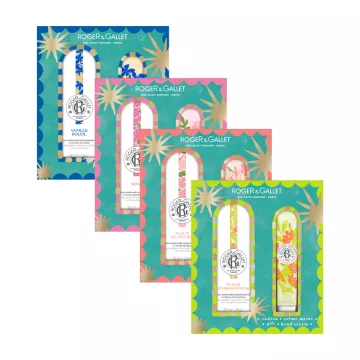
- Opt for a fragrance set that includes an eau de parfum and related products (lotion, shower gel) to enhance the enjoyment and offer a complete experience.
- For someone whose tastes are hard to pin down: opt for a multi-fragrance discovery set or a sample size so they can figure out their preferences.
- Consider dedicated gift sets for women and men based on the recipient’s tastes (but don’t be too rigid: unisex fragrances are also excellent options).
- Keep the receipt in case an exchange is needed.
What are the environmental impacts of eau de parfum?
The fragrance industry is gradually moving toward a more responsible approach:
- Sustainable sourcing of raw materials: organic farming, certifications (Fair Trade, Ecocert), traceability.
- Organically sourced alcohol is used in an increasing proportion of formulations.
- Synthetic substitutes for essences derived from endangered species (plant-grown oud, synthetic white musk replacing animal musk).
- Eco-designed packaging: recycled glass, refillable bottles, FSC-certified cardboard boxes, and a reduction in plastic overpackaging.
- Reduction of synthetic solvents and phthalates in the most environmentally conscious formulas.
- Carbon footprint assessments are now standard at some pioneering brands.
To minimize your environmental footprint, here are several steps consumers can take: choose refillable bottles, recycle empty bottles (separate the glass from the metal cap), use products until they’re completely finished before repurchasing, and avoid accumulating unused perfumes.