What is a dental prosthesis, and what types are there?
A dental prosthesis is a custom-made medical device designed to replace one or more missing teeth, with the goal of restoring chewing function, speech, and aesthetics. There are two main types: removable prostheses (which the patient removes themselves) and fixed prostheses (cemented or screwed onto teeth or implants). The choice depends on the number of missing teeth, the condition of the bone and gums, and the budget. Dental care accessories andoral hygiene products are available in the store.
- Partial removable denture: replaces one or more teeth by resting on the remaining natural teeth—metal framework (Cr-Co) or resin—clasps on the abutment teeth—less expensive—daily cleaning required—recommended to be removed at night
- Removable full denture: replaces all teeth in an arch—held in place by suction (peripheral gum/resin seal) and/or adhesive—on implants (overdenture): significantly improved stability — without teeth, the alveolar bone gradually resorbs → gingival remodeling → denture becomes ill-fitting over time → regular readjustments are essential
- Fixed prosthesis— bridge: a crown cemented onto adjacent teeth (prepared abutment teeth) to replace 1 to 3 teeth—non-removable—lifespan of 10–15 years
- Implant-supported prosthesis: crown, bridge, or complete denture attached to osseointegrated titanium implants — the solution that most closely resembles a natural tooth — requires prior dental surgery — superior durability
How do you care for your dental prosthesis on a daily basis?
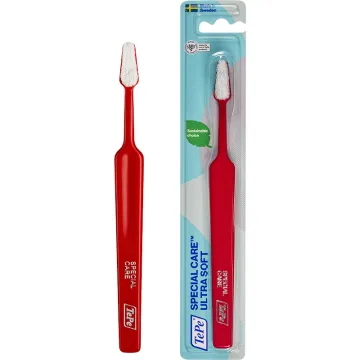
- Mechanical cleaning is required: use a specialized brush (with bristles softer than those on ordinary toothbrushes) and a denture-specific cleaner (non-abrasive) — at least twice a day — soap and water alone are not enough — never use regular toothpaste (abrasive → scratches the resin → promotes bacterial buildup)
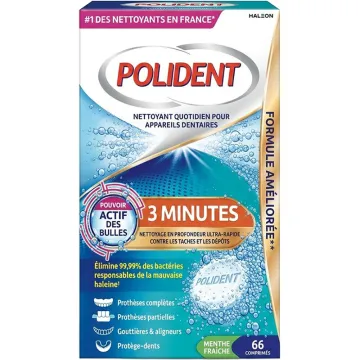
- Effervescent cleaning tablets: soak daily for 15–30 minutes in a disinfecting and cleaning solution — removes plaque, tartar, and anaerobic bacteria responsible for bad breath and oral candidiasis (thrush)
- Nighttime removal: Allow the gums to rest—promotes revascularization and gum health—store in water or the soaking solution (never let it dry out—the resin shrinks and cracks) — People with sleep apnea or bruxism may have specific recommendations from their doctor
- Gum and oral mucosa care: even without natural teeth, clean the gums and palate with a soft brush — prevents sub-denture candidiasis (thrush) and inflammation (denture stomatitis) — dry mouth worsens the buildup of yeast under the dentures
What is the lifespan of a denture, and when should it be replaced?
- Lifespan varies by type: removable resin dentures—5 to 8 years (the resin wears down and discolors)—removable metal dentures—8 to 15 years (more stable structure)—bridge — 10 to 15 years — implant-supported dentures — 15 to 20 years or more
- Signs of a poor fit to watch for: dentures that move or fall out while eating — gum pain or painful pressure points — difficulty chewing — changes in speech — changes in facial appearance (flattening of the cheeks, pronounced perioral wrinkles) — Always consult your denturist or dentist if these signs appear
- Bone resorption and poor fit: without teeth, the alveolar bone resorbs at a rate of about 1 mm per year — the gums change in volume and shape → the denture no longer fits properly → pressure points, ulcers, bad breath — relining (adding material to the inner surface of the denture) — a procedure performed by the dental technician or dentist
- Handling and storage: never boil (irreversible deformation of the resin) — avoid dropping (fragility) — clean over a basin of water or a towel — use a hard case for transport
How do you adjust to a new denture and manage any discomfort?
- Normal adjustment period: the first few weeks—discomfort while chewing, foreign body sensation, temporary increased salivation, changes in speech—are normal and temporary—gradually resume eating hard foods—do not force it
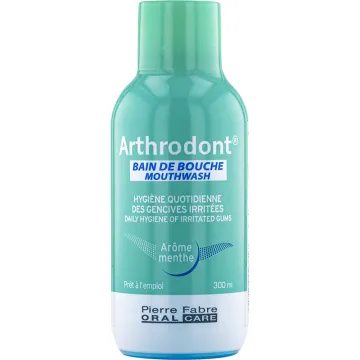
- Sore spots and ulcers: a poorly fitting denture creates areas of excessive pressure → painful gum sores—consult your dentist or denturist for targeted grinding (never attempt to adjust it yourself with abrasives)—mild antiseptic mouthwashes (salt water, low-concentration chlorhexidine) relieve irritated mucous membranes
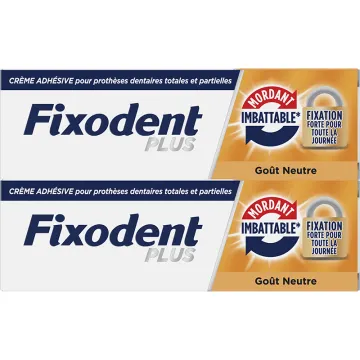
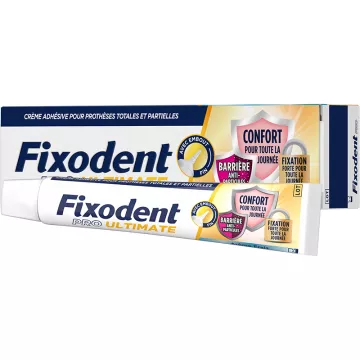
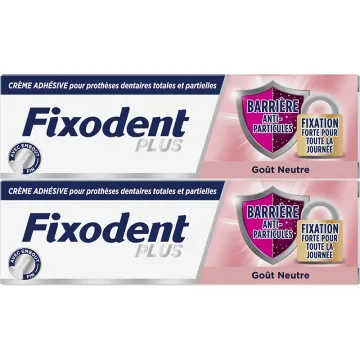
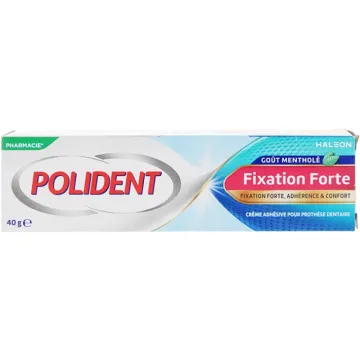
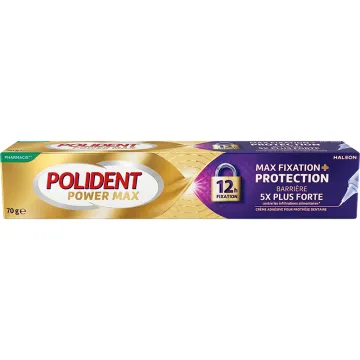
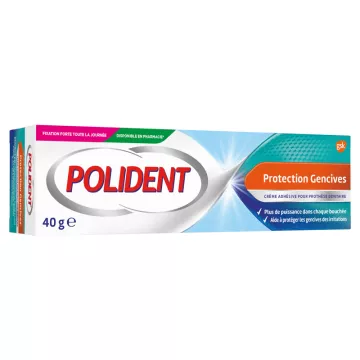
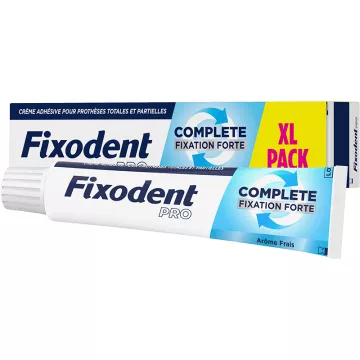
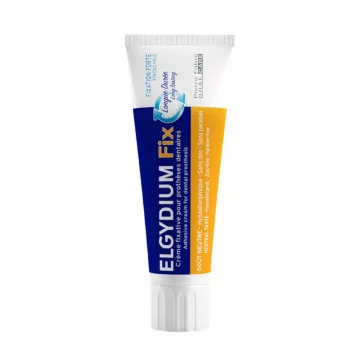
- Denture adhesives: cream or powder — improve the stability and comfort of removable dentures — useful during the adjustment period — should not be used as a substitute for a necessary reline — zinc-free formulas are recommended (risk of zinc-induced neuropathy reported with long-term use of certain adhesive creams)
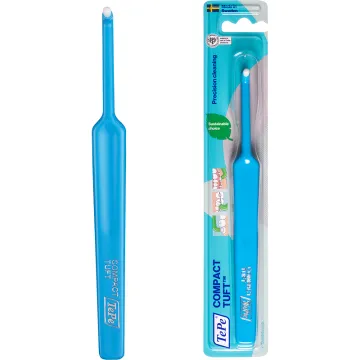
- Brushing remaining natural teeth: if wearing a partial denture, oral hygiene for natural teeth is even more critical — abutment teeth supporting the clasps are highly susceptible to cervical caries — thorough brushing and flossing are essential — care products are available in the oral hygiene line