What is dental surgery, and in what cases is it performed?
Dental surgery encompasses all medical procedures performed on the teeth, gums, alveolar bone, and jaws. It ranges from simple extractions to complex procedures such asdental implant placement, bone grafts, periodontal surgery, or orthognathic surgery. These procedures are performed exclusively by a dental surgeon or maxillofacial surgeon—any treatment decision must be made in consultation with your practitioner following a clinical and radiological examination. Theoral hygiene products and wound-healing care items available in the store can complement medical treatment, as recommended by your practitioner.
- Tooth extractions: simple extraction (loose tooth, irreparably decayed tooth) or surgical extraction (impacted wisdom tooth, fractured root, ankylosed tooth)—impacted or partially impacted wisdom teeth are the primary indication for surgical extraction in young adults—postoperative effects: swelling for 48–72 hours, bleeding during the first few hours, pain managed with prescribed pain relievers
- Implantology: placement of a titanium implant in the jawbone to replace the root of a missing tooth—on this implant, a prosthetic crown is attached after osseointegration (2–6 months)—the implant is the solution that most closely resembles a natural tooth in terms of function and durability—unlike a bridge, it does not require the adjacent teeth to be prepared
- Periodontal surgery: surgical treatment of advanced gum disease (periodontitis) — access flap (deep subgingival curettage), guided bone regeneration, gingival graft to cover recessions — indicated when nonsurgical treatment (scaling and root planing) is no longer sufficient to control the infection
- Orthognathic surgery and bone grafts: surgery to reposition the jaws (severe malocclusion, respiratory disorders) — bone grafts to restore bone volume prior to implant placement (bone harvested from the jaw or substitute materials) — these procedures require extensive planning (3D CBCT imaging, virtual models) and orthodontic follow-up
- Current technologies: digital radiography and CBCT (conical-beam computed tomography) provide precise 3D visualization of bone and nerve structures — computer-guided surgery improves the precision of implant placement — intraoral scanners and CAD/CAM (computer-aided design and manufacturing) enable custom-made prosthetics with reduced turnaround times
How can you best prepare for dental surgery?
- Follow your dentist’s instructions carefully: preoperative instructions vary depending on the procedure—certain surgeries performed under general anesthesia or conscious sedation require fasting for 6 hours—anticoagulants, antiplatelet agents, or immunosuppressants require specific management to be discussed with the prescribing physician and the surgeon
- Stop smoking: Tobacco is the leading cause of postoperative complications in dental surgery—it reduces blood flow to the gums, slows healing, and increases the risk of alveolitis (infection at the extraction site) and implant failure by 3 to 5 times—quit at least 2 weeks before the procedure and continue to abstain during the healing period—the smoking cessation page can help you
- Optimize nutritional status before surgery: bone and mucosal healing require an adequate intake of vitamin C (for gingival collagen synthesis), zinc (cell repair and local immunity), and calcium (bone mineralization)—a varied and balanced diet in the weeks leading up to the procedure improves healing conditions
- Preoperative oral hygiene: A periodontal evaluation and professional teeth cleaning are often required before any implant placement — a healthy mouth at the time of surgery reduces the risk of postoperative infection — maintain thorough brushing until the day before surgery
How to Recover Properly After Dental Surgery?
- The first 24 hours: the critical phase: bite down on a sterile gauze pad for 30–45 minutes to promote blood clot formation — do not spit, rinse, or use a straw (excessive pressure in the mouth may dislodge the blood clot) — apply ice to the cheek in 15-minute intervals — sleep with your head slightly elevated — eat cold, soft foods (yogurt, fruit compote, cold soup)
- Managing pain and swelling: Take prescribed pain relievers as directed, without waiting for pain to set in—generally: acetaminophen ± ibuprofen (if there are no contraindications and as directed by the surgeon) — ibuprofen is not recommended if there is a risk of persistent bleeding — swelling peaks at 48–72 hours before gradually subsiding
- Natural support for healing: Vitamin C is a cofactor in collagen synthesis—essential for the regeneration of gum tissue—500 mg/day during the healing period (do not exceed this dose; excess can acidify the oral environment) — zinc accelerates cellular repair and supports local immunity (15–25 mg/day) — dexpanthenol in a mouthwash (if an appropriate formula is prescribed by the dentist) promotes mucosal healing
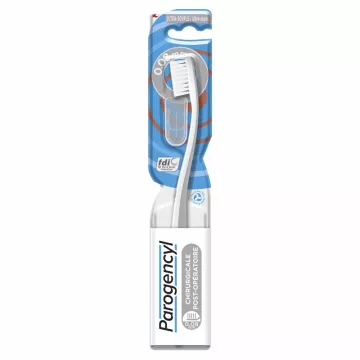
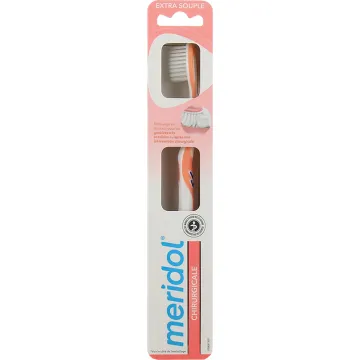
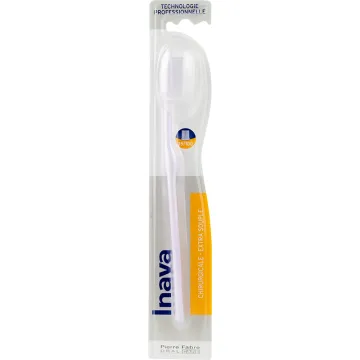
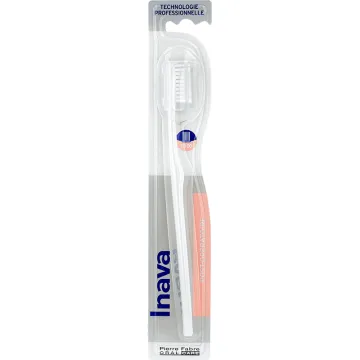
- Proper postoperative oral hygiene: resume brushing the very next day on the teeth that were not treated — brush the treated area very gently with a post-surgical toothbrush — use chlorhexidine mouthwashes (as prescribed) taken between meals — avoid alcohol and tobacco for the duration of the healing process — find the appropriate brushes and care products in the oral hygiene product line
- When to seek emergency care: heavy bleeding that does not stop after 30 minutes of pressure — fever > 38.5 °C after 48 hours — pain that worsens after Day 3 (possible sign of alveolitis—infection at the surgical site) — swelling that extends beyond the cheek toward the neck or airways—these signs require immediate surgical consultation
Implants, Bridges, or Dentures: How to Choose?
- Dental implant: an artificial titanium root osseointegrated into the bone — prosthetic crown placed after 2–6 months — lifespan of 15–20 years or more — does not require altering adjacent teeth — contraindicated in cases of uncontrolled diabetes, cervicofacial radiation therapy, high-dose IV bisphosphonates, or heavy active smoking — see the dedicated page on implants
- Bridge: a fixed prosthesis supported by adjacent teeth (abutments) that must be prepared — a faster and less expensive solution than an implant — but requires sacrificing healthy adjacent teeth — average lifespan of 10–15 years
- Removable dentures: partial or full dentures—an economical solution—offer less comfort and stability than implants or fixed bridges—require rigorous daily maintenance— dental appliances and their accessories are available in the store
- Preliminary bone graft: if bone volume is insufficient for an implant (bone resorption following a previous extraction), a bone graft is performed 3–6 months beforehand — bone volume is increased using autologous, allogeneic, or synthetic bone substitutes — calcium and vitamin D are micronutrients that help support mineralization during the bone regeneration phase