What is cervical osteoarthritis, and how does it differ from conventional osteoarthritis?
Cervical osteoarthritis is a formof osteoarthritis localized to the cervical joints—degeneration of the cartilage in the intervertebral discs and facet joints between C1 and C7. Its distinctive feature lies in the proximity of nerve and vascular structures: cervical osteophytes can compress the nerve roots (cervicobrachial neuralgia) or the vertebral artery (dizziness), complications not seen in other locations. Our joint comfort line offers the appropriate supplements.
- Osteophytes: compensatory bony growths that form in response to disc degeneration—may compress the spinal nerves (tingling in the arm, weakness) or the spinal cord (cervical myelopathy) in severe cases
- Cervical disc disease: narrowing of the intervertebral space due to dehydration of the nucleus pulposus—visible on standard X-rays
- Very common after age 50: 85% of people over 60 have radiographic signs of cervical spondylosis, but only a minority are symptomatic
- Specific aggravating factors: working at a computer screen without ergonomic adjustments, holding a phone pressed against the shoulder, prolonged reading with the head down (“text neck”)
What supplements support cervical joint comfort?
The same chondroprotective ingredients used for general osteoarthritis apply to cervical osteoarthritis—the cervical joints undergo the same cartilage remodeling process. Find these formulas in our joint pain product line.
- Glucosamine + chondroitin: structural support for disc cartilage—1,500 mg glucosamine + 800–1,200 mg chondroitin/day—minimum 3-month course— chondroitin line
- Hydrolyzed marine collagen: amino acids that are precursors to disc collagen (type II) and ligament collagen (type I)— Joint Collagen line
- Turmeric (curcumin): reduces disc and facet joint inflammation — in a bioavailable formula with piperine or in liposomal form
- Omega-3 (EPA/DHA): reduces neurogenic inflammation associated with radicular compression
- Magnesium: relieves paravertebral muscle spasms that accompany and exacerbate cervical osteoarthritis — 300–400 mg/day of bisglycinate
Headaches, dizziness, and sleep disturbances: common complications of cervical osteoarthritis
The extra-articular complications of cervical osteoarthritis are often underestimated—they point toward the diagnosis and guide management beyond simple joint pain.
- Cervicogenic headaches: headaches of cervical origin—pain originating at the base of the skull, radiating to the forehead or behind the eyes—distinguishable from migraines by their trigger in neck movements and their unilateral nature
- Cervical positional vertigo: compression of the vertebral artery or cervical proprioceptive deafferentation—worsens with rapid head rotations—a vestibular evaluation is recommended to rule out a labyrinthine cause
- Cervicobrachial neuralgia: pain radiating into the arm and hand along a nerve root distribution—tingling, numbness, weakness—cervical MRI essential to confirm compression
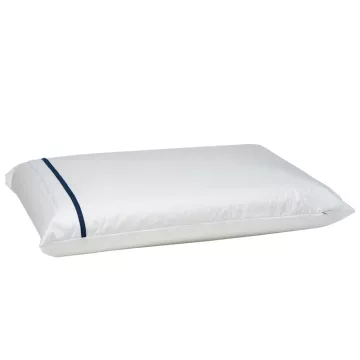
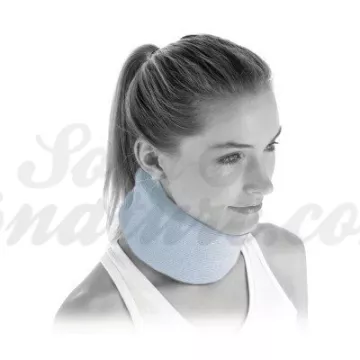
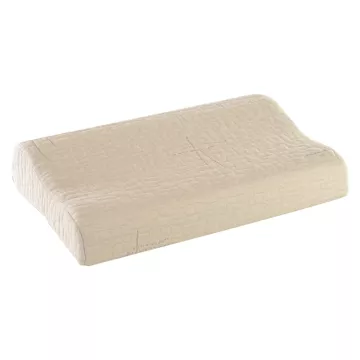
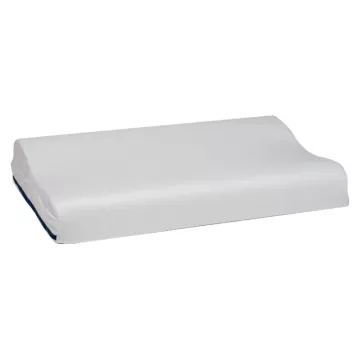
- Sleep disturbances: nighttime pain and difficulty finding a comfortable position — ergonomic cervical pillow adapted to body type and sleep position (side vs. back) — height and firmness are critical
Ergonomics and lifestyle adjustments to relieve cervical osteoarthritis in daily life
- Screen at eye level: the top of the screen should be at eye level — every degree the head tilts forward multiplies the effective weight of the head on the cervical spine (5.4 kg at 0°, up to 27 kg at 45°)
- Take a break every 45 minutes: gentle neck rotations, cervical retractions (chin tucked in), trapezius stretches—to prevent the buildup of compensatory muscle tension
- Appropriate cervical pillow: on your back—a thin pillow that maintains cervical lordosis; on your side—a thicker pillow that fills the space between your shoulder and skull—avoid sleeping on your stomach (cervical hyperlordosis)
- Cervical physical therapy: strengthening the deep neck flexors—essential for stabilizing the cervical spine and reducing stress on the discs
- Smoking cessation: Nicotine reduces blood supply to the cervical discs (which are avascular and nourished by diffusion) and accelerates disc degeneration