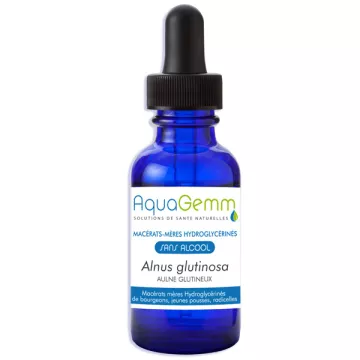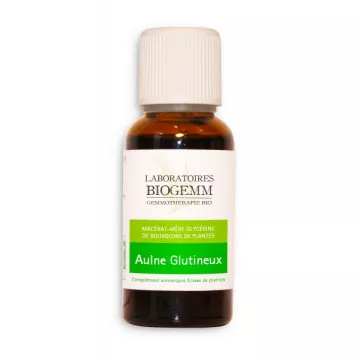

The black alder (Alnus glutinosa) is a tree found in European wetlands that is widely used in gemmotherapy. Its fresh buds are among the most commonly prescribed macerates for supporting the circulatory system, chronic ENT conditions, and cerebral microcirculation. This page provides the essential information needed to understand its traditional uses, dosage, and precautions.
The black alder (Alnus glutinosa) is a deciduous tree of the Betulaceae family, closely associated with wetlands in Europe, Western Asia, and North Africa. It colonizes riverbanks, marshes, and floodplain forests, where it plays a key ecological role thanks to its unique ability to fix atmospheric nitrogen through a symbiotic relationship with the bacterium Frankia alni.
Its nickname “sticky” comes from its young buds, which feel sticky to the touch and are rich in resins and phenolic compounds. It is precisely these fresh buds, harvested in early spring before they open, that serve as the raw material for gemmotherapy, a modern branch of herbal medicine founded by Pol Henry in the 1960s.
In gemmotherapy, the sticky alder bud is considered one of the major macerates for the vascular system and chronic inflammation. It complements other specialized buds, such as the fig tree bud—which is more focused on psycho-digestive issues—within the broad family of gemmotherapy extracts.
The fresh bud is processed by cold glycerin maceration in a mixture of water, vegetable glycerin, and pharmaceutical-grade ethyl alcohol. This preparation preserves flavonoids, condensed tannins, polyphenols, and plant growth factors derived from the embryonic meristem. An alcohol-free version is available for those with sensitive constitutions, as part of the alcohol-free gemmotherapy selection.
The black alder bud is the benchmark gemmotherapy macerate for circulation. It is traditionally used to address venous stasis, tension in small blood vessels, and discomfort in the lower limbs.
Its use aligns with that of plants that support blood circulation and complements treatments for heavy legs. In cases ofchronic venous insufficiency, established varicose veins, or diagnosed vascular disorders, alder should only be considered as an adjunct to medical treatment, never as a substitute. The “Circulation” category includes complementary nutraceutical solutions.
Alder buds are also used for chronic ENT conditions, particularly in individuals prone to winter recurrences. It is intended for long-term, constitutional support rather than as an emergency remedy during acute phases.
It is traditionally used to support individuals with recurrent sinusitis and mild chronic bronchitis, in addition to the medical measures recommended by the primary care physician or pulmonologist. A persistent fever, colored sputum, difficulty breathing, or acute sinus pain require immediate medical attention and are not appropriate for treatment with gemmotherapy.
Alder is one of the few gemmotherapy macerates traditionally used for cerebral microcirculation and cognitive well-being. This indication stems from its general affinity for small blood vessels, which extends to the cerebral regions.
It is often recommended as an adjunct to treat temporary memory and concentration difficulties, particularly in mature adults or during periods of cognitive fatigue. It is sometimes combined with other approaches targeting memory and concentration, though it does not replace a medical evaluation in cases of persistent cognitive complaints or sudden changes in higher cognitive functions.
For skin health, alder bud is used to support conditions with a tendency toward chronic inflammation, particularly in holistic approaches to eczema and psoriasis. It complements dermatological care without replacing it.
Alder is also included in protocols for lymphatic drainage and metabolic reset, often during the off-season. In formulated cosmetics, extractsof alder bark or buds are found in certain products designed for oily and blemish-prone skin, due to their astringent toning properties recognized in traditional cosmetology.
The usual dosage for alder bud glycerin macerate is between 5 and 15 drops per day, to be taken undiluted under the tongue or diluted in a small amount of water, between meals. The dosage should be adjusted based on body weight, individual constitution, and the goal of the treatment.
A typical treatment course lasts 3 weeks, followed by a one-week break, and may be repeated for two to three cycles depending on the individual’s constitution. Gemmotherapy works over time and does not produce immediate results: consistency is more important than dosage. Consulting a pharmacist helps avoid redundant combinations and optimize the sequence with other macerates.
Alder buds are generally well tolerated at the recommended doses for adults. However, there are a few guidelines governing their use to ensure the safety of the treatment and the expected benefits.
Use is not recommended during pregnancy and breastfeeding due to insufficient data, nor in children under twelve years of age without a pharmacist’s advice. People allergic to Betulaceae (birch, hornbeam, hazel, alder) or to pollen from related trees should exercise caution due to the risk of cross-reactions. The glycerin macerate containsethyl alcohol, which should be noted for patients undergoing alcohol withdrawal, those with poorly controlled diabetes, or children: the alcohol-free form is preferred. If the patient is currently taking medication, particularly anticoagulants, antiplatelet agents, or antihypertensives, it is recommended to consult a pharmacist or the treating physician before beginning treatment.
The black alder has distinctive botanical characteristics that make it easy to identify in wetlands. It should not be confused with the white alder or the green alder, which have different traditional uses.
Its oval leaves, with serrated edges and a slightly sticky texture in the spring, give it its name “glutinous.”The dark, rough bark—which cracks on older trees—contrasts with the light-colored bark of the birch, to which it is related. The fruits, which are small, woody cones (strobili), remain on the tree through the winter and are a distinctive feature. In the spring, the pendulous male catkins and female spikes appear simultaneously on the same tree, as the alder is a monoecious species.
Beyond its use in gemmotherapy, the black alder plays a fundamental ecological role in riparian ecosystems. Its preservation is partly essential to the health of Western European waterways.
Its ability to fix atmospheric nitrogen through symbiosis with Frankia alni naturally enriches the soil and promotes the regeneration of riparian forests. Its deep roots stabilize riverbanks, limit erosion, and support the natural purification of waterways. Finally, the alder is home to remarkable biodiversity: insectivorous birds, pollinating insects, and aquatic microfauna living among its submerged roots. The quality of a commercial macerate should ideally reflect these environmental standards through controlled harvesting and certified organic production.