What are appendages?
The term “appendixes” refers to keratinized structures derived from the epidermis: in humans, these are primarily hair and nails. They are primarily composed of keratin, a fibrous protein, and serve several physiological functions (mechanical protection, sensory perception, and contribution to thermoregulation). Although they may seem unremarkable, the appendages often reflect overall health: their condition can indicate underlying nutritional, hormonal, or skin imbalances.
How do appendages develop?
The development of appendages begins as early as the embryonic stage. Keratinization is a continuous process: in the hair follicle for body hair and scalp hair, and in the nail matrix for fingernails and toenails, cells proliferate, accumulate keratin, and then migrate to the surface where they shed their organelles and harden. The visible part of the hair or nail is therefore made up of dead cells: what happens upstream, at the level of the follicle or matrix, determines the quality of what emerges. This is why a healthy scalp, a well-maintained nail matrix, and a balanced diet are key factors in the quality of the appendages.
What are the main functions of the appendages?
They serve several functions:
- Protection: Hair partially protects the scalp from UV rays and impact; nails protect the tips of the fingers and toes; body hair provides moderate mechanical protection.
- Sensory function: Hair follicles are densely innervated and contribute to the perception of vibrations and fine touch.
- Contribution to thermoregulation: limited in humans, more pronounced in other species.
- Social and aesthetic function: The quality of hair, eyebrows, eyelashes, and nails contributes to self-perception and relationships with others.
How can we care for the appendages to maintain their health?
Care is based on a few principles:
- Appropriate hygiene: Cleanse with gentle, pH-balanced products, adjusting the frequency based on scalp and skin type. See also personal hygiene.
- A varied and balanced diet rich in protein, iron, zinc, and vitamins B, A, D, and omega-3.
- Regular hydration throughout the day.
- Protection from physical and environmental factors: excessive heat (high-temperature hair dryers, flat irons), prolonged sun exposure, and repeated contact with water and nail polish removers (wearing gloves is recommended).
- Quality sleep and management of chronic stress.
- Manicures and nail care that preserve the nail bed (do not cut cuticles, do not bite your nails); see manicure.
What common problems affect the appendages?
Several conditions may arise:
- Hair loss: androgenetic alopecia (the most common), post-traumatic telogen effluvium (childbirth, infection, stress, restrictive diets), autoimmune alopecia areata, deficiencies (particularly iron).
- Brittle, dry, dull hair: repeated chemical treatments (coloring, straightening, relaxing), heat exposure, deficiencies, dry skin.
- Split, brittle, or deformed nails: exposure to water and detergents, microtrauma, nutritional deficiencies, and sometimes medical conditions (nail psoriasis, thyroid disorders).
- Onychomycosis (fungal nail infection): suspected based on thickening, brittleness, or discoloration. Diagnosis via mycological testing; antifungal medication prescribed as needed.
- Scalp dermatitis (seborrheic dermatitis, psoriasis, eczema), which can affect hair quality.
Any unusual onset or rapid progression should prompt a visit to a doctor or dermatologist.
What nutrients are essential for the health of the appendages?
Several nutrients contribute to the quality of the skin appendages. A varied diet meets these needs in most cases; supplementation is only justified in cases of proven deficiency or specific needs, following medical advice.
- Proteins: the building blocks of keratin.
- Vitamin A: contributes to the renewal of epithelial tissues. Unsupervised supplementation should be avoided (possible toxicity at high doses; medical retinoids are contraindicated during pregnancy).
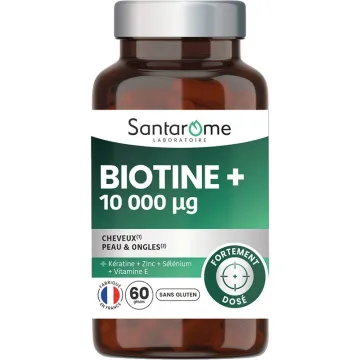
- B vitamins: biotin (B8 or H) and niacin (B3) are frequently mentioned; the effectiveness of supplementation is primarily demonstrated in cases of confirmed deficiency. Biotin may interfere with certain laboratory tests (particularly TSH): this should be noted if taken.
- Iron: Iron deficiency is common in women of childbearing age; it affects hair quality and contributes to telogen effluvium. Blood tests (ferritin, complete blood count) should be performed before supplementation.
- Zinc: plays a role in the health of hair and nails.
- Omega-3: contributes to the quality of the hydrolipidic film on the scalp and skin.
- Vitamin D: Deficiency is common in France; this should be evaluated with a doctor depending on the individual’s circumstances.
What are the options for treating hair loss?
The management of hair loss depends on the cause identified by the doctor or dermatologist:
- Evaluation: medical history (past medical history, current treatments, recent events, diet), scalp examination, laboratory tests as indicated (ferritin, complete blood count, TSH, vitamin D, and sometimes hormonal testing).
- Non-medicinal topical treatments: dietary supplements as advised, appropriate shampoos, gentle scalp massages.
- Medications: Topical minoxidil is used to treat androgenetic alopecia in both men and women; it is available at pharmacies with pharmaceutical counseling depending on the formulation, and requires regular, long-term use to see results. Finasteride is an oral, prescription medication indicated for men with certain forms of androgenetic alopecia. It is contraindicated in women of childbearing age (teratogenic) and requires medical monitoring due to potential side effects.
- Complementary non-pharmacological approaches: essential oils sometimes recommended (cineole-type rosemary, true lavender) for scalp massage; they should be used diluted and with the usual precautions (pregnancy, breastfeeding, children under 7 years of age, epilepsy, asthma, broken skin, sensitization). The level of clinical evidence remains limited.
- Hair transplantation: a surgical procedure indicated for specific conditions, to be performed by a specialized surgeon following a dermatological evaluation. Exercise caution regarding unregulated commercial offers (abroad or in France) without a prior evaluation.
- Hair PRP (platelet-rich plasma): injections into the scalp; evidence is mixed; this is a specialized medical procedure.
No treatment option should be self-prescribed. A medical consultation helps identify the cause and determine the most appropriate course of treatment.
What is the difference between scalp hair and body hair?
Although both are appendages of the skin, scalp hair and body hair differ:
- Structure: Scalp hair is generally longer, thicker, and located on the scalp; body hair is shorter and finer, except for androgen-dependent hair (face, chest, pubic area).
- Life cycle: The anagen phase (growth phase) lasts 2 to 7 years for scalp hair, and only a few weeks to a few months for body hair, which limits its length.
- Distribution: Eyebrows and eyelashes have even shorter cycles (3 to 4 months for eyelashes).
- Hormonal influence: Body hair is more dependent on androgens than scalp hair (conversely, androgenetic alopecia is sensitive to androgens on the scalp).
Can the appendages be affected by stress?
Yes, stress can affect the quality and growth cycle of the appendages:
- Telogen effluvium: diffuse and temporary hair loss, occurring approximately 2 to 4 months after a triggering event (severe stress, high fever, childbirth, surgery, rapid weight loss, infection).
- Alopecia areata: an autoimmune disease whose flare-ups can be triggered by stress.
- Nail-biting, trichotillomania: behavioral disorders associated with anxiety that affect the quality of nails and hair.
- Transverse nail ridges (Beau’s lines): may follow a period of significant physical or medical stress.
Stress management (physical activity, sleep, breathing exercises, sophrology, meditation, and psychological counseling if needed) contributes to the overall health of the skin and hair. In cases of significant and persistent hair loss or unusual changes in the nails, seeking medical advice is recommended.