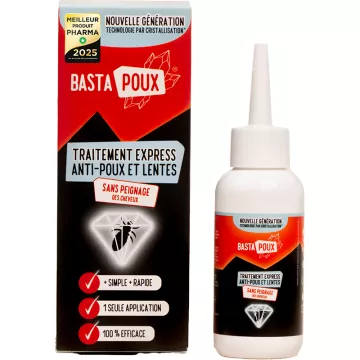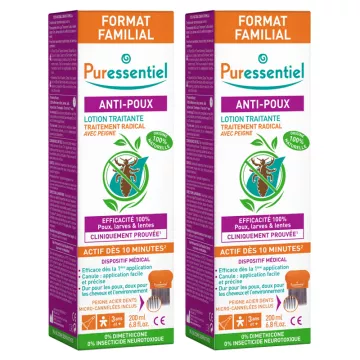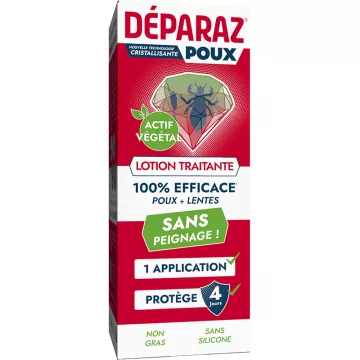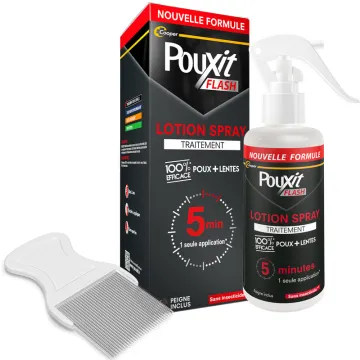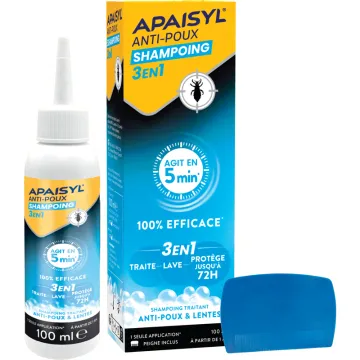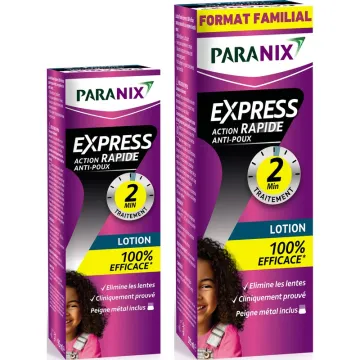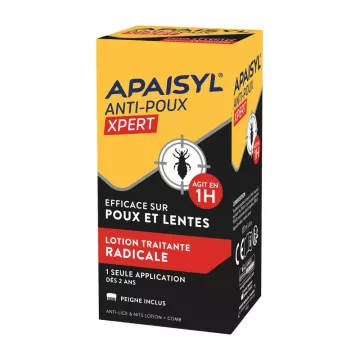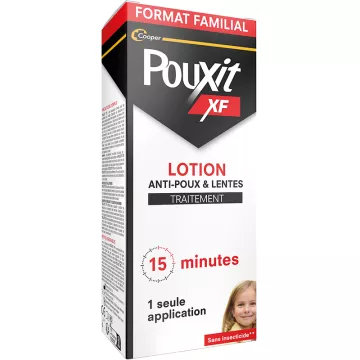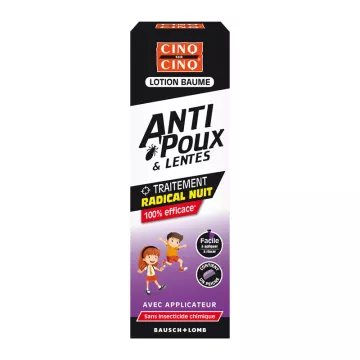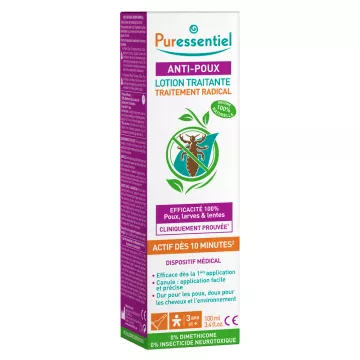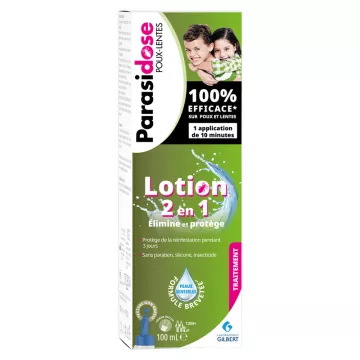
A lice treatment lotion is a product designed to eliminate head lice and their nits. It contains active ingredients such as dimethicone, a silicone that physically coats and suffocates the lice, or permethrin, an insecticide that paralyzes them. The “lotion” formulation offers the advantage of prolonged contact time and even distribution across the entire scalp and hair shaft, whereas a shampoo is rinsed out more quickly. It is applied to dry or damp hair, depending on the formula, with a waiting period before rinsing to allow the active ingredients to take full effect. It is one of the most commonly used treatments for lice and should always be followed by combing with a fine-toothed comb.
Thorough application is key to its effectiveness:
Essential step: Repeat the treatment in 7–10 days to eliminate any lice that have hatched from nits in the meantime.
Several factors influence the choice. First,proven effectiveness: opt for products withdocumented efficacy, keeping in mind that dimethicone, through its physical action, limits the development of resistance, unlike certain insecticides. Next, the ingredients: those who prefer it may choose formulas free of chemical insecticides, such as those based on dimethicone. Scalp sensitivity: for a sensitive scalp, opt for the best-tolerated formulas and test them beforehand. Finally, the type of lice: most lotions target head lice, while others are designed for body or pubic lice; check the label to choose the appropriate product. Carefully reading the package insert and following the manufacturer’s instructions remains the foundation for safe and effective use, regardless of the formula you choose.
Most anti-lice lotions can be applied to colored or chemically treated hair without altering the color or the quality of the hair shaft. As a precaution, it’s still advisable to consult the manufacturer’s instructions and, if in doubt, to test the product on a small, inconspicuous strand before applying it to the entire head: certain active ingredients may react differently depending on previous hair treatments. This precaution is particularly important for recently colored or bleached hair, which is more porous and more likely to be affected. In practice, the primary goal remains the elimination of lice: priority is given to an effective product, while preserving the hair color is a secondary but legitimate consideration that can be easily verified through a preliminary test. If in doubt, seek advice from a professional.
Several precautions are necessary for safe use. Test the product on a small area of skin before full application to check for any allergic reactions. Avoid contact with the eyes and mucous membranes, and rinse thoroughly if the product comes into contact with them. Do not use on children under two years of age without consulting a healthcare professional; for very young children, physical methods (such as combing) are generally preferred. Do not mix different brands or types of treatments without professional advice. Read and follow the manufacturer’s instructions carefully. These precautions—which apply even to dimethicone-based formulas, which are generally well-tolerated—ensure a treatment that is both effective and free of unnecessary risks. If the scalp is damaged or severely irritated, seek advice before applying.
Some people may experience mild side effects: itching, redness of the scalp, a tingling sensation, or temporary irritation. These reactions are generally mild and temporary. However, if symptoms persist or worsen, it is advisable to discontinue use and consult a healthcare professional. Following the manufacturer’s instructions (dosage, application time) minimizes the risk of reactions. Note that itching may also persist after the lice have been eliminated; this is simply due to irritation from scratching and does not indicate that the treatment has failed. Distinguishing between a reaction to the product and residual irritation helps you respond appropriately: the former requires caution, while the latter resolves on its own. If you’re unsure about the cause of the discomfort, consulting a pharmacist or doctor will help you make an informed decision.
Important: Anti-lice lotions are not preventive products. They should only be used in cases of confirmed infestation. For prevention, turn to specific repellents or essential oils known for their repellent properties, such as lavender ortea tree oil—always diluted and used with caution (not recommended for young children or pregnant women). To check for effectiveness after treatment, comb the hair regularly section by section with a fine-toothed comb, cleaning it frequently. If live, active lice are still detected 8 to 12 hours after application, the product may have been ineffective (possible resistance), and another method is necessary. Careful monitoring over two weeks, as part of your regular hair care routine, confirms that the infestation has been completely eliminated.