What is a lingonberry?
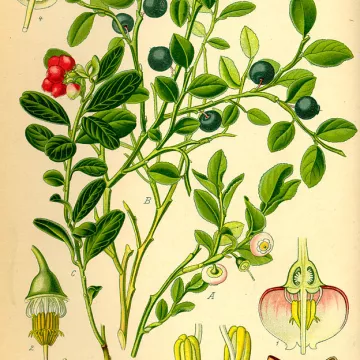
The lingonberry (Vaccinium vitis-idaea) is a small evergreen shrub in the heath family ( Ericaceae) that grows in the undergrowth and peat bogs of the boreal regions of Northern Europe, Canada, and Asia. Its small, bright red, tart berries are harvested in late summer. They are rich in proanthocyanidins (PACs), anthocyanins, vitamin C, fiber, and organic acids (benzoic, citric, and malic acids). The leaves, which are less well known, are rich in arbutin, a phenolic glycoside.
Lingonberry, blueberry, cranberry: what are the differences?
All three berries belong to the genus Vaccinium but represent distinct species with specific properties:
- Lingonberry (V. vitis-idaea): boreal berry, urinary tract, general health;
- Blueberry (V. myrtillus): blue berry, vision, and ocular microcirculation;
- Cranberry (V. macrocarpon): a North American berry, with a specific EMA indication for recurrent E. coli cystitis.
The three are complementary rather than interchangeable in a targeted herbal medicine approach.
What are the benefits of lingonberry?
Its traditional uses cover several areas:
- Support for urinary comfort and management of functional urinary disorders;
- Antioxidant support thanks to anthocyanins;
- Support for the body’s natural defenses through vitamin C;
- Contributes to digestive comfort through its fiber and organic acids;
- Support for individuals with recurrent urinary discomfort.
Why does it support urinary health?
Cowberry combines two complementary mechanisms. The plant-derived active compounds (PACs ) in its berries reduce the adhesion of bacteria (particularly E. coli) to the bladder walls—an effect that has been documented but is slightly less potent than that of cranberry. The leaves, traditionally used as a decoction, providearbutin, which is converted to hydroquinone in the urinary tract and exerts a mild antibacterial effect on the urinary system. This dual action of berries and leaves explains its long-standing use in Scandinavia for urinary health.
Does it offer other benefits to the body?
Beyond urinary comfort, its antioxidant profile is of interest in holistic approaches: cellular protection against oxidative stress, cardiovascular support as a complement to a balanced diet, and intestinal comfort thanks to its fiber content. Rich in vitamin C, it’s helpful during the winter months or after physical exertion, though it should not replace specific medical treatment in cases of a confirmed medical condition.
How can you incorporate cranberries into your daily routine?
Several forms are available depending on your goal:
- Fresh berry juice: 1 glass per day (preferably unsweetened), ideally in the morning;
- Dried berries: add to yogurt, salads, or muesli for their antioxidant benefits;
- Capsules of dried extract standardized for PAC content for a measured treatment course;
- Infusion or decoction of dried leaves: 1 teaspoon per 250 ml of simmering water, steep for 10 minutes, up to 2 cups per day, as a short course of treatment;
- Typical course of treatment: 2 to 3 weeks as a follow-up or for prevention, to be repeated after a break.
What precautions should be taken with cranberries?
- History of oxalate kidney stones: use with caution (due to the presence of oxalates);
- Anticoagulant or antiplatelet therapy: caution is advised, and consultation with a pharmacist is recommended;
- Leaf decoction: use limited to 1 to 2 weeks (contains arbutin, which is metabolized into hydroquinone—prolonged use not recommended);
- Not recommended for pregnant or breastfeeding women or children under 12 years of age;
- Persistent burning sensation during urination, fever, lower back pain, blood in the urine: seek medical attention immediately;
- Possible side effects (excessive consumption): digestive upset, diarrhea.
Which plants can be combined with lingonberry?
Herbal synergies depend on the intended use:
- Bearberry to enhance the antibacterial effect on the urinary tract (short-term treatment);
- Heather and hawkweed for additional diuretic support;
- Birch and cherry stem for gentle kidney drainage;
- Goldenseal as a follow-up treatment for sensitive urinary tracts;
- D-mannose to enhance the anti-bacterial adhesion effect in the urinary tract.