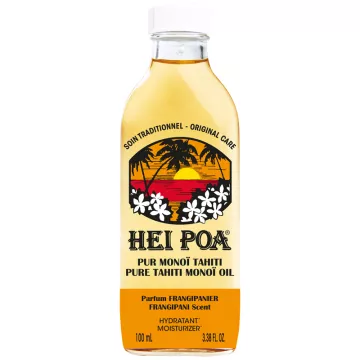
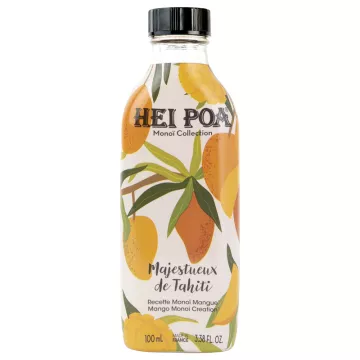
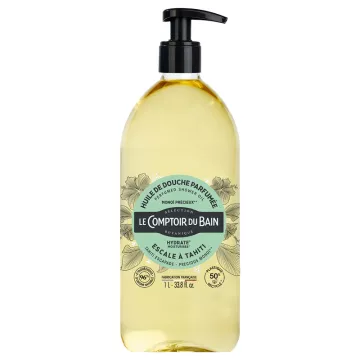
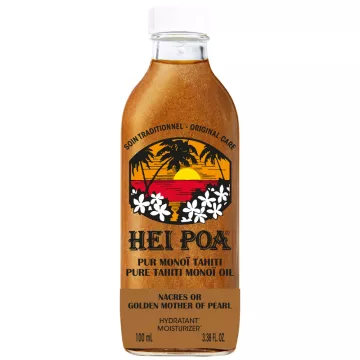
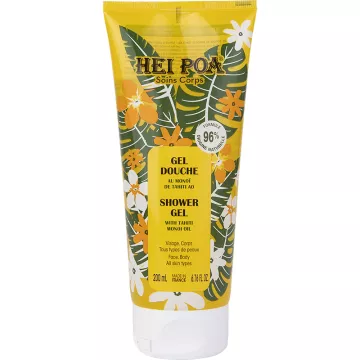
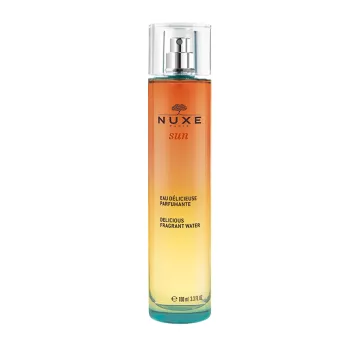
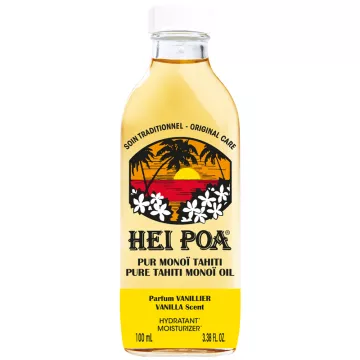
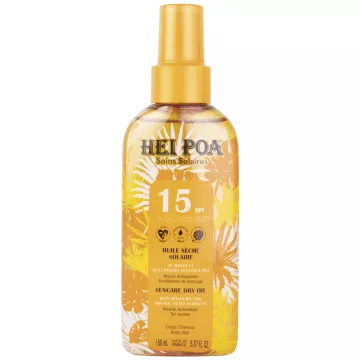
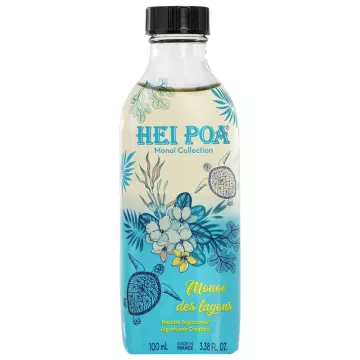
The tiare flower (Gardenia taitensis) is the iconic flower of French Polynesia—and the signature ingredient of Tahitian monoi. Its white petals are steeped in virgincoconut oil to create this fragrant oil with moisturizing, protective, and restorative properties. In addition to monoi, its floral extracts are also used in facial care products, conditioners, and massage oils. Discover our selection of sunscreen and body care products.
What is Tahitian monoi?
Monoi is often misunderstood—it is neither an essential oil nor a simple vegetable oil.
- Authentic Tahitian monoi holds a protected designation of origin (1992 decree): a maceration of at least 10 fresh tiare flowers (Gardenia taitensis) incopra oil (pressed coconut) for a minimum of 10 days—produced exclusively in Tahiti and the French islands of Polynesia
- “Monoi-based” products sold elsewhere are formulations made with coconut oil and tiare fragrance—their quality varies greatly depending on the actual concentration of floral extract
- Authentic monoi solidifies below 25°C (saturated coconut oil)—this is a sign of quality, not a defect
- Composition: laurate (45%), glycerol myristate and palmitate from coconut oil + tiare aromatic compounds (linalool, benzyl acetate, methyl benzoate)—a combination of moisturization and natural fragrance
Tiare flower and skin hydration?
The fatty acids in the coconut oil of monoi, combined with the floral actives of the tiare flower, create a particularly effective moisturizing and protective duo.
- Dry and dehydratedskin: Monoi forms a light occlusive film on the skin—reducing TEWL (trans-epidermal water loss) and restoring the hydrolipidic film
- Skin irritated by the sun, sea salt, or wind: tiare extract soothes and restores balance—ideal for use after sun exposure or a day at the beach
- Body application: after showering, while skin is still slightly damp—monoi absorbs more quickly and leaves less of a greasy film
- See our moisturizing line and our body moisturizers
Tiare flower and sun care?
Monoi has always been associated with the sea and the sun—its use for sun protection is the most traditional.
- Tanning oil: Monoi promotes gradual tanning and prevents skin from drying out during sun exposure
- Monoi is not a sunscreen—it does not protect against UV rays—always use it in combination with a sunscreen with an appropriate SPF before sun exposure
- After-sun care: its most relevant use—soothing the skin after sun exposure, prolonging your tan, and providing deep hydration
- See our range of sun oils and complementary sun care products
Tiare flower and hair care?
Monoi is a classic treatment for dry hair —and hair damaged by UV rays, salt, or chlorine.
- Pre-shampoo mask: Apply a thick layer to dry hair, leave on for 30 minutes to 1 hour (or overnight), then wash with a gentle shampoo—an intensive nourishing treatment
- Finishing and shine: 1–2 drops on the ends after styling—smoothing effect and delicate floral fragrance
- Beach and pool protection: Apply before exposure to saltwater or chlorinated water—creates a protective barrier on the hair shaft
- See our line of products for dry hair
Tiare extract in aromatherapy and perfumery?
The tiare flower does not yield a distilled essential oil—its aromatic profile cannot withstand steam without being altered.
- Absolute extracts (enfleurage or solvent extraction) are used—processes reserved for flowers too delicate for distillation (such as jasmine and rose)
- Heart note in perfumery: benzyl acetate + linalool + methyl benzoate — a creamy, warm white floral signature
- For wellness massage: body oils made with monoi and ylang-ylang —a sensorial Polynesian duo for relaxation and emotional well-being
- Tiaré hydrosol (when available): a very gentle floral water for use as a facial toner or body spray—check the label for “Gardenia taitensis floral water”
Precautions?
- Allergy to Rubiaceae or floral fragrances: a skin test is recommended before extensive use
- Monoi contains natural aromatic compounds (linalool, benzyl acetate) listed as potential allergens under EC Regulation 1223/2009 — use with caution on highly reactive skin
- Do not use before sun exposure without SPF—monoi is not a sunscreen
- Storage: Keep away from heat—may solidify below 25°C (normal)—warm between your hands before application