Essential oils are concentrated plant extracts traditionally used in aromatherapy for their sensory properties and their effects on well-being. Some are particularly valued for their soothing effects, notably true lavender, Roman chamomile, and ylang-ylang. Like any active ingredient, they should be used with care, following the recommended precautions and taking individual contraindications into account.
How can you use essential oils for a soothing effect?
Several methods of use complement one another:
- Aromatic diffusion: Use a suitable diffuser (ultrasonic or nebulizing) for short sessions of 15 to 30 minutes, then ventilate the room. Avoid use in the presence of young children, pregnant women, or people with asthma who are sensitive to the oils.
- Diluted topical application: Always dilute in a carrier oil (jojoba, sweet almond, calophyllum) at a concentration of 1 to 3% for general cosmetic use. Apply to the wrists, solar plexus, or soles of the feet.
- Aromatherapy bath: Add a few drops of essential oil diluted in a bath base (vegetable oil, neutral shower gel, or a dispersant such as Solubol) before adding to the water to promote relaxation.
- Aromatherapy: Inhale directly from the bottle or from a tissue—a quick and well-tolerated method.
Never ingest an essential oil without consulting a trained healthcare professional (aromatherapist, specialized pharmacist): oral ingestion carries risks of liver or neurological toxicity depending on the compounds.
Which essential oils are recognized as soothing?
Several essential oils are traditionally used for their perceived soothing effects:
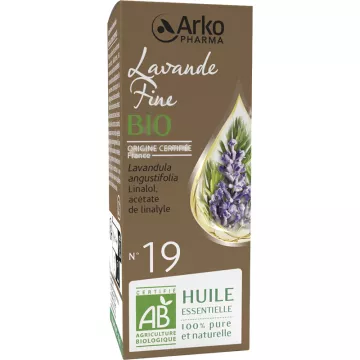
- True lavender (Lavandula angustifolia): the most versatile, valued for its relaxing effect and its ability to promote sleep. Well tolerated in children 3 months and older when applied in diluted form according to aromatherapy guidelines, but with precautions.
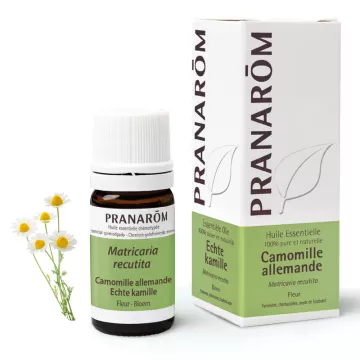
- Romanchamomile (Anthemis nobilis, also known asnoble chamomile ): very gentle, valued for relaxation and sleep. It should be distinguished from German chamomile (Matricaria recutita), which is more commonly used for digestive purposes.
- Ylang-ylang (Cananga odorata): an exotic fragrance traditionally associated with emotional relaxation.
- Bergamot: Pleasant scent, often included in relaxation blends.
- Sandalwood (Santalum album, CITES-regulated species): deeply relaxing when inhaled.
- Petitgrain bigarade: helps balance emotions; gentle to use.
Can essential oils be combined for greater effectiveness?
Yes, synergies are frequently created in aromatherapy to combine the perceived properties. Some classic examples:
- True lavender + Roman chamomile: relaxation and preparation for sleep.
- True lavender + petitgrain bigarade: emotional balance.
- Bergamot + ylang-ylang: serenity and letting go.
For a safe blend, it’s best to rely on recipes validated by a professional trained in aromatherapy (doctor, pharmacist, certified aromatherapist) or on reference books. The total concentration of essential oils must be appropriate for the intended use (1 to 3% in general cosmetics for adults).
What precautions should be taken with soothing essential oils?
Several precautions must always be followed:
- Always dilute before applying to the skin (never apply undiluted essential oils to the skin, unless specifically indicated).
- Perform a patch test on the inner elbow 24 to 48 hours before regular use.
- Avoid the eye area, mucous membranes, and damaged skin.
- Pregnancy and breastfeeding: Use is not recommended without medical or pharmaceutical advice from a professional trained in perinatal aromatherapy. Many essential oils are contraindicated (particularly ketone-containing essential oils).
- Children: Use must be strictly supervised, and certain essential oils are strictly contraindicated for children under 7 years of age, and even more so for those under 3 years of age. Do not use essential oils on infants under 3 months of age unless advised by a specialist.
- Asthma, epilepsy, known allergies: prior medical consultation is essential.
- Store away from light and heat, out of reach of children.
- Never ingest without appropriate medical supervision.
- Some essential oils are photosensitizing (bergamot, lemon, and citrus fruits in general): avoid sun exposure for 8 to 12 hours after topical application.
- In the event of a severe allergic reaction (facial swelling, difficulty breathing suggestive of angioedema), call 15 or 112.
Which essential oils are good for concentration?
To support alertness and mental focus through smell, several essential oils are traditionally used:
- Cineole-type rosemary (Rosmarinus officinalis ct cineole): known for its stimulating effect.
- Peppermint (Mentha × piperita): refreshing effect. Precautions: Not recommended for children under 7 years of age, or in cases of epilepsy, sensitized asthma, pregnancy, or breastfeeding.
- Lemon (Citrus limon): invigorating when inhaled; photosensitizing when applied to the skin.
These effects are primarily linked to the olfactory sensory experience and the context (work routine, atmosphere); clinical evidence regarding cognitive performance remains limited and inconsistent.
Essential Oils: Helpful for Headaches and Stress?
Some essential oils are traditionally used for mild tension headaches and muscle spasms:
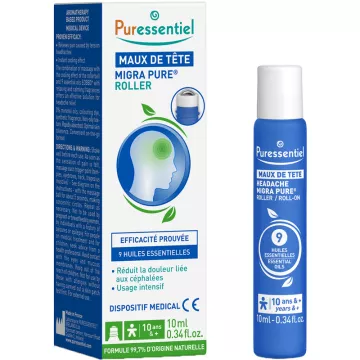
- Diluted peppermint oil applied in very small amounts to the temples (avoiding the eyes) or the nape of the neck: provides a cooling sensation, which has been studied in relation to certain tension headaches. Strict precautions as mentioned above.
- True lavender, applied in a diluted form to the back of the neck and shoulders, accompanied by a gentle massage to relieve tension at the end of the day.
These approaches are never a substitute for medical advice in cases of severe, sudden, or atypical headaches accompanied by fever, vomiting, or visual or neurological disturbances: seek emergency care from the appropriate health services (call 15 or 112, depending on the situation). Recurrent migraines require medical treatment.
Essential oils: Can they promote sleep?
Several essential oils are traditionally used to support quality sleep: true lavender, Roman chamomile, mandarin, petitgrain bigarade, and sandalwood. Whether diffused briefly before bedtime, inhaled, or applied in diluted form to the wrists or solar plexus, they can be incorporated into a soothing bedtime routine. However, they do not treat established insomnia: in casesof chronic insomnia, cognitive-behavioral therapy for insomnia (CBT-I) remains the first-line treatment recommended by the HAS and Inserm, combined with good sleep hygiene.
Essential Oils: Precautions for Children and Infants?
The use of essential oils in children and infants requires very strict precautions:
- Before 3 months of age: no essential oils, unless prescribed by a trained healthcare professional.
- Between 3 months and 3 years: very limited use, at very low dilutions (generally 0.5 to 1% in a carrier oil), restricted to a few well-tolerated essential oils under specialized guidance.
- Between 3 and 7 years of age: supervised use; certain essential oils (camphor-based, ketone-based, and menthol-based) remain contraindicated.
- Aromatherapy diffusion: Avoid in the direct presence of young children, or limit to very short sessions (5 to 10 minutes) after ventilating the room.
Before any use, consulting a doctor, pharmacist, or aromatherapist trained in pediatric aromatherapy remains the best course of action. If a child experiences any unusual symptoms after exposure to an essential oil, do not hesitate to contact a poison control center or seek emergency medical care.
How can you incorporate essential oils into your daily routine?
Incorporating essential oils into a wellness routine can take the form of small daily rituals:
- Morning: Briefly diffuse citrus oils (lemon, mandarin) or inhale peppermint for a refreshing sensation.
- Daytime: If you’re feeling stressed, inhale directly from the bottle or apply a diluted blend of true lavender or petitgrain bigarade to your wrists.
- Evening: An aromatic bath with lavender or Roman chamomile well dispersed in a carrier oil, or a brief diffusion before bedtime.
The experience is personal: what soothes one person may not work as well for another. Testing gradually, varying your approach, and listening to your body’s signals is still the best method.