What is sodium hyaluronate, and how does it differ from hyaluronic acid?
Sodium hyaluronate (INCI: Sodium Hyaluronate) is the sodium salt of hyaluronic acid—obtained by neutralizing hyaluronic acid (free HA) with sodium hydroxide (NaOH). This conversion to a salt improves the molecule’s water stability and its behavior in aqueous solution. In practice, sodium hyaluronate and hyaluronic acid often refer to the same active molecule, but sodium hyaluronate is the ionized form (hyaluronate ion HA⁻) that is biologically present in tissues at physiological pH. For information on the biological mechanisms of hyaluronic acid and its cosmetic applications, visit our hyaluronic acid page. Discover our hyaluronic acid product lines available at pharmacies, our anti-aging serums, and our ophthalmic care products.
- Structure and physicochemical properties: linear polymer of repeating disaccharides (glucuronic acid + N-acetylglucosamine) — molecular weight ranging from 5 kDa (oligomers) to 10,000 kDa (native HMW) — exceptional water-retention capacity (up to 1,000 times its weight in water) thanks to carboxylate (COO⁻) and hydroxyl (OH) groups that bind water molecules — viscosity and rheological properties increase significantly with molecular weight
- Current production: biotechnological (fermentation of Streptococcus equi or modified Bacillus subtilis) — replaces the historical production method involving avian extraction (rooster combs) — vegan form available — very high purity achieved through ultrafiltration — molecular weight controlled according to the intended application
- Three main categories based on molecular weight: HMW (High Molecular Weight — > 1,000 kDa) — viscoelastic surface film, protection, lubrication, less penetrating — LMW (Low Molecular Weight — 50–500 kDa) — penetrates the upper layers of the epidermis — deeper moisturizing effect + slightly pro-inflammatory at very low concentrations — nano-HA (< 10 kDa) — penetrates further into the epidermis — controversial: potential pro-inflammatory effect at high concentrations
- Physiological degradation: endogenous sodium hyaluronate is degraded within 1–3 days by tissue hyaluronidases — in injectable filler gels → chemical cross-linking via BDDE (butanediol diglycidyl ether) → resistance to degradation lasting 6–18 months depending on the degree of cross-linking
- Hyaluronidase (HYLENEX): an enzyme used to dissolve misplaced injectable fillers — emergency treatment in cases of vascular complications (post-injection arterial occlusion → ischemia) → emergency medical care
Medical and paramedical applications of sodium hyaluronate
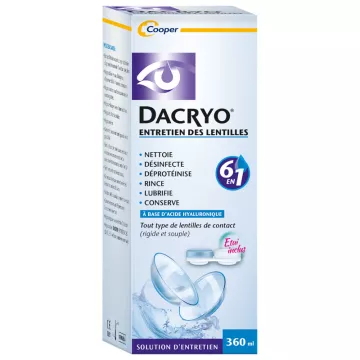
- Ophthalmology: sodium hyaluronate is the primary viscoelastic agent used in eye surgery (cataract, corneal transplant) to protect corneal endothelial cells — lubricating eye drops for dry eye (keratoconjunctivitis sicca): 0.1–0.3% HA — HMW (high viscosity) → artificial mucins for severe dry eye syndromes — LMW (better diffusion) → rapid hydration for mild dryness — explore our products ophthalmology
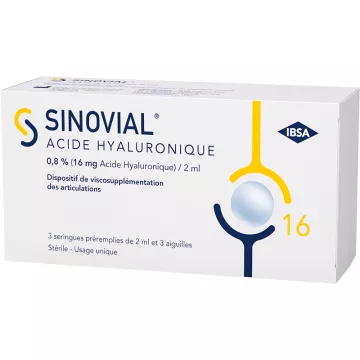
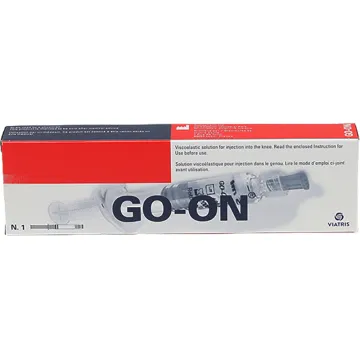
- Rheumatology and Joints (Viscosupplementation): intra-articular injections of sodium hyaluronate into arthritic knees, hips, and shoulders — restores the viscoelastic properties of depleted synovial fluid — pain relief + improved joint mobility for 3–6 months — products: Hyalgan (0.5 MDa), Synvisc (6 MDa cross-linked), Durolane (single-dose gel) — medical procedure covered by insurance for certain indications (stage 2–3 knee osteoarthritis) — see our page osteoarthritis
- Aesthetic medicine (fillers): cross-linked hyaluronate injected for: wrinkle filling (nasolabial folds, marionette lines) — volume restoration (cheeks, chin, lips) — overall hydration (skinboosters — Restylane Skinboosters, Juvéderm Volite) — filling of the tear trough — duration of effectiveness: 6–18 months depending on the product and the area — medical procedure performed by a qualified physician
- Wound healing and surgery: sodium hyaluronate gels for skin healing (chronic wounds, ulcers) — prevention of post-surgical adhesions (Seprafilm — HA membrane + carboxymethylcellulose) — post-burn care — care following laser treatments and dermal peels
- Gynecology and urology: hyaluronate gels for vaginal dryness (menopausal vulvovaginal atrophy) — vaginal HA suppositories and gels: lubricate + restore mucosal health — a non-hormonal alternative for women who cannot take HRT
Sodium hyaluronate in cosmetics: molecular weights and formulations
- Action based on molecular weight in cosmetics: HMW (>1,000 kDa) — forms a protective hydrophilic film on the surface → “second-skin effect” → immediate hydration + reduction in TEWL — LMW (50–300 kDa) — penetrates the superficial layers of the stratum corneum → hydration in the first layers of the epidermis — multi-molecular-weight serums combine both actions — nano-HA (5–50 kDa) — penetrates deeper → controversial (some studies show a mild inflammatory response)
- Cosmetic formulations: facial serums (light, water-based texture — concentrations 0.5–2% — apply to slightly damp skin to maximize hydration) — moisturizers (richer texture — hyaluronate incorporated into an emulsion) — sheet masks — under-eye patches — night creams — discover our facial serums and anti-aging night creams
- Cosmetic synergies: hyaluronate + vitamin C (stimulates collagen synthesis + antioxidant—the gold standard anti-aging synergy) — hyaluronate + retinol (HA reduces retinol irritation while boosting hydration) — hyaluronate + niacinamide (synergistic skin barrier support + hydration) — hyaluronate + peptides (collagen-like) for firmness
- Application tips: Apply to slightly damp skin (a few drops of water or a spritz) — the humectant HA attracts moisture from the air AND water from the skin → in very dry conditions, without water available, it can cause superficial dehydration — always seal in the HA serum with a cream or emollient — avoid formulas containing denatured alcohol (it neutralizes the humectant effect)
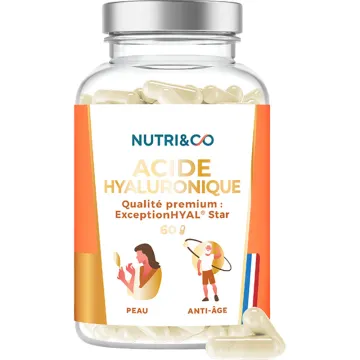
- Oral sodium hyaluronate (dietary supplements): oral bioavailability is debated — studies suggest that HA oligomers (< 300 kDa) may be partially absorbed and stimulate endogenous HA production — see our collagen page for joint and skin supplements that are often combined with it — dosages: 100–200 mg/day of oral HA
Joint dietary supplements, safety, and interactions
- Sodium hyaluronate for joints (oral route): Several clinical studies show benefits for joint pain (stage 1–2 knee osteoarthritis) and joint flexibility with 80–200 mg/day of oral HA — Hypothetical mechanisms: stimulation of synoviocytes (cells that produce synovial HA) + activation of CD44 receptors (role in cartilage repair) — to be combined with collagen (hydrolyzed type II) and vitamin C for cartilage synthesis
- Synergistic combinations in joint supplements: sodium hyaluronate + hydrolyzed type II collagen + vitamin C — all three are cofactors of the joint extracellular matrix — vitamin C is essential for collagen hydroxylation (synthesis of the cartilage matrix) — visit our osteoarthritis page
- Safety and tolerability: topical sodium hyaluronate—excellent tolerability profile, hypoallergenic, suitable for all skin types, pregnancy, and breastfeeding—injectable—well-established safety profile, rare but possible complications (hematomas, nodules) — intra-articular — favorable profile, possible local post-injection reactions (pain + swelling) — oral — very good tolerance in studies, no known systemic side effects at usual doses
- Interactions: NSAIDs (nonsteroidal anti-inflammatory drugs) reduce the endogenous synthesis of synovial hyaluronic acid (inhibition of cyclooxygenases) → long-term worsening of joint degeneration — no known drug interactions for oral or topical HA — for injections: it is essential to consult a doctor
- Quality criteria: specified concentration (serums: 0.5–2%) — molecular weight specified (or “multi-weight”) — free of denatured alcohol and fragrance for sensitive skin — biotechnologically derived (non-animal-based for vegans) — for supplements: pure oral form or combined with collagen + vitamin C — find our anti-aging line at pharmacies