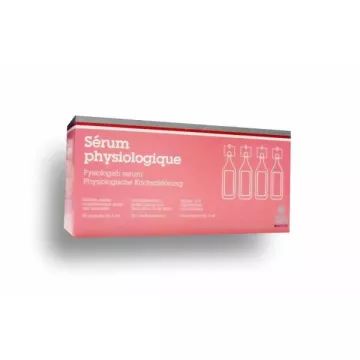
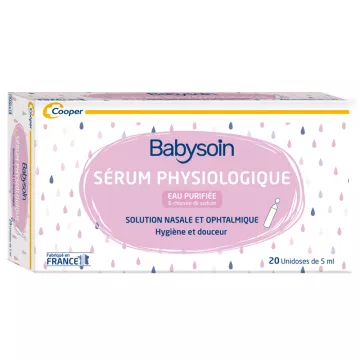
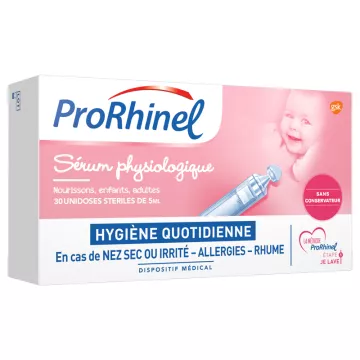
Saline solution (a 0.9% sodium chloride solution in water for injectable preparations) is the standard solution for all mucosal and wound care. Its isotonicity (osmolarity ≈ 308 mOsm/kg, identical to that of blood plasma and tears) makes it the solution best tolerated by all epithelial surfaces: conjunctival, nasal, mucosal, and cutaneous. Its pH, naturally ranging from 5.5 to 6.5, is compatible with microbiomes without disrupting them. Its binary composition (water + NaCl) guarantees the complete absence of irritating excipients—a key advantage over solutions formulated with preservatives. In sterile single-dose vials, it expires within 24 hours after opening.
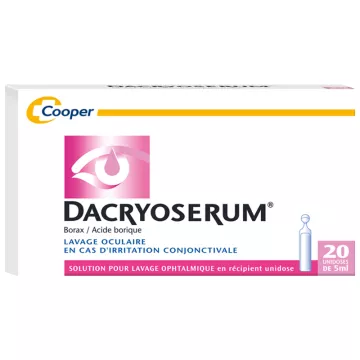
Saline solution is the first-line treatment for mechanical or chemical eye irritation (dust, foreign bodies, chemicals, pool chlorine). Its action is purely mechanical: rinsing dilutes and removes the irritant. It does not moisturize the ocular surface like hyaluronic acid and does not treat any medical condition—it is not a substitute for artificial tears in cases of chronic dry eye. For emergency eye rinses, 5- to 10-ml single-dose containers allow for a thorough rinsing of the conjunctival sac. For chronically irritated eyes, lubricating eye drops containing hyaluronic acid are more appropriate.
Nasal irrigation is one of the best-documented preventive measures for upper respiratory tract health. In cases of nasal congestion (common cold, rhinitis, sinusitis), it mechanically removes secretions, allergens, and viruses. The Proetz technique (nasal irrigation with 5 to 10 ml per nostril using a bulb syringe or pressurized bottle) is more effective than drops for cleansing the maxillary sinuses. Recommended frequency: 2 to 4 times a day during the acute phase, once a day for maintenance. Daily use carries no risk of dependence or mucosal atrophy, unlike nasal vasoconstrictors.
For cleaning superficial wounds (scrapes, shallow cuts, first-degree burns), saline solution is the treatment recommended by the HAS in its 2023 guidelines on wound care. Its isotonic rinse removes contaminants without destroying repair cells, as conventional antiseptics (Betadine, Dakin’s solution) do—which are now discouraged for first aid of clean wounds. For minor everyday wounds, a single 5-ml dose used as a rinse followed by a non-occlusive dressing is the current standard of care.
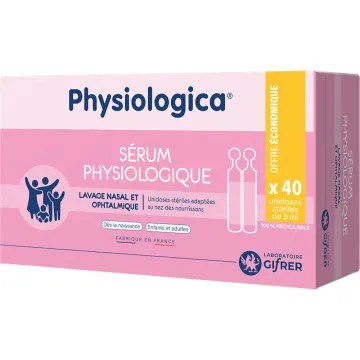
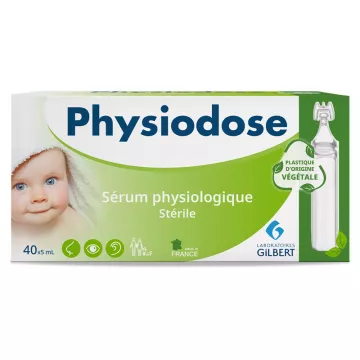
Saline solution is the most commonly prescribed care product in pediatrics, starting from the very first days of life. Its three main uses in infants are: nasal irrigation (starting on day 1, essential for maintaining nasal patency in newborns who breathe through their noses), cleaning neonatal eye secretions, and routine eye hygiene. The 5-ml single-dose vials made of plant-based plastic (Physiodose Green) are ideal for travel. Caution: Pressure during nasal irrigation must remain gentle to prevent any reflux into the inner ear via the Eustachian tube.
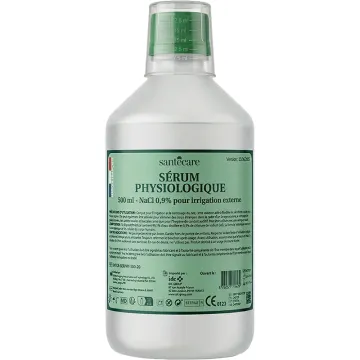
Single-dose vials (5 to 10 ml) are sterile upon opening and expire within 24 hours—the ideal format for ocular use (high risk of infection) and infant care. They guarantee absolute sterility but are more expensive. Multidose bottles (100 to 500 ml with a backflow prevention system) are cost-effective for repeated nasal rinses—their shelf life after opening ranges from 8 to 15 days, depending on the manufacturer. For contact lens wearers, preservative-free single-dose solutions are essential: any preservative residue can cause irritative keratitis.