Emergency eye irrigation is indicated in three situations. If a chemical (acid, base, solvent, household cleaner) splashes into the eye, the eye must be rinsed thoroughly under running water for at least 15 to 20 minutes—this is the only measure that prevents irreversible corneal burns. The effectiveness of rinsing decreases rapidly: rinsing within 30 seconds reduces corneal damage by 90% compared to rinsing delayed by 5 minutes. In the case of a foreign body (grain of sand, eyelash, insect), thorough rinsing with a sterile isotonic solution is often sufficient to remove it without scratching. In cases of exposure to allergens, dust, or pool chlorine, immediate rinsing reduces the inflammatory reaction in the conjunctiva. After any chemical contact, an ophthalmological examination is necessary even if vision appears normal.
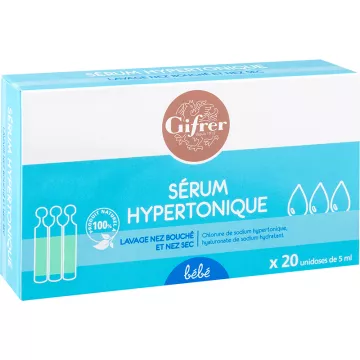
The choice depends on the clinical situation. The isotonic solution (0.9% saline, osmolarity ≈ 308 mOsm/kg) is the universal standard—well tolerated by the corneal epithelium, with no pharmacological action, and suitable for all routine and emergency rinses. The hypertonic solution (1.5–3% NaCl, such as Gifrer Physiologica Hypertonic) exerts an osmotic effect that reduces conjunctival edema and draws out thick secretions—indicated for copious purulent secretions associated with severe bacterial conjunctivitis. Tap water, which is hypotonic, is a last resort if no sterile solution is available—it may cause transient edema of the epithelial cells but is still preferable to not performing an emergency chemical wash.
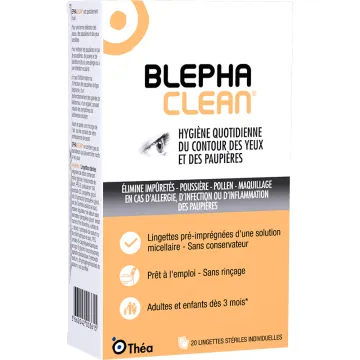
Pre-moistened sterile wipes (Blephaclean, Theawash) are indicated for daily eyelid hygiene in cases of chronic blepharitis, demodex, or recurrent nocturnal discharge. Their advantages over liquid cleansers include a controlled concentration of active ingredients, gentle exfoliation along the ciliary margins—which liquid cleansers alone cannot provide—and ease of daily use. For removing eye makeup, ophthalmic-grade wipes free of alcohol and preservatives emulsify lipid residues from mascara and eyeliner without disrupting the tear film. For emergency eye rinsing (splashes, foreign objects), only a generous amount of liquid solution is effective.
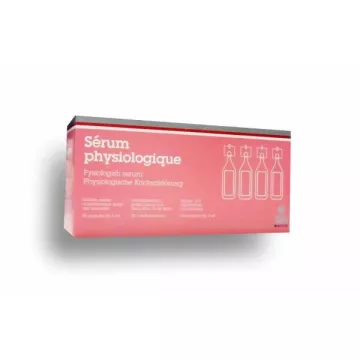
The technique determines the effectiveness. For simple rinsing (mild irritants, allergens, foreign bodies): tilt your head toward the affected eye, pour the sterile solution from the inner corner toward the outer corner, keeping your eye open. For emergency chemical flushing: place your head under lukewarm running water (20–25 °C), with your eye wide open, for 15 to 20 minutes, changing the angle to irrigate all the conjunctival recesses. A 100- to 250-ml bottle is required for emergency flushing—5- to 10-ml single-dose vials are sufficient for comfort rinsing. Eye health depends as much on these daily routines as it does on cosmetic care for the eye area.
Contact lenses must be removed before any eye wash—they trap chemical irritants and microorganisms against the cornea. In case of irritation, rinsing with preservative-free single-dose saline solution is essential for contact lens wearers: the benzalkonium chloride in multi-dose solutions can leave toxic residues on soft contact lenses. Lenses contaminated with a chemical or a bacterial infection must be discarded—never reuse them, even after rinsing. Regular retinal follow-up is recommended for long-term contact lens wearers, as prolonged wear can lead to silent corneal neovascularization.