What is skin pigmentation?
Skin pigmentation determines the color of the skin, hair, and eyes. It depends mainly on melanin:
- Melanocytes: specialized cells in the epidermis that produce melanin
- Two types of melanin: eumelanin (brown to black tones) and pheomelanin (yellow to red tones)
- Tyrosinase: a key enzyme involved in melanin synthesis
- Phototypes: classified from I to VI based on melanin content and sensitivity to UV rays
- Protective function: Melanin absorbs some UV rays and limits their effects on cellular DNA
- Natural variations depending on age, exposure, genetics, and hormonal status
Any disruption in the production or distribution of melanin results in a visible irregularity: a darker area (hyperpigmentation) or a lighter area (hypopigmentation).
Hyperpigmentation and hypopigmentation: What’s the difference?
Two opposite pigmentation disorders can occur:
Hyperpigmentation:
- Localizedexcessive production of melanin
- Appearance: spots darker than the surrounding skin
- Main forms: solar lentigines, melasma, post-inflammatory hyperpigmentation, freckles, drug-induced spots
- Prevalence: very common, especially after age 40
- Course: generally benign but cosmetically bothersome
Hypopigmentation:
- Insufficient melaninproduction or loss of melanocytes
- Appearance: patches lighter than the surrounding skin, sometimes white
- Main forms: vitiligo, pityriasis versicolor, post-inflammatory hypopigmentation, albinism, halo nevus
- Course: varies depending on the cause, sometimes progressive
- Increasedsun sensitivity in depigmented areas
For depigmentation and vitiligo, specific resources are provided alongside the relevant profiles.
What causes hyperpigmentation?
Several factors trigger or aggravate hyperpigmentation:
- Sun exposure: the primary factor, accumulating over the years
- Hormonal changes: pregnancy, estrogen-progestin birth control, hormone replacement therapy
- Skin aging: appearance of lentigines after age 40–50
- Skin inflammation: post-acne marks, eczema, burns, wounds, dermatitis
- Photosensitizing medications: certain antibiotics (cyclines), NSAIDs, antidepressants, antimalarials
- Photosensitizing cosmetics used before sun exposure (citrus essential oils, AHAs, BHAs, retinol)
- Genetic predisposition and skin type (darker skin tones are at higher risk)
- Endocrine disorders: Addison’s disease, thyroid dysfunction
- Previous use oftanning beds
- Liver diseases in cases of certain diffuse hyperpigmentation
Identifying the cause guides treatment. A dermatology consultation is recommended for extensive or progressive hyperpigmentation.
How can hyperpigmentation be prevented?
Prevention relies on strict sun protection:
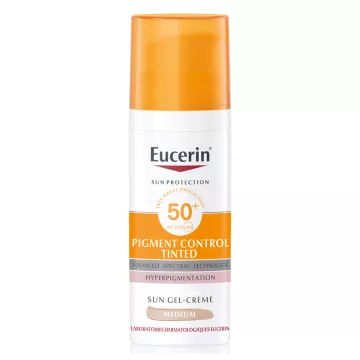
- Broad-spectrum UVA/UVBsunscreen with SPF 50+, applied daily in both winter and summer
- Apply a sufficient amount: 2 mg/cm² (one teaspoon for the face)
- Reapply every 2 hours during sun exposure and after swimming
- Apply to the hands, décolletage, and neck—areas often overlooked
- Wide-brimmed hat, sunglasses, and UV-protective clothing
- Seek shade during the hottest hours of the day (10 a.m.–4 p.m.)
- Strictly avoid tanning beds (proven carcinogen, classified as Group 1)
- Avoid photosensitizing cosmetics before sun exposure (citrus essential oils, lemon juice, AHA, BHA, retinol)
- Be cautious with photosensitizingmedications (read the package inserts, ask your pharmacist)
- Early treatment of skin inflammation to minimize residual marks
- Avoid picking at pimples and skin lesions
- Antioxidants in your morning serum (vitamin C, vitamin E)
For prolonged sun exposure, our high-protection sunscreen section offers suitable products.
What treatments are available for hyperpigmentation?
There are several options to discuss with a dermatologist:
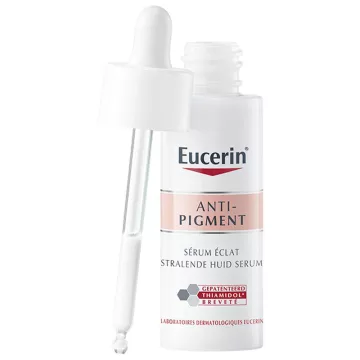
- Topical cosmetic treatments: serums and creams containing vitamin C, niacinamide, azelaic acid, kojic acid, arbutin, and glabridin
- Topicaltranexamic acid: an emerging treatment for melasma
- Cosmetic AHAs (glycolic, lactic, and mandelic acids): gentle exfoliants (photosensitizing)
- Hydroquinone: a potent prescription-only agent in France, used in short courses under medical supervision (contraindicated during pregnancy and breastfeeding)
- Tretinoin: prescription medication, teratogenic, contraindicated during pregnancy and breastfeeding
- Superficial to mediumchemical peels performed in a doctor’s office
- Microdermabrasion: mechanical exfoliation for superficial spots
- Intense Pulsed Light (IPL): suitable for well-defined lentigines on fair skin
- Q-switched or picosecond lasers: highly effective on lentigines
- Liquid nitrogencryotherapy for certain isolated spots
- Microneedling and mesotherapy as indicated
Our anti-dark spot section features dermo-cosmetic products available at the pharmacy. Medical procedures are performed by a dermatologist.
How does vitamin C affect pigmentation?
Vitamin C (L-ascorbic acid) is one of the most well-documented active ingredients:
- Antioxidant: neutralizes free radicals generated by UV rays, pollution, and tobacco
- Regulates melanin production by limiting the associated enzymatic activity
- Helps promote an even skin tone and visible radiance
- Enhances the effectiveness of the accompanying sunscreen
- Supports skin functions related to skin quality
- Well-tolerated during pregnancy at standard cosmetic concentrations
Best practices for use:
- Apply the vitamin C serum in the morning to cleansed skin, before moisturizer and SPF
- Effective concentrations: 10–20% for pure L-ascorbic acid
- Stabilized forms that are better tolerated: ascorbyl glucoside, magnesium ascorbyl phosphate, ascorbyl tetraisopalmitate
- Opaque, airtightpackaging: Vitamin C oxidizes when exposed to light and air
- Performa 48-hourpatch test before regular use
- Compatible with hyaluronic acid, niacinamide, and SPF
What is melasma?
Melasma (chloasma, “pregnancy mask”) is a specific form of hyperpigmentation:
- Appearance: bilateral, symmetrical brown or grayish patches
- Location: forehead, cheeks, upper lip, nose, and sometimes the neck and forearms
- Affected population: predominantly women (ratio of 9 women to 1 man), especially skin types III through V
- Main triggers: pregnancy, estrogen-progestin birth control, hormone replacement therapy
- Aggravating factors: sun exposure (UV and visible light), genetic factors
- Recurs with each new exposure to sunlight or hormonal change
- More difficult to treat than isolated lentigines (variable response and frequent recurrences)
- Epidermal, dermal, or mixed involvement depending on depth (to be assessed by dermoscopy)
For melasma, active treatment is often postponed until after childbirth and weaning. Strict sun protection remains essential.
Is hypopigmentation reversible?
Reversibility depends on the cause of the hypopigmentation:
- Post-inflammatory hypopigmentation: often transient, resolves over several months
- Pityriasis versicolor: possible improvement after antifungal treatment and gradual sun exposure
- Vitiligo: unpredictable course; treatments are available but do not guarantee a complete cure (UVB phototherapy, topical corticosteroids, calcineurin inhibitors, repigmentation under dermatological supervision)
- Albinism: genetic, irreversible
- Halo nevus: may resolve spontaneously
- Hypopigmented scars: partial improvement possible with microneedling, dermabrasion, or lasers
A dermatology consultation is essential to accurately identify the cause and recommend appropriate treatments. Enhanced sun protection is essential for hypopigmented areas (increased vulnerability to UV rays).
What role do chemical peels play?
Chemical peels are a leading treatment option:
- Principle: application of an acidic solution that exfoliates the superficial to mid-dermal layers of the skin
- Superficial peels: 30–70% glycolic acid, mandelic acid, lactic acid, salicylic acid
- Medium peels: TCA (trichloroacetic acid) 15–35%, sometimes combined
- Deep peels: phenol, reserved for specific dermatological cases
- Indications: post-inflammatory hyperpigmentation, mild to moderate melasma, solar lentigines, post-acne marks
- Number of sessions: 3 to 6 sessions spaced 2 to 4 weeks apart for superficial peels
- Aftereffects: redness, visible peeling, increased sensitivity lasting several days to weeks depending on the depth
- Contraindications: pregnancy, breastfeeding, active herpes, impaired wound healing, recent sun exposure
- Caution is advised for dark skin types (risk of paradoxical hyperpigmentation)
Peels must be performed by a trained physician, with strict sun protection before and after. A prior dermatological consultation is essential.
What role do natural remedies play?
Certain natural ingredients are used, with limited and variable results:
Use with caution:
- Purealoe vera gel: soothing and moisturizing (perform a 48-hour patch test beforehand)
- Licorice extract (glabridin) in formulated cosmetics
- Topicalgreen tea: plant-based antioxidants
- Rosehip oil: use only in the evening
- Pure honey as a mask: Perform an allergy test first
Absolutely avoid:
- Lemon juice on the skin: highly phytophototoxic; may cause photosensitivity burns and worsen dark spots (opposite of the desired effect)
- Citrus essential oils (bergamot, lemon, bitter orange): photosensitizing
- Undiluted apple cider vinegar: irritating, disrupts the skin’s pHbalance
- Pure topical turmeric: stains the skin yellow, risk of allergic reaction
- Caustic or untestedhome remedies
Cosmetically formulated skincare products offer more predictable efficacy and better tolerability than home remedies. Always consult your pharmacist before using a remedy on your face, especially if you have sensitive skin or established pigmentation issues. For persistent or progressive dark spots, a dermatologist’s advice is invaluable.